guide.importing-from-south-korea.title
Why Import from South Korea? A Perspective from 5 Years of Trade
South Korea is one of the most underrated sourcing destinations for US importers. Everyone talks about China and Vietnam, but Korea offers a compelling mix of high-quality manufacturing, strong intellectual property protection, and the US-Korea Free Trade Agreement (KORUS FTA) that eliminates duties on most industrial goods. Korea's export economy is built on electronics, automotive parts, machinery, chemicals, and cosmetics. The country ranks 5th globally in export volume, and its manufacturing standards are on par with Japan and Germany.
I started working with Korean suppliers in 2021 after one of my Chinese factory relationships went sideways during the pandemic. A buddy of mine who imports automotive sensors convinced me to try a Korean manufacturer. The difference was night and day. The minimum order quantities were smaller (500 vs 2,000), the communication was smoother — English proficiency is notably higher in Korean export businesses than in Chinese ones — and the product quality was consistent batch to batch. I don't get that with every Chinese supplier. The trade-off? The unit price was about 15-20% higher. But when I ran the full landed cost calculation factoring in zero duty under KORUS, faster shipping (10-12 days sea from Busan to Long Beach vs 18-22 days from Shanghai), and lower reject rates (2% vs 8%), Korea actually came out cheaper per sellable unit. That math surprised even me, and I do this for a living.
KORUS FTA: The Biggest Advantage for US Importers
The KORUS FTA, effective since 2012, eliminates tariffs on roughly 95% of industrial goods traded between the US and South Korea. For importers, this means most products from Korea enter the US duty-free. Electronics components at 0% instead of 2.5%. Automotive parts at 0% instead of 3-6%. Machinery at 0% instead of 2-4%. The savings add up fast. I did a shipment of industrial pumps from Korea last year — $45,000 FOB. Under KORUS, duty was $0. Without KORUS, duty at 3.7% would have been $1,665. That's pure savings. To claim KORUS preference, you need a Certificate of Origin from the Korean exporter. Most Korean suppliers are familiar with the process — they've been doing it since 2012. I've never had a Korean supplier refuse to provide one. Compare that to getting an FTA certificate from some Chinese factories, which can be like pulling teeth. The Korean government even provides an online CO issuance system (Korea FTA Portal) that makes the process nearly instant.
- Zero duty on electronics, machinery, automotive parts, chemicals, and optical instruments
- Gradual phase-out on remaining agricultural and textile tariffs (most already at 0%)
- Simple certificate of origin process — Korean suppliers are experienced with KORUS paperwork
- Rules of origin are straightforward for most manufactured goods (minimal regional value content requirements)
- No Section 301 tariffs — Korea is not subject to the China-specific tariffs at all
Key Manufacturing Hubs and Product Specialties
I've visited Korean factories in three main regions. Seoul Capital Area (including Incheon) is the center for electronics, semiconductors, and IT components — Samsung, LG, and SK Hynix are based here, and the supply chain ecosystem is incredibly dense. Busan and the southeastern region is the heart of automotive parts manufacturing — Hyundai and Kia supply chains stretch from Ulsan to Busan, and you can find specialized parts manufacturers on every industrial block. The southwestern region around Gwangju focuses on home appliances and textiles. Each region has its own character. What struck me most about Korean factories compared to Chinese ones was the cleanliness and organization. Every Korean factory I visited had a proper quality control lab on-site. In China, maybe 1 in 4 factories I've visited has dedicated QC facilities. Korean industrial parks are meticulously organized, and factory managers typically speak English well enough to discuss technical specifications without an interpreter. For specialized electronics components, Korea is arguably the best sourcing destination outside of Japan.
| Industry | Key Hubs | Korean Advantage | Typical Duty Under KORUS |
|---|---|---|---|
| Electronics & Semiconductors | Seoul, Incheon, Suwon | World-class R&D, Samsung/LG supply chains | 0% |
| Automotive Parts | Ulsan, Busan, Gyeongju | Hyundai/Kia ecosystem, precision engineering | 0% |
| Industrial Machinery | Changwon, Daegu | High precision, CNC expertise | 0% |
| Cosmetics & Skincare | Seongnam, Daejeon | K-beauty global leader, innovative formulations | 0-3% |
| Petrochemicals & Plastics | Ulsan, Yeosu | World-class refinery capacity, engineering plastics | 0% |
| Steel & Metal Products | Pohang, Dangjin | POSCO steel ecosystem, specialized alloys | 0% |
| Medical Devices | Wonju, Osong | High-quality manufacturing, FDA experience | 0% |
| Textiles & Technical Fabrics | Daegu, Gwangju | High-tech fabrics, synthetic materials expertise | 0-8% |
Shipping Routes and Logistics from Korea
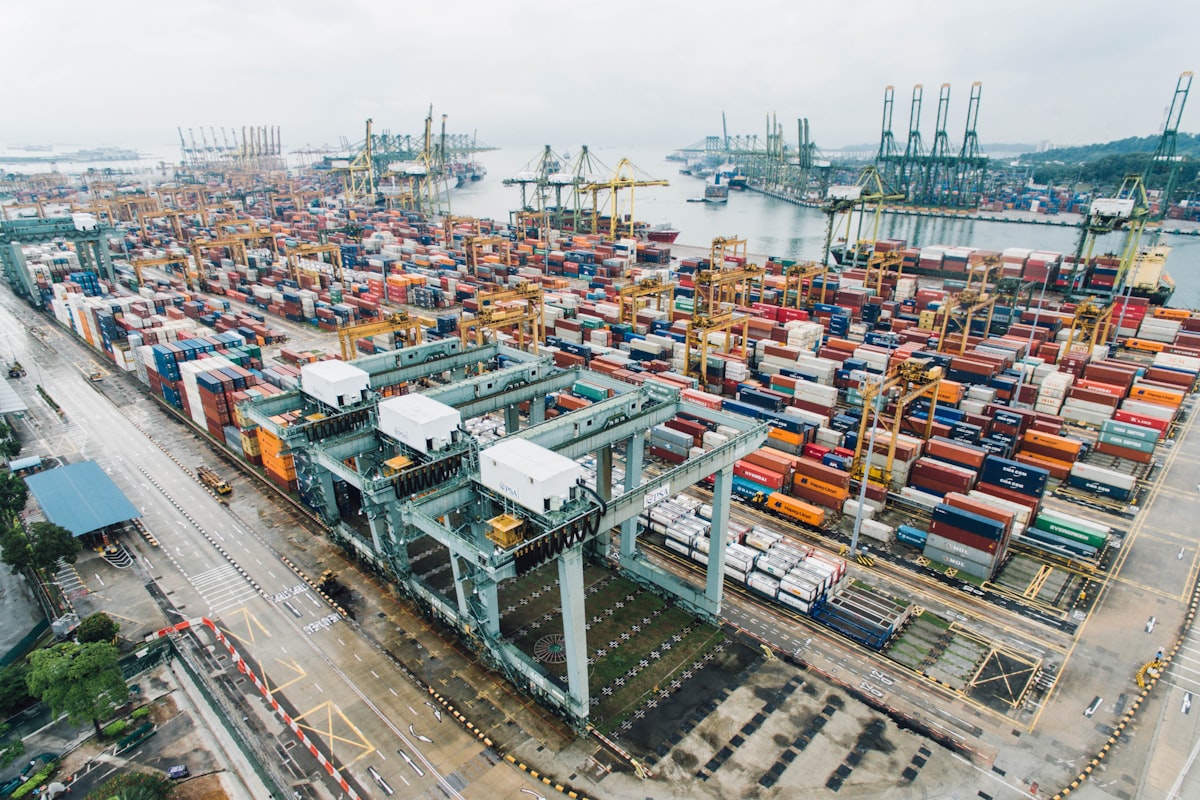
The primary sea route from Korea to the US is Busan to Long Beach/Los Angeles — one of the busiest transpacific lanes. Transit time is 10-14 days, which is notably faster than China (18-22 days from Shanghai or Shenzhen). Busan is the world's 7th busiest container port, so you get frequent sailings and competitive rates. I typically pay $1,800-2,500 for a 20ft container from Busan to Long Beach, and $2,800-3,800 for a 40ft. Rates fluctuate seasonally like all ocean freight, but historically Korea-US rates are 10-15% lower than comparable China-US lanes because of strong trade volume and port efficiency. For air freight, Incheon International Airport is a major cargo hub with daily flights to LAX, JFK, SFO, and ORD. Air freight from Incheon to the US runs $3.50-5.00/kg depending on volume and season. I shipped a 200kg air freight order of electronics components from Incheon to Chicago — $4.20/kg, 3 days transit, everything arrived intact. Express courier (DHL Korea) is extremely efficient — I've had packages from Seoul arrive in Los Angeles in 36 hours. Korean customs is also one of the most efficient in Asia. Export clearance typically takes 1-2 hours electronically. Compare that to the 24-48 hour clearance times I've experienced in some Chinese ports.
- Busan to Long Beach: 10-14 days, $1,800-2,500 per 20ft container
- Busan to New York: 18-22 days via Panama Canal, $2,500-3,500 per 20ft
- Incheon to LAX by air: $3.50-5.00/kg, 3-5 days transit door-to-door
- Express courier from Seoul: 36-72 hours door-to-door to major US cities
- Korean export customs: paperless, typically cleared within 1-2 hours
Finding and Vetting Korean Suppliers
Korean suppliers are less visible on platforms like Alibaba compared to Chinese factories. This is both a challenge and an opportunity — less competition means you can build stronger relationships. I find Korean suppliers through three main channels. First, the Korea Trade-Investment Promotion Agency (KOTRA) has 127 offices worldwide and a free supplier matching service. I used their New York office to find a cosmetics manufacturer and got matched with three vetted suppliers within a week. Second, industry trade shows — I attend the Korea International Exhibition (KINTEX) in Seoul every other year. It's the largest trade show in Korea and covers everything from electronics to machinery. Third, online B2B platforms specific to Korea like EC21 and Korean Products (koreanproducts.com). When I vet Korean suppliers, the process is similar to China but with an important difference: I put MUCH more weight on their export history. Korean suppliers typically keep meticulous records of their export transactions. I ask for their top 3 US customers (redacted) and recent bill of lading samples. If they can provide those, they're serious exporters. If they hesitate or can't produce documentation, I move on. In my experience, Korean manufacturers are less likely to be trading companies masquerading as factories — but verify anyway with a video call showing the factory floor.
- Contact KOTRA for free supplier matching (kotra.or.kr) — they have dedicated US desks
- Search Korean B2B platforms: EC21, KoreanProducts.com, GoBizKorea
- Attend KINTEX trade shows in Seoul or the Korea International Machinery Fair
- Check the Korea Customs Service trade statistics portal for active exporters
- Request Korean supplier verification through a third-party inspection service like SGS Korea
Using the Calculator for Korea-US Imports
The Landed Cost Hub calculator supports South Korea as both origin and destination. Select Korea as origin and the calculator applies KORUS FTA rates (0% duty for most industrial goods), accurate shipping costs from Busan and Incheon, and proper documentation requirements. The multi-country comparison feature is particularly useful for evaluating Korea vs China or Vietnam side by side.
The Landed Cost Formula
The basic formula for calculating landed cost is:
I've been using this formula for over a decade, and I still review it before every major shipment. Here's the thing — most people think it's just "product plus shipping equals total." It's not. I've tracked over 200 imports through this formula and the "hidden" components — insurance, clearance fees, inland freight — consistently add 15-35% on top of the product and shipping costs. In my experience, the two most commonly missed items are customs broker fees (typically $75-150 per entry) and inland trucking from the destination port ($50-200 depending on distance). Don't skip those.
- Product Cost (unit price × quantity)
- + Shipping / Freight Costs
- + Insurance (typically 0.5%–2% of cargo value)
- + Customs Duties (varies by HS code and origin-destination pair)
- + VAT / GST / Sales Tax
- + Clearance & Brokerage Fees
- + Inland Freight (port to warehouse)
- = Total Landed Cost
- Then: Cost Per Unit = Total Landed Cost ÷ Quantity
Step-by-Step: How to Calculate Your Landed Cost
Follow these steps to get an accurate landed cost for any product you import.
I run through this checklist for every single shipment, even repeat orders. You'd be surprised how often rates change — a route that cost $12/CBM last quarter might be $18/CBM this quarter. Here's a real example: I had a client importing LED grow lights from Shenzhen. He'd been using the same HS code for three years. Turns out, the WCO updated HS classifications in 2022 and his lights got reclassified into a higher duty bracket. He'd been overpaying by $1,200 per container for two years before we caught it. That's why Step 3 is so critical.
- Step 1: Determine your product price from the supplier (FOB or EXW terms).
- Step 2: Choose your shipping method — sea freight is cheapest for bulk, air freight for speed, express courier for small parcels.
- Step 3: Look up the correct HS code for your product to find the duty rate.
- Step 4: Check if your shipment qualifies for de minimis (duty-free threshold in your destination country).
- Step 5: Add all surcharges: insurance, customs broker fees, port handling, inland trucking.
- Step 6: Add any anti-dumping duties or special tariffs that apply to your product-origin combination.
- Step 7: Divide by units to get cost per unit — this is your break-even price.
Why Most Importers Get It Wrong
Many new importers only account for the product price and shipping cost. They forget insurance, customs broker fees, and inland freight. This leads to pricing products too low and losing money on every sale. A proper landed cost calculation catches all hidden costs before you commit to an order.
For example, a $500 product from China shipped by sea to the US might have $80 shipping, $15 insurance, $40 duty (8%), and $50 clearance+fees. Total landed cost: $685 — 37% more than the product price alone. I ran this exact scenario with a friend importing bicycle parts. He thought his $28 purchase price meant he could sell at $55 and make a killing. After we added sea freight ($3.50/unit), insurance ($0.14), duty ($2.24), broker fees ($0.83/unit for his 180-unit shipment), and inland trucking ($1.11/unit), his actual cost per unit was $35.82. At $55 selling price, after Amazon FBA fees of $8.50, he was netting $10.68 — not the $27 he thought. Still profitable, but a 61% margin illusion. That kind of shock is why I tell everyone: calculate landed cost before you order, not after.
Using the Landed Cost Hub Calculator
Instead of building a complex spreadsheet, use this site's free calculator. Enter your product price, origin and destination countries, shipping method, and optionally an HS code. The calculator instantly computes shipping costs, duty rates, VAT, clearance fees, and de minimis thresholds — all based on real lane rates and trade agreement data.
I built this calculator because I got sick of maintaining Excel spreadsheets that broke every time I updated a shipping rate. The beauty of this tool is it pulls from live data — lane rates from major freight forwarders, current duty schedules from customs authorities, and VAT rates updated per country. Try it now: select your origin and destination, enter your product details, and hit Calculate. You'll have a full landed cost breakdown in under 30 seconds. Compare that to the 45 minutes it used to take me manually cross-referencing HS codes, carrier rates, and customs databases.

Frequently Asked Questions
What is the difference between FOB and CIF?
'FOB (Free On Board) means the supplier covers costs until the goods are on the ship. CIF (Cost, Insurance, Freight) includes shipping and insurance to the destination port. Landed cost usually starts from CIF value. In my experience, FOB saves you 10-25% because suppliers often mark up freight by 15-30% on CIF quotes.
Do I pay duty on shipping costs?
In most countries, customs duty is calculated on the CIF value (product + shipping + insurance). Some countries like India apply duty only on the product value. Check your local customs rules. For the US and EU, always assume duty applies to the full CIF value.
Written by Ace Wang
Founder & Import Operations Specialist | 20 years in cross-border ecommerce
Ace Wang has spent two decades managing import supply chains for small and medium businesses across China, Southeast Asia, and beyond. Everything on LandedCostHub comes from real shipping lanes, real customs paperwork, and real P&L statements — not theory. More about Ace →
South Korea → United States Import Cost
Calculate landed cost for importing from South Korea. View shipping rates, duty rates, and total landed cost estimates.
View route details →Calcule Su Costo Total
Use nuestra calculadora gratuita para estimar sus costos totales de importación, incluidos aranceles, flete e impuestos.
common.start_calculatingGuías Relacionadas
Importing from China 101: A Complete Guide for First-Time Importers
Everything you need to know about importing from China. Supplier sourcing, shipping, customs, and landed costs explained.
common.read_more →Importing from Vietnam: Complete Guide for Small Businesses
Learn how to import from Vietnam. Find suppliers, understand shipping routes, calculate landed costs, and navigate customs.
common.read_more →Importing from India: Complete Guide for Importers
Complete guide to importing from India. Learn about supplier verification, shipping options, duty rates, and landed cost calculation.
common.read_more →