Importing from Japan to USA: Customs Duties, Shipping, and Landed Cost Guide
Why Import from Japan?
Japan is the world's third-largest economy and a powerhouse in precision manufacturing, automotive parts, electronics, and industrial machinery. For US importers, Japan offers quality that's hard to beat — but you'll pay for it. The trade-off is fewer defects, better engineering, and customers who'll pay a premium for 'Made in Japan'.
I started importing from Japan back in 2019 when I was sourcing automotive sensors for a client. My first container of Toyota-compatible oxygen sensors from Nagoya taught me some hard lessons. The product was flawless — zero defects out of 5,000 units, which I'd never experienced with Chinese suppliers. But the freight costs were higher, and I hadn't accounted for the Japan-side handling fees that added about $0.35 per sensor. My client loved the quality but balked at the price until I showed him the return rate was under 0.2% compared to nearly 4% on his previous Chinese-sourced batch. Sometimes paying more upfront saves you money on the backend.
Key Japanese Export Hubs and Shipping Routes
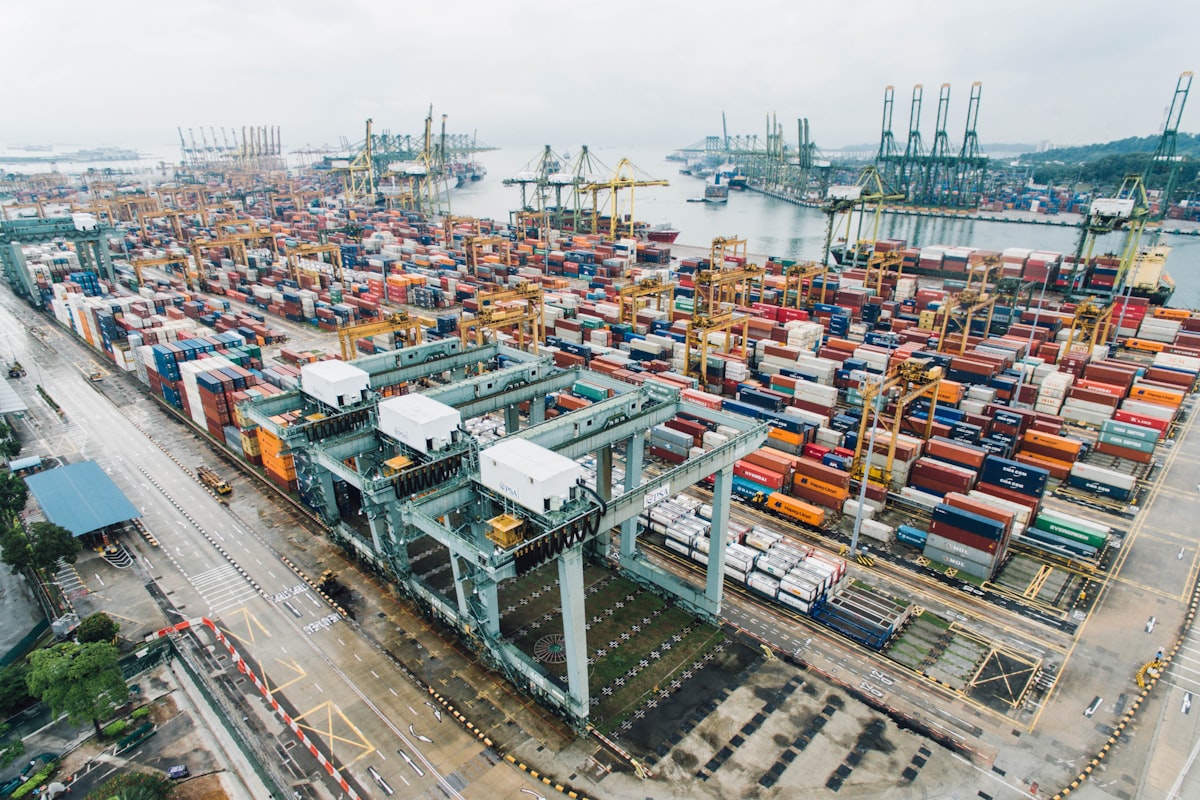
Japan's major ports are concentrated on the Pacific coast. Tokyo (the busiest), Yokohama, Nagoya, Osaka, and Kobe handle the bulk of export traffic. Each specializes in different cargo types.
From my experience, Nagoya is the go-to for automotive and machinery exports — Toyota's headquarters is there, so the port infrastructure for vehicle parts is unmatched. Tokyo handles more general cargo and electronics. Kobe and Osaka are better for textiles and consumer goods. I once had a shipment of ceramic tableware from Gifu Prefecture that went through Nagoya port, and finding a consolidator who could handle LCL from that region was a pain. Took me three weeks to find a freight forwarder who knew the smaller inland routes. Lesson learned: if you're sourcing outside the major industrial zones, budget an extra week for inland logistics.
- Tokyo Port — general cargo, electronics, consumer goods
- Yokohama — industrial machinery, chemicals, steel
- Nagoya — automotive parts, heavy machinery, ceramics
- Osaka — electronics, textiles, food products
- Kobe — machinery, chemicals, synthetic fabrics
Japan-US Import Duties and Tariffs
The US-Japan Trade Agreement (USJTA), which took effect January 1, 2020, reduced or eliminated tariffs on $7.2 billion worth of Japanese agricultural and industrial goods. For industrial products, about 90% of Japanese imports to the US enter duty-free or at reduced rates.
Don't get too excited, though. The duty rates are product-specific and depend on the HS code. I imported a batch of precision ball bearings (HS 8482.10) from Nagoya last year and was surprised to find they only had a 2.5% duty rate under the trade agreement. But when I tried importing optical lenses (HS 9001.90), the rate was 4.2%. The USJTA phased in reductions gradually, so some products still have duties between 2-8%. Always check the current HTS code — I use the USITC Tariff Database before every shipment. One thing that caught me off guard was that rules of origin matter. If any component of your Japanese product was actually made in China, it might not qualify for the reduced duty rate. I had a shipment of 'Japanese' electronics where the power adapters were Chinese-made, and CBP reclassified them at a higher rate. Cost me about $1,200 in unexpected duties.
| Product Category | HS Code Range | Typical Duty Rate | Notes |
|---|---|---|---|
| Automotive parts | 8407-8708 | 0-2.5% | Most duty-free under USJTA |
| Industrial machinery | 8401-8486 | 0-3.5% | Phased reductions ongoing |
| Electronics | 8517-8543 | 0-3.9% | Some components duty-free |
| Optical/medical | 9001-9023 | 0-4.2% | Higher for specialized equipment |
| Steel products | 7201-7229 | 0-8.0% | Some subject to Section 232 |
| Ceramics/glassware | 6901-7019 | 3.0-8.0% | Less competitive tariff-wise |
Shipping Costs from Japan to the USA
Shipping from Japan is generally more expensive than from China or Southeast Asia, primarily because of the longer Pacific crossing and generally higher port fees at Japanese ports.
I track shipping costs obsessively. Right now (mid-2025), a 20ft container from Tokyo to Los Angeles runs about $2,200-3,000 depending on the carrier and season. Peak season June-October adds $400-600. A 40ft container runs $3,500-5,000. For LCL shipping, you're looking at $130-200 per CBM, which is about 40% higher than LCL from Shanghai to LA. Air freight is where it gets painful. Narita to LAX cargo rates are around $4.50-6.50 per kg, compared to $3.50-5.00 per kg from PVG to LAX. If you're shipping high-value, low-weight items like electronics components, the air freight premium is worth it for the speed — transit is 3-5 days vs 14-18 days by sea. I use express courier (DHL/FedEx) for samples and small orders under 50kg. Yamato Transport also has competitive rates for smaller parcels, something most US importers don't know about.
| Shipping Method | Cost Range | Transit Time | Best For |
|---|---|---|---|
| 20ft container (FCL) | $2,200-3,000 | 14-18 days | Large shipments >15 CBM |
| 40ft container (FCL) | $3,500-5,000 | 14-18 days | Bulk shipments >30 CBM |
| LCL (per CBM) | $130-200/CBM | 16-22 days | Small-medium shipments |
| Air freight (per kg) | $4.50-6.50/kg | 3-5 days | High-value, time-sensitive |
| Express courier (DHL/FedEx) | $25-45/kg | 2-4 days | Samples, urgent orders |
Tips for First-Time Importers from Japan
Importing from Japan is different from China or Vietnam. The business culture, payment terms, and quality expectations are unique. Here's what I've learned the hard way.
First, Japanese suppliers expect professionalism. Email communication is formal, and they'll want to establish a relationship before discussing prices. I bombed my first negotiation by jumping straight to unit pricing — the supplier went silent for two weeks. Second, payment terms are less flexible. You'll likely need LC (Letter of Credit) or T/T upfront for first orders, while Chinese suppliers are more open to PayPal or 30% deposits. Third, quality is outstanding but lead times are longer. Chinese factories can turn samples in 7 days; Japanese factories take 3-4 weeks and don't rush. Fourth, Japanese suppliers rarely speak fluent English on the production floor. I strongly recommend hiring a bilingual sourcing agent in the Kanto or Kansai region for at least your first few orders. It costs $300-500 per day but saves you from expensive translation mistakes. I once had a spec sheet mistranslated — we said 'matte finish' but the supplier understood 'satin finish' because the translator wasn't a manufacturing specialist. That mistake cost $4,000 in rework.
- Build relationships first — expect 2-3 rounds of polite correspondence before pricing
- Budget for 30-50% higher shipping costs vs China for equivalent volume
- Hire a bilingual sourcing agent for your first 2-3 orders ($300-500/day)
- Plan for longer lead times — Japanese factories don't rush quality
- Check USJTA rules of origin carefully — Chinese components void reduced tariffs
- Use Yamato Transport for smaller parcels — cheaper than DHL/FedEx for under 50kg
Frequently Asked Questions
What are the duty rates for importing from Japan to the US?
Most industrial products from Japan enter the US at 0-4.2% duty under the US-Japan Trade Agreement. Automotive parts often have 0-2.5% rates. Check the HTS code on the USITC website before ordering, and verify rules of origin qualify for reduced rates.
How much does it cost to ship a container from Japan to the USA?
A 20ft container from Japan to the US West Coast costs $2,200-3,000, and a 40ft costs $3,500-5,000. LCL runs $130-200/CBM. East Coast destinations add $600-1,200 depending on the route.
Is importing from Japan cheaper than from China?
No. Shipping from Japan is typically 30-50% more expensive than from China, and product costs are higher. But quality is generally superior with fewer defects, which can offset the cost difference for high-value products.
What products are best to import from Japan?
Automotive parts, industrial machinery, precision tools, electronics components, medical devices, and high-end ceramics are the most cost-effective products to import from Japan, given the quality premium and existing trade agreement benefits.
How long does shipping from Japan to the US take?
Sea freight takes 14-18 days from Japan to the US West Coast, and 20-28 days to the East Coast. Air freight takes 3-5 days. Express courier (DHL/FedEx) takes 2-4 days for small packages.
Written by Ace Wang
Founder & Import Operations Specialist | 20 years in cross-border ecommerce
Ace Wang has spent two decades managing import supply chains for small and medium businesses across China, Southeast Asia, and beyond. Everything on LandedCostHub comes from real shipping lanes, real customs paperwork, and real P&L statements — not theory. More about Ace →
Japan → United States Import Cost
Calculate landed cost for importing from Japan. View shipping rates, duty rates, and total landed cost estimates.
View route details →Calcule Seu Custo Final
Use nossa calculadora gratuita para estimar seus custos totais de importação, incluindo impostos, frete e taxas.
common.start_calculatingGuias Relacionados
guide.importing-from-south-korea.title
guide.importing-from-south-korea.desc
common.read_more →Importing from China 101: A Complete Guide for First-Time Importers
Everything you need to know about importing from China. Supplier sourcing, shipping, customs, and landed costs explained.
common.read_more →Importing from Vietnam: Complete Guide for Small Businesses
Learn how to import from Vietnam. Find suppliers, understand shipping routes, calculate landed costs, and navigate customs.
common.read_more →Popular Routes
Calculate import costs from this country.