Australia to the EU in 2026: 0% Duty on Wine, 30% on Beef, and No FTA in Force Yet
Updated: 2026-09-07
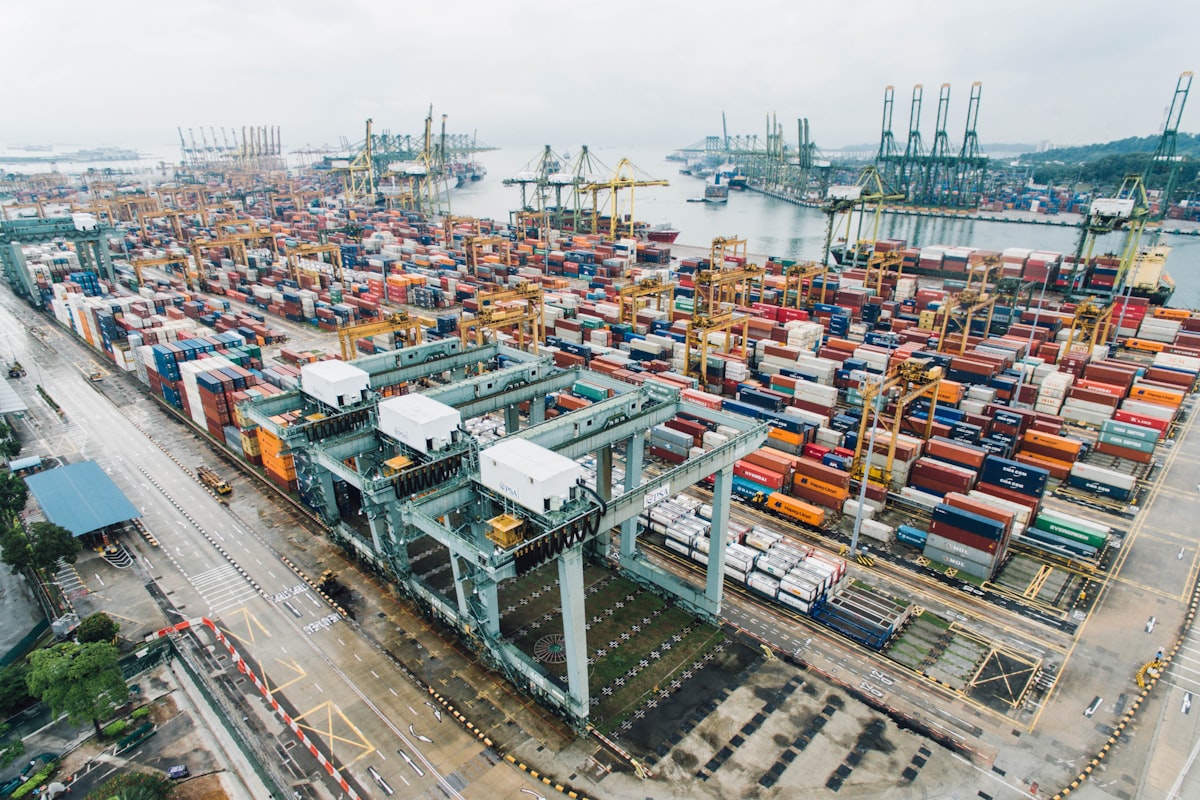
The Trade Deal Australia Still Does Not Have
Australia is the only big, Western-facing origin I price that has no trade deal with the EU. Japan has one. Canada has one. South Korea has one. New Zealand got one on 1 May 2024. Australia, the EU's 18th-largest trading partner, with the EU sitting as Australia's second-largest partner after China, is still waiting. Talks opened in 2018, collapsed in October 2023 over farm access and food-name protection, restarted, and on 24 March 2026 the two sides finally announced a deal they value at around A$10 billion. Here is the part most people miss: an announcement is not a treaty. As of September 2026 the text has not been signed, let alone ratified by the European Parliament and the Australian Parliament, and no one is promising entry into force before 2027. Every Australian shipment you clear this year, and probably next year too, pays the standard EU rate -- the MFN rate.
I started quoting the Australia-to-Europe lane in 2017, and I have watched three separate 'the deal is coming' waves talk importers into expensive waiting. In 2023 a client in Amsterdam froze a chilled-beef program because the FTA was 'months away'. It cost him roughly EUR 60,000 in lost sales before he gave up and ordered at the old duty rate anyway. My rule for everyone since: price today's duty, build today's supply chain, and treat the FTA as a bonus that may not land on your timeline. Trade deals of this type are also rarely retroactive, so do not expect a refund on the containers you clear in 2026.
- 2018: negotiations open between Brussels and Canberra.
- October 2023: talks collapse over agricultural access and geographic indications -- the fight over names like feta and prosecco.
- 24 March 2026: negotiators conclude and announce the deal, valued at around A$10 billion.
- Late 2026 or 2027 at the earliest: draft text, signature, then ratification by both parliaments.
- Until it enters into force: Australian goods pay standard EU MFN duty -- 0% on most factory goods, 12.8% plus a weight charge on beef, 17.3% on honey.
What Australian Goods Actually Pay in 2026: the Duty Table
Because no preference is in force, every Australian shipment is rated under the EU's MFN schedule. The good news: EU industrial tariffs are low, with most machinery and electronics lines at 0-1.7%. The bad news: agriculture is where the EU protects itself, and Australian exports to Europe are heavy on food and drink. The table below is what I work with for Australia-origin freight in September 2026. Duties change and your exact HS code is the only thing that settles your rate, so check the line on TARIC before you sign anything.
The row that surprises my clients every time is honey. Last year a Dutch importer brought in EUR 18,000 of eucalyptus honey for a health-food launch and only saw the duty when the customs bill arrived: 17.3%, or EUR 3,114, because he had assumed a natural product from a friendly country must be free. It is not. Australia's honey exports to Europe have been climbing for years, and the 17.3% wall is exactly why.
| Product | EU MFN duty (2026) | The note I give clients |
|---|---|---|
| Bottled still wine, up to 2 L (HS 2204.21) | 0% | Duty is not why Australian wine is pricey in Europe -- freight and VAT are. |
| Sparkling wine (HS 2204.10) | Not 0% -- separate per-hectolitre duty | Sparkling sits on its own, higher line. |
| Honey (HS 0409) | 17.3% | The EU protects its beekeepers hard, and Australian honey growth runs straight into this. |
| Beef, boneless (HS 0201/0202) | 12.8% + about EUR 3.03/kg | Out of quota. The grain-fed Hilton quota is the only discount lane, and grass-fed rarely qualifies. |
| Sheep meat (HS 0204) | 12.8% + up to about EUR 1.71/kg | Same structure as beef; the exact line on TARIC decides. |
| Macadamias and most tree nuts (HS 0802) | 0-3% | Most lines sit at zero -- nuts are an easy entry product. |
| Raw wool and hides (HS 5101, 4101-4103) | 0-2% | Australia is still one of the world's biggest wool origins. |
| Machinery, electronics, most manufactured goods | 0-1.7% | The EU's factory tariffs are low; volume belongs here. |
| Lithium, rare earths and mineral ores | 0% | Strategic raw materials enter free -- the lane Canberra and Brussels both talk about. |
New Zealand Got Its Deal in 2024. Australia Is Still Waiting.
The NZ-EU agreement is the best live proof of what a trade deal actually changes. It was signed on 9 July 2023, ratified by the European Parliament on 23 November 2023, and entered into force on 1 May 2024. On day one, 91% of New Zealand's export tariffs disappeared, rising to 97% after seven years. Wine, kiwifruit, manuka honey and every manufactured good went straight to zero. Beef and dairy were the sensitive parts, kept on quotas and phase-ins rather than instant freedom. Australia is now roughly two years behind that starting line, and the March 2026 conclusion did not even produce a signed text yet.
I price the same product spec from both sides of the Tasman Sea almost weekly, and the difference shows up in the quote, not in the product. New Zealand exporters email me with a preference line on the commercial invoice; Australian exporters email me the same price and hope nobody asks. When duties differ by 12.8 percentage points plus a weight charge on the exact same cut of grass-fed beef, the exporter who can explain origin rules wins the order. That is the quiet way the NZ deal is already costing Australian suppliers business.
| What | New Zealand (FTA in force) | Australia (no FTA in force) |
|---|---|---|
| Trade deal with the EU | In force since 1 May 2024 | Concluded 24 March 2026 -- not signed, not in force |
| Wine into the EU | 0% (day one) | 0% anyway on bottled still wine |
| Honey | 0% (day one, manuka included) | 17.3% |
| Beef | Quota access, duty phasing to zero over seven years | 12.8% + about EUR 3.03/kg out of quota |
| Most manufactured goods | 0% (day one) | 0-1.7% (low anyway) |
| Cheese names like feta | Restricted after a transition period | A core sticking point in the talks |
The Distance Problem: Nobody Flies Reefers by Choice
Duty gets the attention, but distance is the real tax on Australian imports. Melbourne to Rotterdam is roughly 20,000 km by sea, and a container typically spends 35-45 days on the water, longer when it transships through Singapore or Colombo. Air freight closes the gap to 4-8 days door to door but at a price that only makes sense for light, valuable or chilled cargo. These are the numbers I quoted in August 2026; freight markets move, so treat them as a budget, not a contract.
In August I quoted a Melbourne-to-Rotterdam reefer for a client at EUR 6,400. His previous forwarder had booked cheaper space through a Singapore transshipment, and the container took 52 days door to door, missed its Border Control Post slot, and picked up EUR 740 in storage and demurrage before it was even inspected. The cheap quote was the expensive one. For anything time-sensitive, I ask two questions first: what is the latest acceptable arrival date, and what is the product worth per kilo? Chilled beef at EUR 22/kg answers both -- it flies. Wine at EUR 4 a bottle answers both -- it sails.
| Mode | Door-to-door transit | What it costs (Aug 2026 quotes) | Sensible use |
|---|---|---|---|
| Air, general cargo | 4-8 days | EUR 3.20-5.50 per kg | Samples, spares, documents, high-value low-weight |
| Air, chilled meat or seafood | 4-8 days | EUR 5.50-8.50 per kg | Premium chilled beef and lamb trial orders |
| Sea, 20-ft dry container | 35-45 days | EUR 3,800-6,000 | Wine, packaged food, machinery |
| Sea, 20-ft reefer | 35-45 days | EUR 5,200-8,000 | Volume chilled or frozen beef and seafood |
| Sea, LCL groupage | 40-50 days | EUR 130-250 per CBM | First orders too small for a container |
The Paperwork That Actually Stops Australian Shipments
Australian customs paperwork on the export side is competent, which is more than I can say for some origins, but the EU side has its own gates, and meat is the strictest lane you will ever enter. The rules are not negotiable, and they are enforced at the border by a vet, not by a clerk.
I once watched a EUR 41,000 chilled order sit for three days because the health certificate named the exporter's old trading name. The company had rebranded, the DAFF certificate still carried the old legal name, and the vet at the Border Control Post would not accept the mismatch. Cold storage ran EUR 2,100, and the beef lost nine days of its shelf life over a name. Check every document against the commercial invoice before the plane takes off, not after it lands.
- Meat and some dairy: the shipment must come from an EU-approved Australian establishment, travel with a DAFF health certificate, and be pre-notified in the TRACES system (a CHED-P) for inspection at a designated Border Control Post.
- Your side: an EORI number, a customs declaration, and import VAT handling -- in the Netherlands that is 9% on meat and 21% on wine.
- Wooden pallets and crates need ISPM 15 heat-treatment stamps. One unmarked pallet can hold a whole container in the yard while it is re-treated.
- Grain-fed beef claiming the reduced Hilton-quota rate needs the quota certificate arranged before the shipment leaves. Grass-fed beef usually does not qualify for it.
- Organic claims need an EU-recognised certificate. The word 'natural' on a label proves nothing at the border.
Worked Example: a 1,500 kg Chilled-Beef Trial Order, Melbourne to Schiphol
The numbers below are from a quote I assembled in August 2026 for a Dutch importer trialling grass-fed chilled beef for restaurant supply. Trial size, 1,500 kg, is too small for a reefer container and too valuable to sit at sea for six weeks, so it flies. The supplier's price is EUR 22/kg FOB Melbourne. Duty is calculated on the CIF value, which is why the freight and insurance matter to the customs bill, not just to the supplier.
Read the table the way a customs officer would. Duty alone is EUR 9,904 -- 30% on top of the FOB price, or EUR 6.60 on every kilo. The full landed bill comes to 72% above FOB, and VAT on top of duty is what pushes the total past the point where most first-time importers panic. The scaling lesson matters more: once the trial works and volume grows past about ten tonnes, the same beef moves by sea reefer, freight drops from EUR 5.80/kg to under EUR 0.60/kg, and the landed cost falls to roughly EUR 31/kg. Air is for proving the product. Sea is for making money on it.
| Line | Amount | Note |
|---|---|---|
| Goods: 1,500 kg at EUR 22/kg, FOB Melbourne | EUR 33,000 | Supplier invoice |
| Air freight, chilled, at EUR 5.80/kg | EUR 8,700 | August 2026 quote to Schiphol |
| Insurance, about 0.4% of value | EUR 170 | |
| Customs value (CIF) | EUR 41,870 | Duty and VAT are charged on this |
| Duty: 12.8% of EUR 41,870 | EUR 5,359 | |
| Duty: weight charge, about EUR 3.03/kg | EUR 4,545 | Out of quota -- no FTA, no Hilton certificate |
| Import VAT (Netherlands, 9% food rate) on CIF plus duty | EUR 4,660 | Paid at clearance; reclaimable for VAT-registered firms |
| Customs clearance and documents | EUR 125 | Broker fee |
| Inland trucking, Border Control Post to door | EUR 220 | |
| Total landed | EUR 56,779 | EUR 37.85/kg against EUR 22/kg FOB |
The Other Australia: Why Wine Importers Rarely See a Duty Bill
If beef is the expensive end of the lane, wine is the cheap end. Bottled still wine under 2 litres has paid 0% MFN duty into the EU for years, and the Netherlands is one of the few member states with no wine excise on top, which is why Dutch independents import so much of it. The duty bill is zero; the freight and VAT bills are the story. Here is a small first container I priced in August 2026: 950 cases, about 11,400 bottles.
Run the two examples side by side and the contrast jumps out. Wine lands at 39% over FOB; beef lands at 72%. Spread across the bottles, the freight is EUR 0.42 each and the VAT is EUR 0.75 each -- the two lines that decide whether Australian wine makes money in Europe, not the customs duty. My standing advice to anyone learning this lane: start with wine. The duty risk is zero, and the lessons about freight consolidation, cold chain and VAT cash flow transfer to every other product you will ever import from down under.
| Line | Amount | Note |
|---|---|---|
| Goods: 950 cases at about EUR 37.90/case, FOB | EUR 36,000 | A small first order |
| Sea freight, groupage reefer share, Melbourne to Rotterdam | EUR 4,800 | August 2026 quote |
| Insurance, about 0.5% | EUR 180 | |
| Customs value (CIF) | EUR 40,980 | |
| Import duty | EUR 0 | Bottled still wine under 2 L -- MFN is zero |
| Import VAT (Netherlands, 21%) on CIF | EUR 8,606 | No duty, so the VAT base is just CIF |
| Customs clearance and documents | EUR 125 | |
| Inland trucking to the warehouse | EUR 240 | |
| Total landed | EUR 49,951 | EUR 4.38 per bottle |
The 60-Second Budget Formula for Australian Imports
You do not need a spreadsheet to sanity-check an Australian quote. Multiply the FOB price by the band that matches your product and you are close enough to decide whether the line is worth real work: 1.20-1.35 for high-value machinery and parts (duty near zero, freight a small share), 1.30-1.45 for wine into the Netherlands (no duty, 21% VAT), 1.65-1.80 for air-freighted chilled meat, and 1.35-1.55 for the same meat by sea reefer once you scale up. Remember the VAT twist: it is charged on CIF plus duty, not on FOB, so for low-duty goods the VAT line alone can be a fifth of your total landed cost.
The Australia lane rewards patience more than any route I know. The duty tables are stable, the suppliers are reliable, and the March 2026 deal means the political tailwind is finally real -- but the money is made by importers who price 2026 as 2026 and treat the FTA as a future discount, not a current one. Plug your own numbers into the calculator on this page and see where the line really lands before you commit.
- Pull your exact HS code on TARIC before you sign -- never guess from a similar product.
- Check the FTA status: concluded in March 2026 but not in force, so price MFN today.
- For meat: confirm the establishment is EU-listed, the DAFF certificate matches your invoice names exactly, and the TRACES entry is filed before the plane lands.
- Write 'ISPM 15-stamped pallets required' into the purchase order -- one unmarked pallet can stall a whole container.
- Budget the VAT cash flow: you pay import VAT weeks before you sell the goods.

Frequently Asked Questions
Do I pay customs duty on goods imported from Australia to the EU?
Yes, under the standard EU MFN rate, because no EU-Australia trade deal is in force yet. Most manufactured goods and machinery sit at 0-1.7%, which is painless. Agriculture is the wall: bottled still wine is 0%, but honey is 17.3% and out-of-quota beef is 12.8% plus about EUR 3.03/kg. Your exact HS code on TARIC settles the rate.
When will the EU-Australia free trade agreement take effect?
The deal was announced on 24 March 2026 after talks collapsed in October 2023, but it is not signed or ratified yet. Realistic entry into force is 2027 at the earliest, after signature and approval by both the European Parliament and the Australian Parliament. Shipments cleared before then pay MFN duty, and trade deals of this type are rarely retroactive, so do not delay orders expecting a refund.
How much does shipping from Australia to Europe cost?
In my August 2026 quotes: air freight runs EUR 3.20-5.50/kg for general cargo and EUR 5.50-8.50/kg for chilled meat or seafood; a 20-ft dry container runs EUR 3,800-6,000 and a reefer EUR 5,200-8,000, with 35-45 days of transit; LCL groupage runs EUR 130-250 per CBM. Air gets there in 4-8 days door to door. Rates move with fuel and season, so treat these as a budget.
Is importing Australian wine into the EU worth it?
Yes, on duty at least: bottled still wine under 2 litres pays 0% MFN. The real costs are freight (about EUR 0.42 per bottle on a groupage share), import VAT (21% in the Netherlands, charged on the CIF value) and any excise your sales country levies -- the Netherlands has none for wine, but several member states do. A 950-case container lands at roughly EUR 4.38 per bottle before your margin.
What documents do I need to import Australian beef or lamb into the EU?
The shipment must come from an EU-approved Australian establishment and travel with a DAFF health certificate. You pre-notify the arrival in TRACES with a CHED-P for inspection at a designated Border Control Post. On your side you need an EORI number and a customs declaration, plus ISPM 15-stamped pallets. Grain-fed beef claiming the reduced Hilton-quota rate needs its quota certificate arranged before departure.
Written by Ace Wang
Founder & Import Operations Specialist | 20 years in cross-border ecommerce
Ace Wang has spent two decades managing import supply chains for small and medium businesses across China, Southeast Asia, and beyond. Everything on LandedCostHub comes from real shipping lanes, real customs paperwork, and real P&L statements — not theory. More about Ace →
Australia → China Import Cost
Calculate landed cost for importing from Australia. View shipping rates, duty rates, and total landed cost estimates.
View route details →Calculate Your Total Landed Cost
Use our free calculator to estimate your total import costs including duties, shipping, and taxes.
Related Guides
De Minimis Threshold Guide: Import Duty-Free Limits by Country
Complete guide to de minimis thresholds worldwide. Learn how to legally reduce landed costs by staying under duty-free limits.
Read More →Amazon FBA Import Costs: Complete Guide for Sellers
Calculate your total landed costs for Amazon FBA imports. Understand duty, shipping, storage, and FBA fee structures.
Read More →US Customs Duty Rates: Complete Guide for Importers
Comprehensive guide to US customs duty rates. Learn how duties are calculated, find your HTS code, and discover duty reduction strategies.
Read More →Popular Routes
Calculate import costs from this country.