Importing from Japan to the EU in 2026: Duty, VAT and the EPA 0% Route
Updated: 2026-09-03
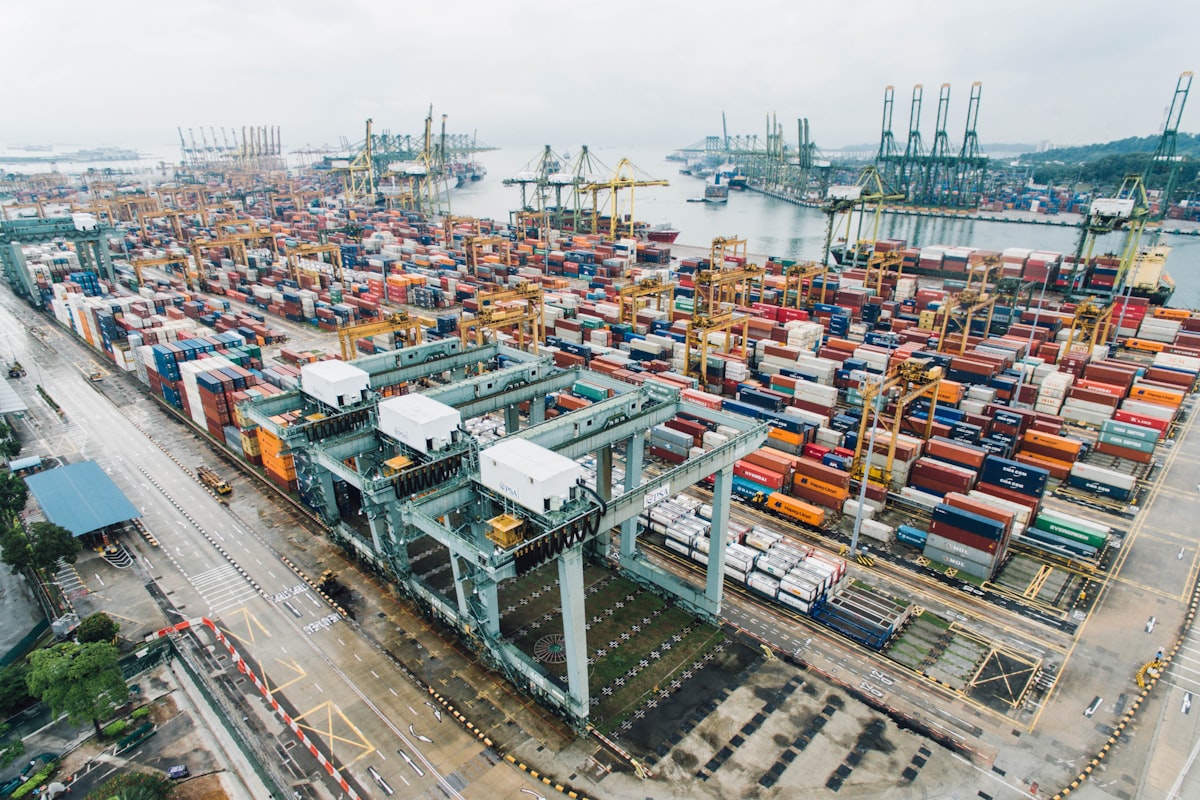
Japan to the EU: The Lane Most Importers Never Price
Japan ranks among the EU's largest sources of imports -- as high as sixth in recent years -- and the lane is not some niche for anime figures and JDM car parts. Roughly two thirds of what Japan sends to Europe is machinery, transport equipment and precision goods -- the kind of freight that keeps factories and workshops running. Yet in seven years of quoting this route, I've found most European importers treat Japan as a mystery: they assume it's expensive, they assume the paperwork is brutal, and they never actually price it. The truth is more interesting. Since 1 February 2019, the EU-Japan Economic Partnership Agreement (EPA) has removed duties on the overwhelming majority of Japanese goods that qualify as Japanese origin, and it created a free-trade zone covering roughly a third of the world economy and about 600 million people. That means a correctly documented shipment from Tokyo or Nagoya often pays 0% duty into Rotterdam -- less than most intra-EU importers expect to pay on goods from almost anywhere else. This guide walks the route in five stages, from the supplier's factory floor to your door, with the numbers I actually quote in September 2026.
I started pricing Japan-to-Europe freight back in 2019, right after the EPA entered into force, and my first client nearly gave up before we found the savings. He owned a small workshop in Rotterdam, he'd been buying Japanese parts through a German distributor for years, and the distributor's markup was running about 30% over the Japanese list price. When I showed him what the same parts cost landed from Nagoya with a 0% duty claim, he thought I'd made an arithmetic mistake. I hadn't. The distributor wasn't the problem -- the problem was that nobody had ever shown him the EPA route. Since then I've quoted this lane for workshops, car importers, collectors and one very patient watch dealer, and the mistakes repeat in the same order every time. This article is built from those mistakes.
- The EPA has applied since 1 February 2019 -- duties on most Japanese-origin industrial goods are 0%, but only with proof of origin.
- Japan is the EU's sixth-largest import source; machinery and transport equipment are roughly two thirds of the lane.
- The big exception: the EU's 10% passenger-car duty is being phased out over up to eight years and is in its final stretch in late 2026.
- Import VAT is charged on every commercial shipment at your country's rate -- 21% in the Netherlands and Belgium, no matter what the duty is.
- Freight is the line most first-timers get wrong: they quote courier air rates for cargo that belongs on a ship.
Stage 1 -- Sourcing and the Export Side: Japan Adds Cost Before the Shipment Leaves
Japan does not tax its exports. There is no Japanese export duty on the vast majority of goods, and the export declaration is filed by your forwarder or the seller's, usually within a day or two of the vessel departing. The costs Japan does add come earlier and are easier to miss. First, domestic trucking: a full container from a factory in, say, Gifu or Shizuoka to the port of Nagoya costs roughly EUR 300-800 depending on distance, and it is almost always quoted separately from the ocean freight. Second, consolidation: if you are buying LCL volumes from more than one supplier, your goods have to be gathered at a forwarder's warehouse near Tokyo, Yokohama, Nagoya, Kobe or Osaka before they can be grouped into a container. That warehousing and handling typically runs EUR 80-200 per shipment, and it adds 3-7 days to the timeline. Third, the payment friction: most Japanese suppliers still expect a bank transfer, often 30-50% deposit with the balance before shipment, and they quote in yen. I tell every client to lock the EUR/JPY rate or use a forward contract on orders above roughly EUR 10,000, because a 5% currency swing can wipe out the duty saving you came for.
My honest advice on suppliers: Japanese manufacturers are the most reliable I have ever worked with, and also the slowest to start. A new buyer asking for a credit account or a small trial order will often wait a week just for the supplier's export department to reply in formal English. That is not rudeness -- it's process. Budget 1-2 weeks of lead time before your order even enters production, and always ask for the commercial invoice to state the correct HS code and the country of origin in writing. On one early shipment, my client's supplier described a machine part as 'made in Japan' on the invoice but the certificate showed the casting had come from China and been machined in Japan. The origin claim was wrong, the EPA 0% did not apply, and we only caught it because I asked for the breakdown before the ship sailed. Ask early, ask in writing, and get the supplier's origin statement before you pay the deposit, not after.
- No Japanese export duty on most goods -- the export declaration is routine and handled by the forwarder.
- Budget EUR 300-800 for inland trucking to port and EUR 80-200 for LCL consolidation handling.
- Expect 1-2 weeks of supplier lead time before production starts; Japanese B2B sales move at their own pace.
- Get the HS code and country of origin in writing on the commercial invoice before you pay a deposit.
- Watch the EUR/JPY rate on orders above roughly EUR 10,000 -- a currency swing can erase the duty advantage.
Stage 2 -- Choosing the Lane: Parcel, Air, LCL or FCL
Japan to mainland Europe is a 20,000+ km journey, so your shipping choice decides both your transit time and whether the freight bill eats your margin. These are the ranges I actually quoted in September 2026 -- confirm live rates before you commit, because ocean spot prices still move with carrier schedules and season. The rule I repeat to every client: under about 30 kg, ship as a parcel and stop thinking; from 30 kg to about half a container, use LCL groupage; above that, go FCL. Air cargo only wins when time is the product, and it almost always costs 4-6 times more per kilo than sea.
I have a client who imports precision bearings for industrial maintenance, and he ran the air-vs-sea math every month for a year before he trusted it. A 400 kg air shipment at EUR 5.50/kg was costing him EUR 2,200 in freight alone, plus a surcharge season that pushed it to EUR 7/kg in October. The same 400 kg as part of an LCL consolidation cost him about EUR 550 all-in, including the consolidation handling, and arrived in 38 days instead of 6. His customers could wait 38 days for planned maintenance stock, and the EUR 1,650 difference per shipment paid for a lot of warehouse space. If your goods are urgent, pay for air and don't apologize. If they are not, the sea lane is where this route makes money.
| Method | Cost (Sept 2026 quotes) | Door-to-door transit | Best for |
|---|---|---|---|
| Parcel -- EMS or courier, 0.5-2 kg | EUR 20-60 | 3-7 days | Samples, spare parts, single items |
| Air cargo, consolidated, 100-500 kg | EUR 4-8 per kg | 4-8 days | Urgent stock, high-value compact goods |
| LCL groupage, 1-8 m3 | EUR 120-250 per m3, min ~EUR 300-400 | 30-45 days | First containers and mixed orders |
| FCL, 20 ft or 40 ft | EUR 1,800-3,600 for 40 ft | 35-55 days | Regular monthly volumes |
Stage 3 -- Arrival: The EPA 0% Duty, and the One Big Exception
When your goods reach the EU, the duty they pay depends on one document-backed question: do they qualify as Japanese origin under the EPA? If yes, the duty on the overwhelming majority of industrial lines is 0%. If no -- because the goods were made elsewhere, or you cannot prove where they were made -- the EU's standard Most-Favoured-Nation (MFN) duty applies instead. For many machinery and electronics lines MFN was already low before the EPA, so the agreement's real gift was certainty and the phase-outs. The single biggest exception is passenger cars: the EU's 10% duty on Japanese cars is being phased out over up to eight years, and in late 2026 it is in its final stretch -- a residual rate may still apply depending on the exact vehicle and the phase-out schedule, so check the current rate on TARIC before you rely on 0% for a car. Motorcycles, ceramics and some food lines sit on their own schedules too. The table shows typical lines -- always confirm your exact HS code on TARIC, because the EPA does not make every line 0% and the MFN anchor changes by product.
The car phase-out is the part collectors misunderstand. A client importing a Nissan Skyline GT-R from Nagoya in 2024 paid a reduced duty, not zero, because the phase-out was still running. The same car landed in early 2027 -- after the schedule completes -- would sit at 0%, and the difference on a EUR 45,000 car is roughly EUR 4,500 in duty alone. If you are serious about a Japanese car, the paperwork question is not whether the car is Japanese (it is), but whether you can prove it: the EPA origin proof for vehicles is strict, and the registration costs in your country come on top of customs. In the Netherlands, that means BPM and an RDW individual approval, which I cover in Stage 4.
| Product | EU MFN duty (no EPA origin) | EPA duty (Japanese origin, proven) |
|---|---|---|
| Passenger cars (HS 8703) | 10%, phasing out under EPA | 0% once the phase-out completes |
| Car and bike parts (HS 8708) | 2.5-4.5% | 0% |
| Industrial machinery (HS 84) | 0-1.7% | 0% |
| Electronics and appliances (HS 85) | 0-1.7% | 0% |
| Toys and figures (HS 9503) | 4.7% | 0% -- only if actually made in Japan |
| Anything else | Varies by HS code | 0% for most lines -- confirm on TARIC |
Stage 4 -- Clearance and VAT: Two Buyer Worlds, Two Different Bills
Import VAT is the line that dominates every Japan-to-EU shipment, because it is charged on every commercial import at your country's rate -- 21% in the Netherlands and Belgium, 19% in Germany, 20% in France, 22% in Italy, 23% in Portugal -- calculated on the CIF value (goods plus freight plus insurance) plus any duty. Since 1 July 2021 there is no low-value VAT exemption left, so even a EUR 30 parcel of spare parts attracts VAT. The fork in the road is who you are. A VAT-registered EU business declares the import with its EORI number and can apply to defer the VAT (the article 23 arrangement in the Netherlands), paying it on the next VAT return instead of at the border, then reclaiming it as input VAT. A private buyer has no deferral: the courier or postal service collects the VAT at delivery, adds a clearance fee of roughly EUR 12-25 per parcel, and the EU's 2025 customs reform piled a flat EUR 3 duty on top of small commercial parcels. The clearance fee, not the VAT rate, is what shocks people.
I test this myself every few months, because I buy JDM-only parts for a project car. Last order: EUR 120 of small parts from a Japanese webshop that is not IOSS-registered -- which describes almost every Japanese seller, by the way. The bill at the door was EUR 25.20 import VAT (21%), EUR 3 flat duty, and EUR 15 clearance fee: EUR 43.20 of extras on a EUR 120 order, about 36% on top. Had the seller been registered for IOSS (Import One-Stop-Shop), the VAT would have been collected at checkout for orders up to EUR 150 and the parcel would have cleared without a fee or the flat duty. So before you buy from Japan online, check whether the shop is registered for IOSS. Most Japanese sellers are not, so assume it isn't and add about a third to the price -- then expect a courier email asking you to pay the VAT before the parcel is released.
- VAT-registered business: get an EORI number, use the article 23 deferral where available, pay the 21% on your next VAT return, reclaim as input VAT.
- Private buyer, IOSS-registered seller, order up to EUR 150: VAT paid at checkout, parcel clears clean -- the best case, and rare with Japanese sellers.
- Private buyer, no IOSS: import VAT at your country rate plus EUR 12-25 clearance fee plus EUR 3 flat duty on small parcels -- build it into the price before you order.
- Car imports add a national layer: in the Netherlands, BPM (registration tax) is due when you register the car, and an RDW individual approval is required -- get both quoted before you bid.
Stage 5 -- The Origin Trap: Made in Japan Is a Claim, Not a Fact
The EPA's 0% duty exists only for goods that meet the agreement's product-specific rules of origin, and 'made in Japan' on a box proves nothing. Origin is determined by where the substantial transformation happened, not by where the seller is, where the warehouse is, or what the brand says. Two failures cost my clients real money in 2025 and 2026. First, the collector trap: my watch-and-figure client bought a line of collectible figures from a Japanese distributor because he wanted 'Japanese quality' for his EU store. The figures were manufactured in China -- as almost all of them are -- and merely distributed from Japan. Origin: China. The EU applied the 4.7% MFN duty on toys instead of 0%, and worse, the distributor's invoice did not state the true origin, which is the kind of error customs auditors notice. Second, the repacking myth: goods that arrive in Japan from a third country and are repacked, relabelled or quality-checked in Japan do not become Japanese. Warehousing is not processing. If your supplier cannot give you a statement on origin naming the product and the processing done in Japan, price the order at MFN and be glad you found out before the invoice, not after.
The fix is boring and cheap. Ask the Japanese seller for a statement on origin before you order -- for most industrial goods the supplier or its chamber of commerce can issue one, and it travels with the commercial invoice. Keep it, plus the invoice and packing list, for at least three years, because customs can ask for the origin evidence well after the shipment cleared. If the supplier hesitates or cannot name the processing done in Japan, treat that as a warning: the goods may be Chinese, Taiwanese or Thai-made goods wearing a Japanese brand, and the duty difference is the least of your problems if you declare them wrong. I have seen exactly one client get an origin claim rejected at the border, and the re-filing cost him EUR 860 plus two weeks of demurrage on the container. A two-minute email to the supplier would have prevented all of it.
- Ask for a written statement on origin from the Japanese supplier before you order, naming the product and the processing done in Japan.
- Remember that repacking, relabelling and quality checks in Japan do not change origin -- warehousing is not processing.
- Figures, electronics and many 'Japanese brand' consumer goods are often made in China -- check, don't assume.
- Keep origin statements, invoices and packing lists for at least three years after each import.
- If origin cannot be proven, budget MFN duty rates and fix the paperwork before the ship sails.
Two Orders, Two Totals: EUR 19,360 vs EUR 20,037.60
Now the whole route in one table. My Rotterdam client restocks JDM-compatible parts every quarter, and his July 2026 order shows exactly what the origin trap costs. Order A is EUR 14,200 of genuinely Japanese-made parts -- bearings, sensors and brake components from Nagoya suppliers, with origin statements on file. Order B is the same value of 'Japanese brand' parts where the actual manufacturing happened in Thailand, so no EPA origin. Same freight lane, same forwarder, same week:
Order B cost EUR 677.60 more than Order A -- about 3.5% on top -- for goods that looked identical in the catalogue. The duty itself was EUR 560, and because VAT is calculated on CIF plus duty, that EUR 560 also generated an extra EUR 117.60 of VAT. That is the tax-on-tax effect most importers forget: a 3.5% duty does not cost 3.5%; it costs 3.5% plus 21% of that 3.5%. My client now sends every new product line's origin paperwork to me before he orders it, and he has not paid MFN duty on a single shipment since. Run your own numbers on the landed cost calculator on this site -- goods value, freight and HS code in, and it will show you which column you are actually in.
| Line | Order A (Japan-made, EPA origin) | Order B (Thai-made, no EPA origin) |
|---|---|---|
| Goods value | EUR 14,200 | EUR 14,200 |
| Freight (LCL share) and insurance | EUR 1,800 | EUR 1,800 |
| CIF value (customs base) | EUR 16,000 | EUR 16,000 |
| Import duty | EUR 0 (EPA, origin proven) | EUR 560 (3.5% MFN on CIF) |
| Import VAT (21%) | EUR 3,360 (on CIF) | EUR 3,477.60 (on CIF plus duty) |
| Total landed cost | EUR 19,360 | EUR 20,037.60 |
Which Japan Importer Are You? Three Profiles, Three Answers
After seven years on this lane, I stop giving generic advice and start with a question: which of these three are you? The business restocking parts or machinery, the private buyer after a car or bike, or the one-off shopper ordering from Japanese webshops. Each profile has a different best shipping mode, a different VAT path, and a different paperwork load -- and the wrong default choice is what costs people money. My blunt ranking of the lane: for B2B stock of genuinely Japanese-made goods, Japan is one of the most underrated origins in the EU right now, because 0% duty plus reliable suppliers beats most alternatives once you price it properly. For cars, the phase-out completion in early 2027 makes it a waiting game -- the duty saving on a EUR 45,000 car is roughly EUR 4,500, so if you can wait six months, wait. For one-off private shopping, Japan is fine as long as you assume no IOSS, add a third for VAT, fee and flat duty, and treat EMS or a courier as your only realistic options.
The one-line version I give every client who asks whether Japan is worth it: Japan is not cheap, but it is predictable -- and predictable is what the EPA route rewards. The suppliers answer, the quality is exactly what the spec sheet says, and the duty is 0% when the paperwork is right. What gets people is not Japan; it is assuming the paperwork will sort itself out. It won't. Ask for the origin statement, choose the sea lane for anything over 30 kg, budget 21% VAT plus fees on top of everything, and the lane works. Skip any of those three and the invoice will teach you the lesson I've watched clients learn for seven years.
| Profile | Best shipping | Duty expectation | VAT and paperwork | My honest watch-out |
|---|---|---|---|---|
| B2B restock (parts, machinery) | LCL or FCL by volume | 0% with EPA origin proof | EORI + article 23 deferral, reclaim input VAT | Get origin statements before every order |
| Private car or bike buyer | FCL, often via a specialist | Near 0% once the car phase-out ends | VAT on CIF + BPM + RDW approval in NL | The phase-out ends in early 2027 -- time it |
| One-off webshop shopper | EMS parcel or courier | Small parcels: flat EUR 3 duty | 21% at delivery + EUR 12-25 fee, no IOSS | Add ~36% to the price you see, or find an IOSS seller |

Frequently Asked Questions
Do I pay customs duty on goods imported from Japan to the EU in 2026?
Usually 0% -- but only for goods that qualify as Japanese origin under the EU-Japan EPA and only when you can prove it. If the goods were actually made in China or Thailand, the EU's MFN duty applies instead: 4.7% on toys, 2.5-4.5% on car parts, up to 10% on cars. The passenger-car duty is being phased out under the EPA and is in its final stretch in late 2026.
How much VAT do I pay when importing from Japan?
Import VAT is charged at your country's rate on the CIF value plus duty: 21% in the Netherlands and Belgium, 19% in Germany, 20% in France, 22% in Italy, 23% in Portugal. Businesses with an EORI number can often defer it and reclaim it as input VAT. Private buyers pay at delivery plus a EUR 12-25 clearance fee, unless the seller collected VAT at checkout through IOSS.
Is importing a car from Japan to the Netherlands worth it in 2026?
The customs part is becoming very attractive: the EU's 10% duty on Japanese cars is being phased out under the EPA and reaches 0% when the schedule completes in early 2027. On top of customs you still pay 21% VAT on the CIF value, Dutch BPM registration tax, and an RDW individual approval. On a EUR 45,000 car the duty saving between 2024 and 2027 is roughly EUR 4,500.
Do I need a customs broker or an EORI number for small orders from Japan?
For private parcels up to a few kilograms you do not need either -- the postal service or courier clears the parcel and collects VAT plus a EUR 12-25 fee at delivery. For any commercial import, even small ones, you need an EORI number to declare, and a broker or forwarder typically charges EUR 50-150 per shipment to handle the declaration.
Why do goods made in China but sold by a Japanese shop not get the 0% EPA duty?
Because the EPA's 0% rate follows the origin of the goods, not the seller. Origin is decided by where the substantial manufacturing happened. Goods made in China and only warehoused or distributed from Japan are Chinese origin and pay the EU's normal MFN duty -- 4.7% for toys and figures, for example. Ask for a written statement of origin before you order.
Written by Ace Wang
Founder & Import Operations Specialist | 20 years in cross-border ecommerce
Ace Wang has spent two decades managing import supply chains for small and medium businesses across China, Southeast Asia, and beyond. Everything on LandedCostHub comes from real shipping lanes, real customs paperwork, and real P&L statements — not theory. More about Ace →
Japan → United States Import Cost
Calculate landed cost for importing from Japan. View shipping rates, duty rates, and total landed cost estimates.
View route details →Calculate Your Total Landed Cost
Use our free calculator to estimate your total import costs including duties, shipping, and taxes.
Related Guides
De Minimis Threshold Guide: Import Duty-Free Limits by Country
Complete guide to de minimis thresholds worldwide. Learn how to legally reduce landed costs by staying under duty-free limits.
Read More →Amazon FBA Import Costs: Complete Guide for Sellers
Calculate your total landed costs for Amazon FBA imports. Understand duty, shipping, storage, and FBA fee structures.
Read More →US Customs Duty Rates: Complete Guide for Importers
Comprehensive guide to US customs duty rates. Learn how duties are calculated, find your HTS code, and discover duty reduction strategies.
Read More →Popular Routes
Calculate import costs from this country.