Importing from the USA to the EU: The $9,800 Order That Really Cost $13,164
Updated: 2026-09-01
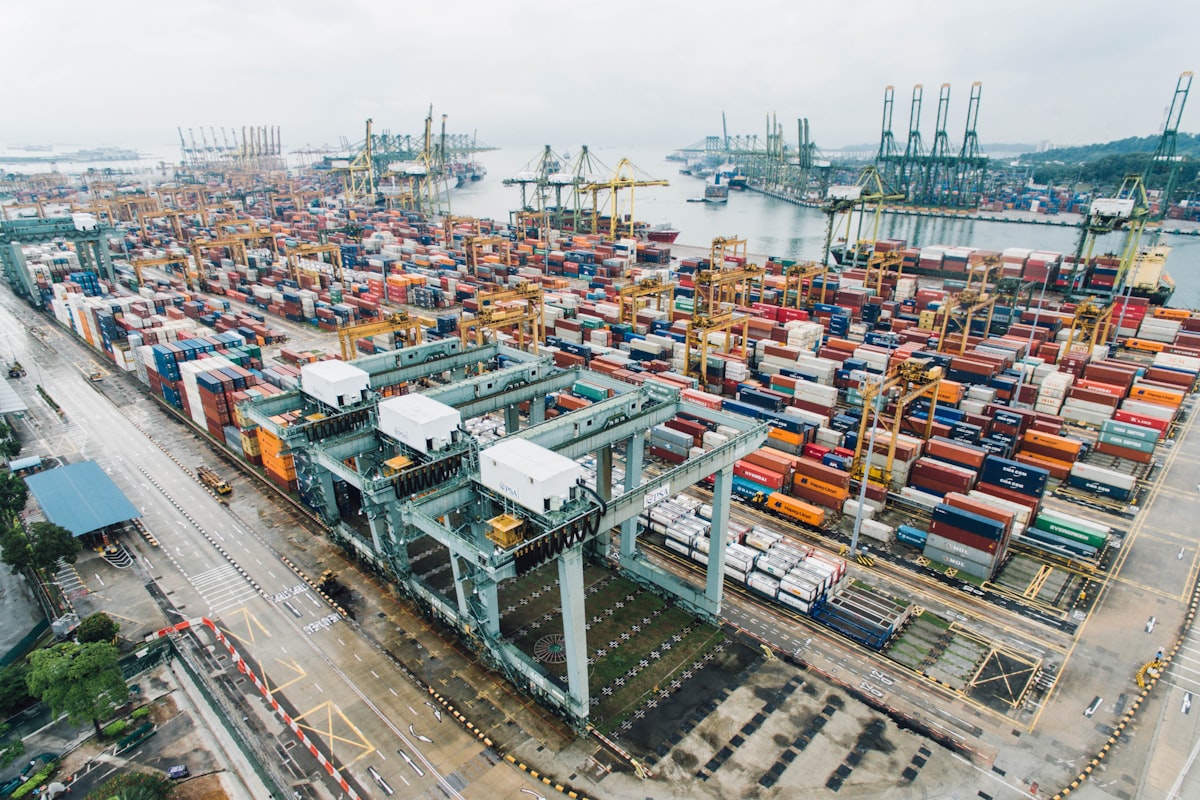
The $9,800 Order That Really Cost $13,164
A client of mine runs a small webshop in Rotterdam, and in July he placed a $9,800 order with a supplier in New Jersey -- small electronics, stainless kitchenware, and a box of toys. He expected the all-in number to sit around $11,000. It landed at $13,164, which is 34.3% more than the FOB price. That gap is not a mistake and not a scam: it's the difference between what a supplier invoices and what the EU actually charges you, and it's the single most common reason first-time US-to-EU importers blow their budget. Here's the exact teardown, line by line, with rates checked against TARIC in September 2026 -- confirm your own HS code before you commit, because the duty line changes everything:
I've been pricing US-to-EU shipments since 2016, and the pattern is always the same: first-time buyers underestimate by 25-40% because they only count the invoice and the freight. When I sent my client this teardown, his reply was "can you make the VAT go away?" -- no, and the next section explains why nobody can, along with the one part of the bill that genuinely surprised him (it was the cheapest line).
| Cost line | Amount | Notes |
|---|---|---|
| FOB goods (supplier invoice) | $9,800 | 1,240 units across 3 product lines |
| Ocean freight (LCL, 2.5 CBM, NY-NJ to Rotterdam) | $480 | All-in with BAF and terminal fees |
| Insurance (0.3% of goods + freight) | $31 | Optional but I always take it |
| CIF value | $10,311 | The number customs actually taxes |
| Import duty (2.6% blended MFN rate) | $268 | 0% electronics, 2.7% kitchenware, 4.7% toys |
| Import VAT (21% of CIF + duty) | $2,222 | The line nobody budgets for |
| Customs broker | $165 | About EUR 150 -- worth every cent |
| Inland trucking (Rotterdam to Utrecht) | $198 | About EUR 180, 60 km |
| Total landed cost | $13,164 | 34.3% above the FOB price |
First, the Good News: the US Doesn't Tax Its Exports
Before you panic about the numbers above, here's the part most guides get wrong: the US side of this transaction costs almost nothing. Article I, Section 9 of the US Constitution bans export taxes outright -- "no Tax or Duty shall be laid on Articles exported from any State" -- and there's no US export VAT either. The US government does not collect a cent when your goods leave Newark. What actually exists is paperwork: an AES filing (EEI) for any shipment valued over $2,500, which your freight forwarder submits for you and bundles into the freight quote, plus a commercial invoice, a packing list, and a bill of lading. That's the entire US-side process for most goods. No export license unless you're shipping weapons, certain chemicals, or tech with military applications.
In my experience the only US-side fees that ever appear on a quote are terminal handling (roughly $85-150) and, occasionally, a forwarder's documentation fee of $35-60. Compared to the $2,222 VAT line in the table above, those are rounding errors. The lesson: if a US supplier quotes you "export fees" of hundreds of dollars, ask what they actually are -- legitimate ones don't exist for ordinary consumer goods.
The Real Math: EU Duty Depends on the HS Code, Not the Invoice
The EU has no free-trade agreement with the US, so American goods enter under the EU's standard MFN (most-favoured-nation) tariff. The average EU MFN rate is around 5%, but that average hides a brutal spread: most industrial goods sit at 0-3%, while clothing, footwear, and food preparations can run 12-27%. Your rate is set by the HS code of the specific product, not by the invoice total and not by what the supplier calls it. Here are the rates I quote most often for US-to-EU shipments (MFN, September 2026 -- always re-check on TARIC):
One rule trips up more importers than any other: origin is where the goods were made, not where you bought them. A "US brand" product manufactured in China enters the EU under Chinese origin -- which means it can attract anti-dumping duties on top of the normal rate, even though it shipped from a US warehouse. I check certificates of origin on every quote now, because I've watched a client pay 12% plus a 7.5% anti-dumping line on "American" goods that were actually made in Guangdong.
| Product category | EU MFN duty | Typical HS chapter |
|---|---|---|
| Headphones, speakers, audio | 0% | 8518 |
| Laptops, computers, tablets | 0% | 8471 |
| Stainless steel kitchenware | 2.7% | 7323 |
| Fitness equipment | 2.7% | 9506 |
| Toys and games | 4.7% | 9503 |
| Auto parts | 2.5-4.5% | 8708 |
| Leather handbags | 9.7% | 4202 |
| Denim jeans and most clothing | 12% | 6203 |
| Food preparations, supplements | 12.8-27% | 2106 |
VAT Is the Big One: 21% on CIF Plus Duty
Here's the number that dominates every US-to-EU import, and it's not the duty. Dutch import VAT is 21%, and it's charged on the CIF value plus the duty -- not on the invoice price alone. On my client's shipment: 21% of ($10,311 + $268) = $2,222. That's more than four times the duty line, and it's why "the VAT went away" is never a real answer. The rate varies by country -- Germany 19%, France 20%, Italy 22%, Portugal 23%, Spain and Belgium 21% -- but the mechanism is identical everywhere in the EU.
The part that genuinely surprised my client: businesses don't have to front this money. If you're VAT-registered in the Netherlands, you can apply for deferred VAT (the article 23 arrangement) and account for the 21% on your next VAT return instead of paying it at the border. He hadn't registered, so he fronted $2,222 for six weeks until the goods sold and the VAT came back on his return. Private buyers don't have that option -- they pay the VAT plus clearance fees at delivery, full stop.
Shipping from the US: Three Options, Three Different Cost Curves
Freight is where most people overpay, because they default to the method they used for China. US-to-EU is a different market: the Atlantic is short, the ports are efficient, and LCL is dramatically cheaper per CBM than most people expect. Here's the comparison I actually quote (September 2026 spot ranges):
My honest opinion, after a decade of quotes: for anything over 50 kg, air freight is usually a mistake, and express courier is a mistake for anything that isn't urgent. The sweet spot for webshop stock is LCL from the East Coast -- my client's 2.5 CBM cost $480 and took 21 days door-to-door. One more thing nobody tells you: origin port matters almost as much as the method. Shipping from Los Angeles or Long Beach adds 10-14 days and $300-600 versus New York or Newark, because the cargo has to cross the continent first. If your US supplier is on the West Coast, price both options -- sometimes it's cheaper to truck to the East Coast and sail, sometimes air wins once you add the land leg.
| Method | Cost | Transit | Best for |
|---|---|---|---|
| LCL sea (1-8 CBM) | $100-180/CBM, East Coast | 18-25 days | Pallets and mixed webshop stock |
| FCL 20ft container | $2,800-4,500 | 20-30 days | Anything over ~10 CBM |
| Air cargo | $3.50-6.50/kg | 3-7 days | High-value, low-weight goods |
| Express courier (FedEx/DHL/UPS) | $8-15/kg | 2-4 days | Samples and urgent restocks |
What This Client Got Wrong (and What It Cost)
The teardown above is the happy ending. Getting there cost my client three specific mistakes, and they're the same three I see in every first US-to-EU import. First, he trusted the supplier's "no export fees, just pay the invoice" line -- true, but it hid the fact that nothing was filed with AES until the forwarder caught it, which cost a $45 late-filing amendment. Second, the HS misclassification: EUR 380 in re-filing and storage, nine days lost, all because he classified by intuition instead of by TARIC. Third, no deferred VAT registration: he fronted $2,222 for six weeks, which at his 4.5% cost of capital is about $31 in interest -- small, but the cash-flow hit is what hurt when the next order came due.
The fixes are boring and cheap. Classify before you ship, or pay a broker $50-150 to do it once and reuse the codes. Register for deferred VAT the week you place your first order -- it takes an afternoon with the belastingdienst and saves you fronting 21% on every future shipment. And re-quote freight at least twice: my client saved $140 by switching from the forwarder his supplier recommended to a second quote from a Rotterdam-based forwarder, which is 29% of his entire freight bill. None of this is glamorous, but it turned a $13,164 lesson into a $13,024 bill -- and the process now runs on autopilot.
The US-Import Checklist I Print for Every Client
Print this out, because the order matters -- item 1 catches more shipments than everything else combined:
- Confirm the true origin of every product line (certificate of origin, not the brand's marketing). Chinese-made "US brands" can carry anti-dumping duties on top of MFN
- Get the HS codes right before you book anything -- thirty minutes on TARIC, or EUR 50-150 for a broker to classify the whole order once
- Register for deferred VAT (article 23) before the first shipment lands if you're a VAT-registered EU business
- Ask the forwarder to confirm the AES filing is included in the freight quote, and get the filing number in writing
- Quote at least two forwarders, one on each side of the Atlantic -- my client saved 29% on freight this way
- Budget 30-45% above the FOB price for landed cost, and don't touch that buffer for anything else
- For parcels under EUR 150 sold to consumers: check whether the seller is IOSS-registered before checkout
- Keep the commercial invoice, packing list, and bill of lading for at least five years -- the belastingdienst can ask, and "I deleted it" is not a defence
My Take: When the US Is Worth It as an Origin (and When It Isn't)
After pricing transatlantic shipments for a decade, here's my honest position: the US is a great origin for exactly three kinds of products -- things with no real EU equivalent (American-specific brands and specialty goods with a genuine premium), products under IP or licensing that you can't buy from EU distributors, and anything where the US price is at least 40% below EU retail even after the 34% landed-cost uplift. Outside those three buckets, the US usually loses to China on price, to Turkey on freight time, and to intra-EU suppliers on hassle. The worst possible import from the US is a Chinese-made commodity product wearing an American brand: you pay US prices, Chinese-origin duties, and EU VAT all at once.
What I tell every client who asks "should I import from the US?": run the numbers before you fall in love with the product. The landed cost calculator on this site will do the teardown above for your exact shipment in about two minutes -- plug in your FOB price, freight quote, HS code, and origin country, and it shows you the VAT line you're about to be hit with. My client's mistake wasn't the products; it was skipping that step until the invoice arrived. The US isn't the cheapest origin in the world, but for the right product it's one of the most reliable -- the paperwork is light, the infrastructure is excellent, and the only real tax surprise is the one you can calculate before you order.

Frequently Asked Questions
Do I pay US export duties when importing from the USA to the EU?
No. The US Constitution (Article I, Section 9) prohibits taxes on exported goods, so there are no US export duties for ordinary consumer products. You only need an AES filing (EEI) for shipments over $2,500, which the freight forwarder handles as part of the freight quote.
What import duty do I pay on US goods in the EU?
The EU has no FTA with the US, so MFN rates apply -- on average around 5%, but the rate depends on the HS code: most electronics are 0%, kitchenware around 2.7%, toys 4.7%, leather bags 9.7%, and clothing 12% or more. Check the exact rate for your product on TARIC before shipping.
How is import VAT calculated on US goods?
Import VAT is charged on the CIF value (goods + freight + insurance) plus the duty, at the destination country's standard rate -- 21% in the Netherlands. VAT-registered businesses can use deferred VAT (article 23) and pay on their next VAT return instead of at the border.
Does IOSS apply to imports from the US?
Yes, for distance sales to EU consumers where the order value is up to EUR 150. If the US seller is IOSS-registered, they collect the VAT at checkout and the parcel clears without extra charges. Above EUR 150, or for B2B shipments, normal import VAT and clearance procedures apply.
Is it cheaper to ship from the US East Coast or West Coast?
East Coast. LCL from New York/Newark to Rotterdam runs about $100-180/CBM with 18-25 day transit, while West Coast origins (Los Angeles/Long Beach) add 10-14 days and $300-600 because the cargo crosses the continent first. Air freight from either coast runs $3.50-6.50/kg.
Written by Ace Wang
Founder & Import Operations Specialist | 20 years in cross-border ecommerce
Ace Wang has spent two decades managing import supply chains for small and medium businesses across China, Southeast Asia, and beyond. Everything on LandedCostHub comes from real shipping lanes, real customs paperwork, and real P&L statements — not theory. More about Ace →
United States → China Import Cost
Calculate landed cost for importing from United States. View shipping rates, duty rates, and total landed cost estimates.
View route details →Calculate Your Total Landed Cost
Use our free calculator to estimate your total import costs including duties, shipping, and taxes.
Related Guides
Importing from South Korea: Complete Guide for Importers
Complete guide to importing from South Korea. KORUS FTA duty savings, supplier sourcing, shipping routes, and landed cost calculation.
Read More →Importing from China 101: A Complete Guide for First-Time Importers
Everything you need to know about importing from China. Supplier sourcing, shipping, customs, and landed costs explained.
Read More →Importing from Vietnam: Complete Guide for Small Businesses
Learn how to import from Vietnam. Find suppliers, understand shipping routes, calculate landed costs, and navigate customs.
Read More →