Importing from Turkey to the EU in 2026: 0% Duty With an A.TR, and a Truck That Arrives in 5 Days
Updated: 2026-09-04
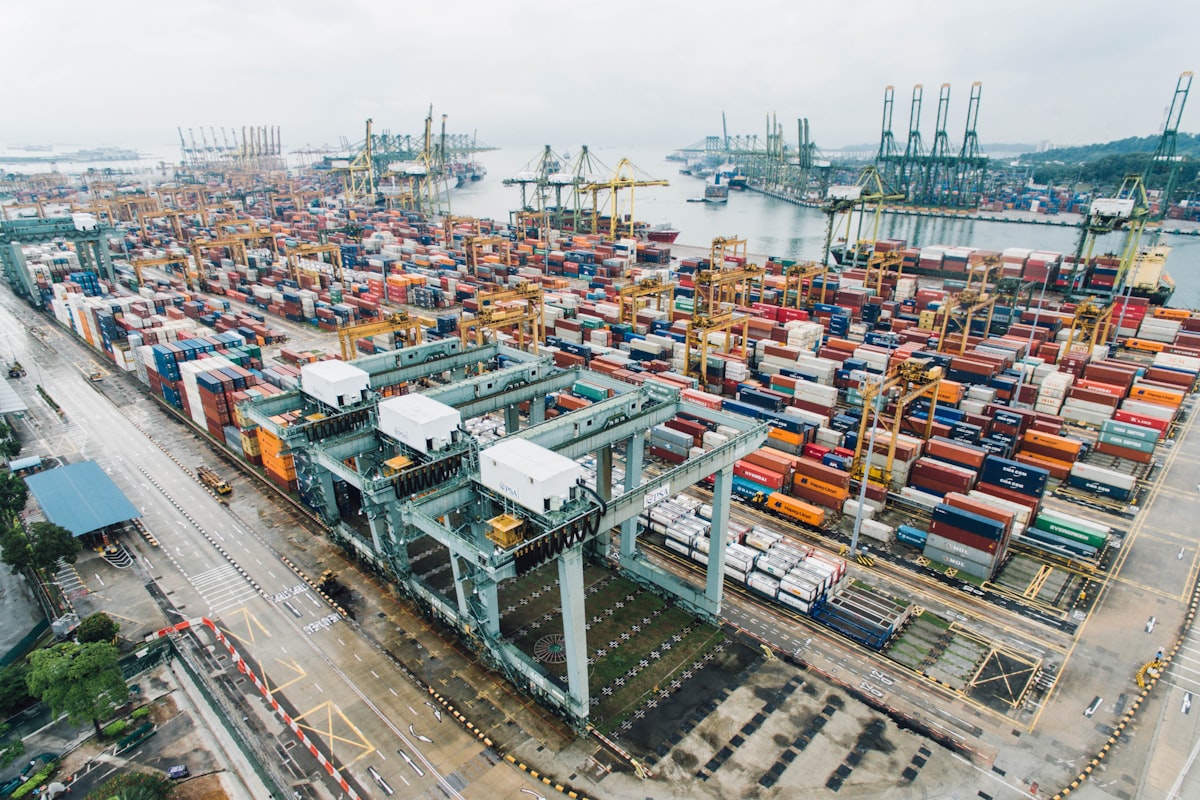
Turkey to the EU: 0% Duty, a Five-Day Truck, and the A.TR Form Everyone Forgets
Turkey sits in a category of its own for European importers, and most of them never realise it. It is not a free-trade partner like Japan or Canada, and it is not a distant factory floor like China. Turkey has been locked into a customs union with the EU since 31 December 1995, which means industrial goods move between the two sides with zero duty -- provided one sheet of paper is right. In the years I have quoted Turkey-to-Europe freight, roughly EUR 200 billion in goods has moved between the EU and Turkey annually, the EU takes around 40% of everything Turkey exports, and Turkey ranks as one of the EU's six largest trading partners. Yet the question I hear most from Dutch and German buyers is still whether importing from Turkey is 'worth the hassle'. The hassle is mostly paperwork fear. A correctly documented shipment from Istanbul or Izmir pays 0% duty into Rotterdam, a full truck covers the roughly 2,500 km from Istanbul to the Netherlands in five to eight days, and the one document that makes the whole 0% claim real -- the A.TR movement certificate -- is routinely forgotten until customs asks for it.
I started quoting this lane in 2016, when a Rotterdam clothing importer asked me to price a mixed container of knitwear and machine parts that his German supplier had told him was 'not worth the border'. That advice cost him money for years. The knitwear, with a Turkish A.TR in the file, cleared at 0% instead of the 12% EU duty his German supplier was quietly paying on Turkish fabric made up in Germany. We found the saving by accident, and I have watched the same accident happen in reverse ever since: importers pay duties they do not owe because nobody asked the Turkish exporter for the A.TR before the truck left. This guide is the briefing I wish I could hand every first-time Turkey buyer, with the freight quotes I gave in September 2026 and the exact numbers from an order I priced last month.
- The EU-Turkey customs union has been in force since 31 December 1995 -- industrial goods move duty-free with the right paperwork.
- Import VAT is charged on every commercial shipment at your country's rate -- 21% in the Netherlands -- no matter what the duty is.
- Road freight is the lane's superpower: a full truck from Istanbul to Rotterdam takes roughly five to eight days, not five weeks.
- The customs union does not cover everything: unprocessed agricultural goods, services and public procurement sit outside it.
- The A.TR certificate is the document that proves the 0% claim -- without it, customs applies the standard EU duty, up to 12% on clothing.
Why the Customs Union Beats a Plain Free Trade Agreement
A free trade agreement cuts duties on goods that originate in the partner country. The EU-Turkey customs union goes further: it also lets goods that entered Turkey from outside the union circulate into the EU without a second duty charge, as long as they were released into free circulation in Turkey at the union's common external tariff. That is why the arrangement, set up by Association Council Decision 1/95 of 6 March 1995 and effective on 31 December 1995, is described as a deeper economic merge than an FTA. Turkey committed to align its external tariffs with the EU's common customs tariff for the covered goods, and to keep its industrial standards and competition rules broadly in line with the EU's. In return, Turkish-origin industrial goods -- and processed agricultural products under the agreement's rules -- cross into the EU at 0% duty with an A.TR certificate. The real-world effect is why Turkey keeps showing up in near-shoring conversations: a Turkish factory supplying the EU competes on duty terms with a factory in Germany, not with a factory in a country that merely has an FTA and its own rules of origin to satisfy.
The catch most importers miss is the phrase 'in free circulation'. It does not mean 'the truck drove through Turkey'. A Chinese-made product shipped into Turkey, released there after paying Turkish import duty at the common-tariff level, and then re-exported to the EU can indeed circulate duty-free -- that pillar of the customs union is real. But if the goods entered Turkey at a rate below the EU's common tariff -- for example under one of Turkey's separate trade deals with a third country -- they are not in free circulation for the union, and the EU's full duty applies at the border. And since roughly 2024, Turkey has piled extra duties of 40% or more onto many Chinese-built cars and a range of other Chinese goods, well above the EU's own rates. So the practical answer to the 'China via Turkey' loophole question is short: the back door is shut, and trying to force it is how importers end up paying duty twice. I explain the paperwork that keeps you out of that mess in the next section.
- Customs union in force since 31 December 1995 under Association Council Decision 1/95 -- not a free trade agreement, a deeper arrangement.
- Covered: industrial goods and processed agricultural products; excluded: unprocessed agriculture, services and public procurement.
- Turkey aligns its external tariff with the EU's common customs tariff for covered goods -- deviations break the free-circulation chain.
- Goods released into free circulation in Turkey at common-tariff rates can move to the EU duty-free, not just Turkish-origin goods.
- Trade between the two sides runs around EUR 200 billion a year, and the EU takes roughly 40% of Turkish exports.
The Duty Matrix: What Pays 0% and What Does Not
The 0% story is true, conditional and narrower than most people assume. It is true for industrial goods with proof of customs-union status. It is conditional on that proof existing at the moment of clearance. And it is narrower than the full catalogue of what Turkey sells, because food and agriculture sit under separate arrangements where preferences are product-by-product. The table below shows the categories I quote most often for Turkey-to-EU shipments, with the EU's standard most-favoured-nation (MFN) duty as the fallback when the paperwork is missing. These are the rates as I understand them for 2026 -- always confirm your exact HS code on TARIC, because one wrong digit changes the answer.
The rows that matter for money are clothing and cars. Clothing is Turkey's calling card in Europe, and the EU's MFN duty on most apparel lines runs to 12% -- which is why the A.TR is worth real euros, not just a warm feeling. Cars carry the EU's 10% passenger-car duty, and Turkey builds a lot of the vans and small commercial vehicles you see on European roads. Machinery and electronics, by contrast, mostly sit at 0-1.7% MFN anyway, so the customs union saves you little there -- I tell clients not to lose sleep over the A.TR for a CNC machine, and to treat it as sacred for a clothing order.
| Product group | With A.TR (customs union) | Without A.TR (EU MFN fallback) | Notes |
|---|---|---|---|
| Clothing and knitwear (HS 61-62) | 0% | Up to 12% | The classic A.TR mistake -- verify your exact line on TARIC |
| Passenger cars and vans (HS 8703) | 0% | 10% | Turkish-built vans and commercial vehicles qualify with origin proof |
| Auto parts (HS 8708) | 0% | 2.5-4.5% | Ford, Stellantis and Renault supply chains move these daily |
| Industrial machinery (HS 84) | 0% | 0-1.7% | MFN is already low -- the A.TR matters less here |
| Electronics and appliances (HS 85) | 0% | 0-1.7% | White goods from Turkish plants enter EU-wide at 0% with an A.TR |
| Food and unprocessed agriculture | Separate rules | Product-specific | Not in the customs union -- check Decision 1/98 preferences and TARIC |
| Steel products | 0% with A.TR | Varies, plus safeguard quotas | Steel has spent years under EU safeguard measures -- check quota status |
The A.TR: One Sheet of Paper Worth 12 Percentage Points
The A.TR movement certificate is the document that proves your goods crossed under the customs union instead of at MFN rates. In practice the Turkish exporter arranges it -- the exporter applies to the Turkish customs authorities or the local chamber of commerce, and the certificate is issued on the basis of the export declaration before the goods leave Turkey. Your job as the buyer is to put 'A.TR required' in the purchase order and to confirm it exists before the truck departs, not after. If the goods arrive without one, customs has no reason to believe they qualify, so it applies the standard EU duty at clearance -- up to 12% on clothing. The duty can sometimes be reclaimed later through a repayment application once the certificate arrives, but that process runs for months and eats the saving in accountant time.
I watched this cost a client EUR 2,400 once, and it still annoys me. He ordered EUR 20,000 of knitwear from a factory near Bursa. The factory's export clerk had the A.TR ready but nobody asked for it, the forwarder filed the import declaration without it, and the shipment cleared at 12% -- EUR 2,400 in duty that the customs union was supposed to make impossible. The exporter produced the A.TR a week later, but the goods had already been released, so reclaiming meant a formal repayment claim through the Dutch authorities. He got most of it back about seven months later, and the accountant's fee for the claim was larger than the duty on his next two shipments combined. The fix costs nothing: one line in the purchase order, one email before the truck leaves. I now put it in every Turkey contract I see.
- Write 'A.TR required' into the purchase order and confirm the certificate exists before the truck departs.
- The Turkish exporter obtains the A.TR from Turkish customs or the chamber of commerce before export.
- Without an A.TR, the EU applies its standard MFN duty at clearance -- up to 12% on clothing, 10% on cars.
- A late A.TR means a repayment claim through the authorities: months of waiting and accountant fees that eat the saving.
- Keep the A.TR with your invoice and packing list for at least three years -- customs can ask to see it long after clearance.
Road, Sea or Air: the Turkey Matrix
Turkey is the only major origin I quote where the truck is often the right answer, and the numbers below are why. The table shows the ranges I actually quoted in September 2026 for Istanbul and Izmir to the Netherlands -- confirm live rates before you commit, because diesel, driver availability and season move them. The short version: under about 50 kg, ship as a parcel; from a pallet to a dozen pallets, use groupage road freight and stop overthinking; a steady full-trailer volume every week or two means FTL; and air only wins when the goods are urgent or very light for their value. Sea freight from Turkey still exists, but it is the slow lane for cargo that could sit on a truck and arrive two weeks earlier for similar money.
A client of mine imports auto parts from Bursa for a workshop chain, about six pallets a month. When he started in 2023 he shipped LCL by sea because his old China forwarder only offered sea, at roughly EUR 550 per shipment and 16-20 days door to door. I moved him to weekly groupage road at about EUR 1,950 per month for all six pallets combined, with delivery in seven to nine days. His stock holding dropped from six weeks to three, and the EUR 40,000 he had sitting in slow inventory became EUR 40,000 of cash flow. The same logic does not apply to China -- you cannot truck from Shenzhen -- which is exactly why Turkey feels different to anyone who built their habits on Asian freight.
| Method | Cost (Sept 2026 quotes) | Door-to-door transit | Best for |
|---|---|---|---|
| Parcel courier, 0.5-30 kg | EUR 25-70 | 2-5 days | Samples, spare parts, documents, single boxes |
| Air cargo, 100-500 kg | EUR 1.80-3.20 per kg | 1-3 days | Urgent stock, high-value compact goods |
| Road groupage, 1-12 pallets | EUR 380-650 per pallet | 6-10 days | The default for most Turkey-EU orders |
| Full truck load (FTL), 13.6 m trailer | EUR 3,400-4,800 | 5-8 days | Steady weekly or biweekly trailer volumes |
| Short-sea LCL, 1-8 m3 | EUR 90-170 per m3 | 12-18 days | Cargo that is not time-sensitive and cannot fill a truck |
| FCL, 40 ft container | EUR 1,400-2,400 | 14-20 days | Full-container volumes on a fixed schedule |
Worked Example: a EUR 25,000 Knitwear Order, Landed and Priced
Last month I priced a real order that shows the whole lane in one table: EUR 25,000 of knitwear from a factory outside Istanbul, delivered to the buyer's warehouse near Amsterdam. The factory quoted FOB Istanbul, which means the buyer paid the inland leg to the groupage depot, the road freight to the Netherlands, and the insurance. With the A.TR in the file, the duty line is zero, and the bill is VAT plus the local charges. Here is the arithmetic exactly as I presented it to the client -- and customs officers and accountants do add these numbers up, so check them yourself.
Now the part that surprises people: what the same order costs if the A.TR is missing. The duty becomes 12% of the EUR 26,000 CIF value -- EUR 3,120 -- and because import VAT is calculated on CIF plus duty, the VAT base grows to EUR 29,120, producing EUR 6,115.20 of VAT instead of EUR 5,460. The total bill lands at EUR 35,575.20, which is EUR 3,775.20 more than the EUR 31,800 the same goods should have cost. Notice the tax-on-tax effect: the 12% duty does not add 12%; it adds 12% plus 21% of that 12%, because VAT is charged on top of the duty. That is the real price of forgetting one sheet of paper, and it is why I call the A.TR the most valuable form in European importing.
| Line | With A.TR (correct) | Without A.TR (the mistake) |
|---|---|---|
| Goods value (FOB Istanbul) | EUR 25,000 | EUR 25,000 |
| Freight and insurance to CIF | EUR 1,000 | EUR 1,000 |
| CIF value (customs base) | EUR 26,000 | EUR 26,000 |
| Import duty | EUR 0 (customs union) | EUR 3,120 (12% MFN on CIF) |
| Import VAT (21%) | EUR 5,460 (on CIF) | EUR 6,115.20 (on CIF plus duty) |
| Clearance and delivery | EUR 340 | EUR 340 |
| Total landed cost | EUR 31,800 | EUR 35,575.20 |
Where the Customs Union Still Bites: Food, Steel and Origin Rules
The customs union is not a magic wand, and knowing where it stops saves you from quoting a landed cost you cannot deliver. Three areas bite importers who assume 0% covers everything. First, food: unprocessed agricultural goods sit outside Decision 1/95, and while Decision 1/98 grants preferences on many agricultural lines, the rates are product-specific and some fresh produce carries entry-price systems -- always check TARIC before pricing a food order from Turkey. Second, steel: Turkish steel into the EU has spent years under safeguard quota measures, so even at 0% duty your shipment can need quota cover or face the out-of-quota duty -- your forwarder checks this before the truck loads. Third, origin rules: 'made in Turkey' on a label is a marketing claim, not a customs fact. For most clothing, the rule of origin requires the fabric to be woven in Turkey as well as the garment made up there -- sewing Chinese fabric in Istanbul does not make the finished shirt Turkish, and declaring it as such is how importers get an origin examination and a fraud penalty, not a slap on the wrist.
My blunt advice on the origin question: if a Turkish supplier quotes you suspiciously cheap prices on goods that also flood out of China, ask where the fabric, components or raw material come from before you sign. A genuine Turkish manufacturer answers that question in one sentence. A trader who is relabelling Chinese goods hesitates, and the hesitation is your answer. I have turned down two 'too good' Turkey deals in my time on this lane, and both times the goods turned out to be Chinese stock wearing a Turkish invoice. The customs union gives you a real 0% route -- do not let a relabeller turn it into your liability.
- Food: unprocessed agricultural goods are outside the customs union -- Decision 1/98 preferences are product-specific, check TARIC.
- Steel: EU safeguard quotas have covered Turkish steel for years -- confirm quota status before the truck loads.
- Origin: clothing usually needs the fabric woven in Turkey too, not just sewn there -- 'made in Turkey' labels prove nothing.
- Chinese goods re-exported via Turkey at below-common-tariff rates are not in free circulation -- the EU duty applies at the border.
- A supplier who hesitates on origin questions is a warning sign -- genuine Turkish manufacturers answer in one sentence.
My Verdict on Turkey as an Origin in 2026
After a decade of quoting this lane, my verdict is straightforward: Turkey is the most underrated origin in Europe for goods that fit its strengths, and a poor fit for the ones that do not. If you import clothing, textiles, auto parts, white goods, furniture or machinery in volumes that fill a trailer or a groupage order every month, Turkey beats China on lead time -- five to eight days by truck against five to eight weeks by sea -- and beats EU domestic production on price, with the same 0% duty either way. If you need rock-bottom unit costs on high-volume consumer electronics, or goods that only Asia makes, Turkey is not your lane, and pretending otherwise wastes everyone's time.
The one-line version I give every client: Turkey gives you China's geography without China's ocean, and a customs union that removes duty on industrial goods -- if you respect the A.TR. The suppliers answer in days, the freight arrives in a week, and the duty is 0% when the paperwork is right. What gets people is not Turkey; it is assuming the customs union works by magic. It works by one document. Put 'A.TR required' in the purchase order, price the VAT at 21% on top of everything, choose the truck unless the cargo tells you otherwise, and the lane delivers. Skip any of those and the invoice will teach you the lesson I have watched importers learn for ten years. Run your own numbers in the landed cost calculator on this site before you commit -- goods value, freight and HS code in, and it shows you what the customs union is actually worth on your order.
- Clothing, textiles, auto parts, white goods and machinery are Turkey's sweet spot -- monthly volumes by road at 0% duty.
- Lead time is the real saving: five to eight days by truck versus five to eight weeks from Asia by sea.
- High-volume consumer electronics and goods only Asia makes are still better sourced elsewhere -- Turkey is not a universal fix.
- VAT at your national rate applies to every import -- 21% in the Netherlands -- on the CIF value plus any duty.
- The A.TR is the whole game: one line in the purchase order, one email before the truck leaves, 0% instead of up to 12%.

Frequently Asked Questions
Do I pay customs duty on goods imported from Turkey to the EU in 2026?
For industrial goods covered by the EU-Turkey customs union, the duty is 0% -- but only with proof of customs-union status, normally an A.TR movement certificate arranged by the Turkish exporter. Without it, customs applies the standard EU duty: up to 12% on clothing, 10% on cars. Unprocessed agricultural goods are not in the customs union and have their own product-specific rates -- check TARIC.
What is an A.TR certificate and who issues it?
The A.TR is the movement certificate that proves your goods cross from Turkey to the EU under the customs union at 0% duty. The Turkish exporter obtains it from Turkish customs or the local chamber of commerce before the goods leave. As the buyer, you should write 'A.TR required' into the purchase order and confirm it exists before the truck departs -- a certificate that arrives after clearance means a slow repayment claim instead of a clean 0%.
Can I import Chinese goods via Turkey to avoid EU duties?
In theory goods released into free circulation in Turkey at the common external tariff can move to the EU duty-free. In practice Turkey's own duties on many Chinese goods now run above the EU's -- 40% or more on Chinese-built cars since 2024 -- so the route saves nothing, and goods that entered Turkey under one of its separate trade deals at lower rates are not in free circulation for the EU at all. Relabelling Chinese goods as Turkish is origin fraud, not a loophole.
How long does shipping from Turkey to the Netherlands take?
Road groupage from Istanbul or Izmir to the Netherlands typically takes six to ten days door to door, and a full truck load five to eight days. Air cargo takes one to three days, short-sea LCL twelve to eighteen days, and a full container fourteen to twenty days. For most orders the truck is the right answer -- it is two to three weeks faster than sea for similar money.
Do I need an EORI number and do I pay VAT when importing from Turkey?
Yes to both. The customs union removes duty on covered industrial goods, but import VAT is charged on every commercial shipment at your country's rate -- 21% in the Netherlands -- calculated on the CIF value plus any duty. Businesses need an EORI number to declare the import and can normally reclaim the VAT as input VAT; private buyers pay it at delivery through the courier or customs agent.
Written by Ace Wang
Founder & Import Operations Specialist | 20 years in cross-border ecommerce
Ace Wang has spent two decades managing import supply chains for small and medium businesses across China, Southeast Asia, and beyond. Everything on LandedCostHub comes from real shipping lanes, real customs paperwork, and real P&L statements — not theory. More about Ace →
Turkey → United States Import Cost
Calculate landed cost for importing from Turkey. View shipping rates, duty rates, and total landed cost estimates.
View route details →Calculate Your Total Landed Cost
Use our free calculator to estimate your total import costs including duties, shipping, and taxes.
Related Guides
De Minimis Threshold Guide: Import Duty-Free Limits by Country
Complete guide to de minimis thresholds worldwide. Learn how to legally reduce landed costs by staying under duty-free limits.
Read More →Amazon FBA Import Costs: Complete Guide for Sellers
Calculate your total landed costs for Amazon FBA imports. Understand duty, shipping, storage, and FBA fee structures.
Read More →US Customs Duty Rates: Complete Guide for Importers
Comprehensive guide to US customs duty rates. Learn how duties are calculated, find your HTS code, and discover duty reduction strategies.
Read More →Popular Routes
Calculate import costs from this country.