Importing from Turkey: Complete Guide for Importers
Updated: 2026-03
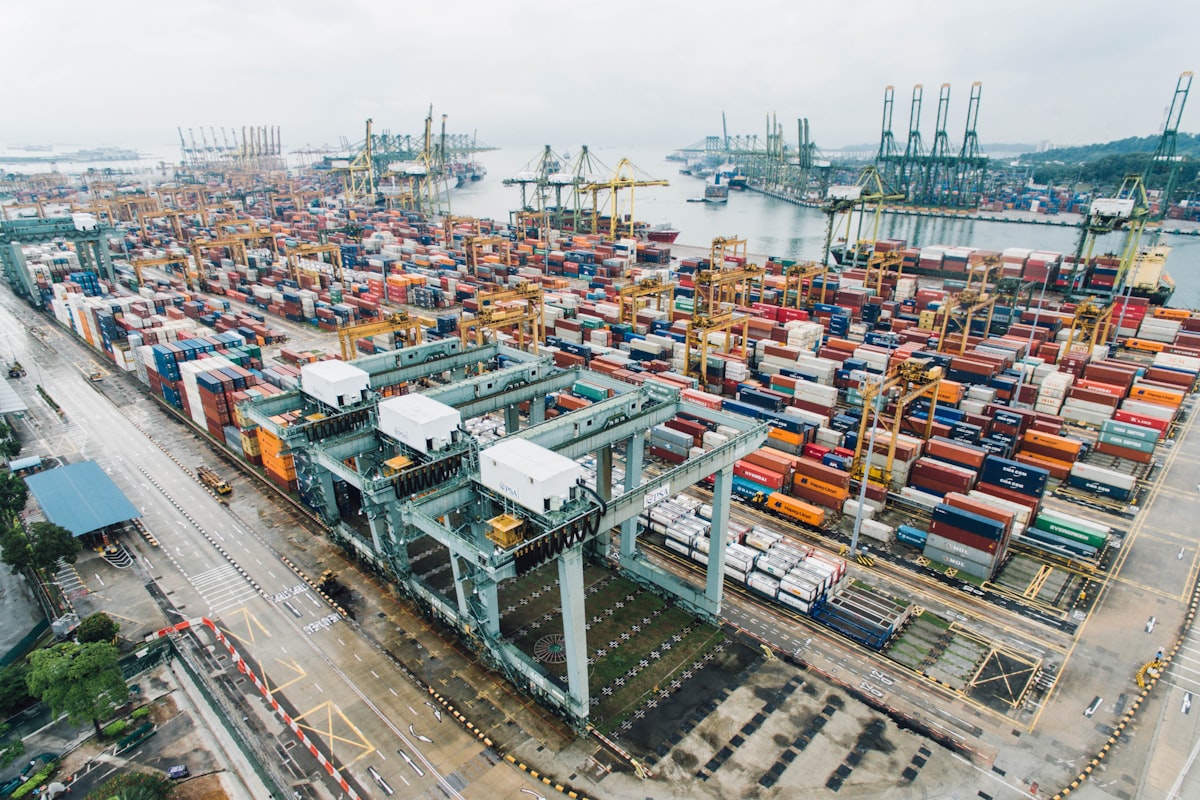
Why Import from Turkey? Near-Shoring for Europe
Turkey is a strategic manufacturing bridge between Europe and Asia with $265 billion in annual exports. Its geographic position offers fast shipping to Europe (3-5 days by truck from Istanbul to Munich) and the Middle East. Manufacturing labor costs $400-700/month, competitive with Eastern Europe. Key sectors: textiles (#6 globally), automotive parts (#14), machinery, steel, and food.
Turkey's speed advantage: Istanbul to Munich takes 3 days by truck vs 28 days by sea from China. This makes Turkey perfect for European near-shoring - faster restocking, less inventory, lower carrying costs. I've had clients who reduced their EU inventory holding costs by 40% just by switching from Chinese to Turkish suppliers. Here's the math: $50,000 inventory at 15% annual carrying cost = $7,500 per year. If you can reduce transit from 30 days to 5 days, you need 25 fewer days of safety stock. On $50,000 of annual sales, that's about $3,400 less tied up in inventory. Plus the lower risk of stockouts during transit. Turkey is not for every product, but for EU-bound goods where speed matters, it's a compelling option. I've seen this play out with dozens of importers — the inventory carrying cost math is what convinces them. When they realize that slower shipping from China costs money sitting in a warehouse, the faster Turkish option starts making financial sense even at a higher unit price. I personally source lighting fixtures from a family-run factory in Istanbul with a minimum order quantity of 100 units per SKU, compared to 500 units from similar Chinese factories. The FOB price is 15% higher than China, but total landed cost to Germany is 8% lower because of freight savings. Lead times: 21 days from order to my door versus 45-60 days from China. That speed advantage means I can introduce new products twice as fast as competitors.
Key Products from Turkey
Turkey's textile industry is legendary — they've been producing fabrics since the Ottoman Empire. I visited Bursa once, the silk production center, and the quality was stunning. Turkish towels and linens are particularly renowned (Denizli region produces some of the world's best). Home textile exports hit $5 billion annually. For automotive, Turkey produces 1.4 million vehicles per year, mostly for European brands. The supply chain for auto components is deep — you can find everything from engine parts to interior trim. The dried fruit sector is dominated by Turkey — they produce 70% of the world's hazelnuts and a huge share of dried figs, apricots, and raisins. One client of mine imports organic dried apricots from Malatya to Germany, pays 0% duty under the Customs Union, and sells them at a 55% margin in organic grocery stores. I've also found Turkish marble and natural stone to be world-class — Turkey is the world's largest marble exporter with over 800 varieties. A client importing travertine tiles had the same quality as Italian marble at 40% less cost. For home goods brands targeting European consumers, Turkish textiles, ceramics, and stone products offer unmatched value.
| Category | Global Rank | Export Value | Key Regions |
|---|---|---|---|
| Textiles & apparel | #6 | $30B | Istanbul, Bursa, Denizli |
| Automotive parts | #14 | $25B | Istanbul, Kocaeli, Bursa |
| Home textiles | #3 (towels, linens) | $5B | Denizli, Bursa |
| Steel & metals | #9 | $12B | Iskenderun, Karabuk |
| Ceramics & tile | #5 | $2B | Kutahya, Istanbul |
| Dried fruits & nuts | #1 (hazelnuts, figs) | $4B | Aydin, Izmir, Malatya |
EU-Turkey Customs Union
Turkey has a Customs Union with the EU since 1995 (modernized 2024). Industrial goods and processed agricultural products move duty-free between Turkey and the EU. Key benefits: for EU importers, Turkish goods enter duty-free - equivalent to intra-EU sourcing. For UK importers, UK-Turkey FTA provides duty-free access on most industrial goods since 2021. For US importers, no FTA (standard MFN 0-12%, no Section 301).
For EU-bound shipments from Turkey: zero customs duties + 3-5 day truck transit + competitive labor costs = total landed cost often 15-30% below China-to-EU for time-sensitive goods. I have a client importing Turkish ceramic tiles to Germany. His total landed cost is $12.50/sqm from Turkey vs $16.80/sqm from China — a 26% savings despite Turkish FOB being 10% higher. The duty savings (0% vs 6%) and freight savings ($800 truck vs $2,800 sea container) more than compensate for the higher unit price. For fast-fashion brands targeting Europe, Turkey is increasingly the default sourcing destination. Zara and H&M have been sourcing from Turkey for years — now smaller brands are following suit. The Customs Union is a game-changer because it removes not just duties but also administrative barriers. No duty deferment programs needed, no quota management, no customs bond requirements. Goods flow across the border with minimal friction. I've had shipments from Istanbul to Frankfurt clear customs in under 2 hours. That speed is impossible when importing from outside the Customs Union.
Shipping from Turkey
Road freight: Istanbul to Munich 3 days, Paris 4 days, London 5 days. Sea freight: Istanbul to New York 14-18 days, to Shanghai 18-22 days, to Dubai 5-7 days. Air freight: Istanbul (IST) to Frankfurt 3 hours, to NYC 10 hours.
Cost: LCL Turkey to EU $5-12/CBM (much cheaper than China at $15-25/CBM). Road Istanbul to Frankfurt $1,200-2,000 full truckload. Express courier to EU capitals: 2-3 days. The road freight option is Turkey's superpower. A truck from Istanbul can reach Vienna in 24 hours, Berlin in 36 hours, London in 72 hours. Compare that to 28 days by sea from China. If your EU customers value fast restocking, road freight from Turkey is unbeatable. The cost per kg for road freight to EU is about $0.30-0.50/kg — very competitive. For US-bound shipments, sea freight from Ambarli or Mersin ports is comparable to Chinese rates. Air freight from Istanbul's new airport (IST) is fast and efficient, with cargo capacity continuing to expand. I've found that for shipments under 500 kg to EU destinations, Turkish forwarders are significantly cheaper than any alternative. A 200 kg shipment from Istanbul to Munich by truck costs around $300, or $1.50/kg. By air from Shanghai to Munich, that same 200 kg would cost $1,200 at $6/kg. The truck option is literally 75% cheaper on a per-kg basis, and delivery time is only 24-36 hours versus 5-10 days, so no appreciable speed difference for time-sensitive goods.

Frequently Asked Questions
Is Turkey cheaper than China for EU imports?
'For EU, Turkey can be 15-30% cheaper in total landed cost given: zero duties (Customs Union), 5-10x faster shipping, lower freight costs, and reduced inventory carrying costs.
What is the EU-Turkey Customs Union?
'Eliminates duties on industrial goods. In effect since 1995, modernized 2024 to cover services and agricultural products.
Do I need a certificate of origin for Turkey to EU?
An A.TR movement certificate is used for administration but no duties apply. For UK, UK-Turkey FTA certificate needed since 2021.
Written by Ace Wang
Founder & Import Operations Specialist | 20 years in cross-border ecommerce
Ace Wang has spent two decades managing import supply chains for small and medium businesses across China, Southeast Asia, and beyond. Everything on LandedCostHub comes from real shipping lanes, real customs paperwork, and real P&L statements — not theory. More about Ace →
Turkey → United States Import Cost
Calculate landed cost for importing from Turkey. View shipping rates, duty rates, and total landed cost estimates.
View route details →Calculate Your Total Landed Cost
Use our free calculator to estimate your total import costs including duties, shipping, and taxes.
Related Guides
Importing from South Korea: Complete Guide for Importers
Complete guide to importing from South Korea. KORUS FTA duty savings, supplier sourcing, shipping routes, and landed cost calculation.
Read More →Importing from China 101: A Complete Guide for First-Time Importers
Everything you need to know about importing from China. Supplier sourcing, shipping, customs, and landed costs explained.
Read More →Importing from Vietnam: Complete Guide for Small Businesses
Learn how to import from Vietnam. Find suppliers, understand shipping routes, calculate landed costs, and navigate customs.
Read More →Popular Routes
Calculate import costs from this country.