Importing to Australia: The Border Math on One 2026 Container
Updated: 2026-10-22
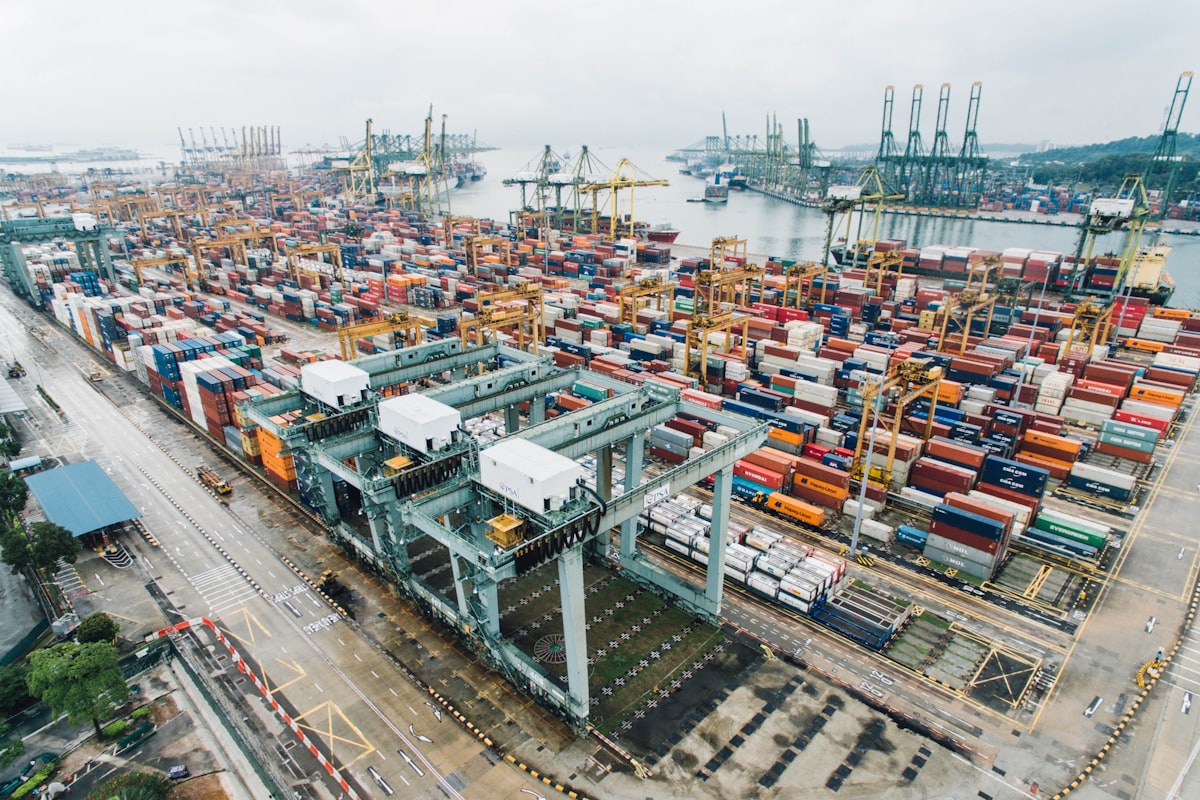
Six Numbers That Decide What One Container Costs
Australia is the last big market where the duty base and the tax base are deliberately different numbers, and almost every landed cost template I get sent has them welded together. Take one real consignment: 640 industrial pumps, HS heading 8413, packed in a single 40 foot high cube, FOB Hamburg at EUR 84,000, ocean freight EUR 3,150, marine insurance EUR 420, shipped in the second week of October 2026. Six numbers decide the whole border bill, and four of them are computed, not quoted.
I have been pricing Australian entries since 2011 and I still write these six lines on paper before I open the broker portal, because the portal will happily accept a wrong customs value and only a human notices that GST came out on the goods value instead of the value of taxable importation. The container above clears with AUD 22,295.05 payable at the border and AUD 15,142.05 of that coming back on the next activity statement. If you are GST registered, the real cost of crossing the border on this shipment is AUD 7,153.00. If you are not, it is AUD 22,295.05, and that gap is the single most expensive thing non-resident sellers get wrong about Australia.
| Line | Amount | Why it exists |
|---|---|---|
| Factory price, FOB Hamburg | EUR 84,000 | Transaction value, the starting point for customs value |
| Customs value | AUD 138,600.00 | FOB converted at the gazetted rate on the day of export |
| Duty at 5 percent | AUD 6,930.00 | Charged on customs value only, never on ocean freight |
| International freight and insurance | AUD 5,890.50 | Excluded from duty, included in GST |
| Value of taxable importation | AUD 151,420.50 | Customs value plus duty plus transport and insurance |
| GST at 10 percent | AUD 15,142.05 | Recoverable on your next BAS if you are registered |
The Duty Base and the GST Base Are Two Different Numbers
The Australian Border Force values imported goods on a FOB basis. The customs value is the price paid for the goods with pre-export inland freight and inland insurance included, packing included, and the cost of getting the box across the water excluded. That is the opposite of the CIF convention most European importers work with every day, and it is written plainly in the ABF fact sheet on valuation: the customs value does not include freight and insurance from the place of export to Australia. Then the tax base is built on top of it. The value of taxable importation is the customs value plus duty plus the amount paid to transport and insure the goods to Australia, plus wine equalisation tax where that applies, and GST is 10 percent of that total. Two bases, one declaration, and the second one is always bigger.
The first Australian entry I ever reviewed was prepared by an accountant who had spent a decade on Dutch imports. She had put freight into the customs value because that is what CIF means in Rotterdam, so duty came out high, and then she had charged GST on the goods value alone because that is what a Dutch VAT return looks like. The two errors ran in opposite directions and very nearly cancelled. On this pump container the FOB rule saves AUD 294.53 of duty against a CIF base, and the GST rule adds AUD 1,282.05 against a goods-only base. Approve both mistakes and the entry still looks roughly right, which is exactly why they survive audits for years.
| Base | What goes in | What stays out | Used for |
|---|---|---|---|
| Customs value | Goods price, pre-export inland freight and insurance, packing, commissions, production assists | Ocean or air freight to Australia, marine insurance, anything after arrival | Ad valorem duty |
| Value of taxable importation | Customs value plus duty plus international transport and insurance plus WET if payable | Inland delivery after the border, broker fees, warehousing | GST at 10 percent |
| Landed cost | Everything above plus processing charges, biosecurity charge, treatment, drayage | GST you can claim back, duty you cannot | Pricing and margin |
The AUD 1,000 Line Is Not a Loophole
For most goods with a value of AUD 1,000 or less there are no duties, taxes or charges to pay, and that sentence comes straight from the ABF's own declaration guidance. Tobacco, tobacco products and alcoholic beverages are the standing exceptions and pay regardless of value. Above AUD 1,000 every relevant duty, tax and charge applies including the import processing charge. The paperwork changes with the threshold too: air or sea cargo at or below AUD 1,000 is cleared on a Self Assessed Clearance declaration lodged in the Integrated Cargo System, while anything above it needs an Import Declaration, form N10, unless a permit requirement pushes even a small consignment onto a long format SAC. Mail and carnet shipments cannot use a SAC at all.
What catches people is the word consignment. Three cartons that leave one supplier on one vessel for one buyer are one consignment, and a broker will value them together even if the invoices were split to keep each one under a thousand dollars. I watched a Melbourne reseller learn this with three separate invoices of AUD 940 each for the same pallet of coffee equipment, all arriving on the same bill of lading. The entry went in at AUD 2,820, the processing charge appeared, and the exercise saved nothing at all. Compare that with the European Union, where the small parcel line is EUR 150 and, since 1 July 2026, distance sales below it carry a flat customs duty of EUR 3 per item line rather than being genuinely free. Australia's thousand dollars is a real relief by comparison, but only if the consignment genuinely is small.
- Value the consignment, not the invoice, and count every carton on the same bill of lading together.
- Check for a permit requirement first, because a permit forces an N10 or a long format SAC no matter how low the value is.
- Remember that alcohol and tobacco pay duty and tax at any value, including a single bottle in a courier box.
- Keep the entry and the commercial documents for five years after the goods enter home consumption.
The Charges That Arrive Before Your Duty Does
Duty gets all the attention and the fixed charges quietly decide whether a small shipment is worth doing. The import processing charge is levied on the declaration itself, and the rate depends on how you lodge and what the consignment is worth: AUD 50 electronic between AUD 1,000 and AUD 10,000, AUD 152 electronic at AUD 10,000 and above, AUD 90 and AUD 192 if you lodge on paper. There is a separate biosecurity cost recovery charge collected by the ABF for the Department of Agriculture, Fisheries and Forestry on every full import declaration, and it went up on 1 July 2026 from AUD 46 to AUD 48 for air and from AUD 68 to AUD 71 for sea, confirmed in Australian Customs Notice 2026/23 published on 29 June 2026. Warehouse declarations are charged separately at AUD 23 electronic.
On the pump container the processing charge and the biosecurity charge add AUD 223.00 to a bill that a quote sheet usually describes as duty plus GST. On a AUD 2,000 sample order they add AUD 121.00 against AUD 100 of duty at 5 percent, which means the fixed charges are larger than the tariff. That is the arithmetic nobody puts in a landing cost template, and it is the reason I tell first-time importers to consolidate rather than send three small shipments and pay three times.
| Declaration | Consignment value | Charge in AUD |
|---|---|---|
| Import Declaration N10, electronic | Over AUD 1,000 and under AUD 10,000 | 50.00 |
| Import Declaration N10, electronic | AUD 10,000 and over | 152.00 |
| Import Declaration N10, documentary | Over AUD 1,000 and under AUD 10,000 | 90.00 |
| Import Declaration N10, documentary | AUD 10,000 and over | 192.00 |
The Container That Cannot Be Opened
October is the middle of the brown marmorated stink bug season, which runs from 1 September to 30 April inclusive, and the trigger is not the arrival date but the shipped on board date on the ocean bill of lading. Gate in dates and container tracking are not accepted as evidence. Goods that fall in the target high risk chapters, which include 84 for machinery and 73 for steel articles, and that were manufactured in or shipped from a target risk country, must be treated. Germany is on that list, so are the Netherlands, Italy, France, Spain, Poland, Switzerland, Turkey and the United States. China, Japan and Korea appear as target risk for heightened vessel surveillance only, and the United Kingdom, China, Japan and Korea are treated as emerging risk with random onshore inspection, including chapters 39, 94 and 95.
My pump container is a sealed six sided FCL box, so it can be treated offshore before departure or onshore at the container level after arrival. What it cannot do is get devoured piece by piece first. Deconsolidation before treatment is refused, and if the goods were shipped as break bulk, on a flat rack or in an open top, offshore treatment is the only option and untreated cargo is denied discharge or directed for export. That last rule is the one that ends businesses, because a container sent back is not a delay, it is a total loss of the season. The department's 5 August 2026 update added an onshore ethyl formate option, removed the rolled goods policy and removed the safeguarding scheme, so anyone working from last season's notes is working from a different rulebook.
| How it arrives | What is allowed | What happens if you get it wrong |
|---|---|---|
| FCL in a sealed six sided container | Offshore treatment, or onshore at container level | Container directed for treatment, deconsolidation refused |
| LCL or freight of all kinds | Managed at container level before deconsolidation | Your pallets wait for every other shipper in the box |
| Break bulk, flat rack, open top | Offshore treatment only, no onshore option | Denied discharge or directed for export |
| Airfreight from the United States or China | Random inspection, no treatment required | Delay only |
The Free Column Your Broker Checks and You Do Not
Australia's tariff has a general rate and then a free column for originating goods from countries with an agreement, and the exceptions to that free column are published as separate schedules rather than hidden in the rate table. Schedule 1 lists the countries whose goods can get a preferential rate, and schedules 4A through 16 then list, for each agreement, the classifications that are still not free: Singapore, the United States, Thailand, Peru, Chile, ASEAN and New Zealand, the CPTPP parties, Malaysia, Indonesia, Korea, India, Japan, China, Hong Kong, RCEP, the United Kingdom and the UAE each have their own schedule. That structure is genuinely useful, because it means the question is never what is the rate, it is whether my goods are on the exception list for my origin.
This is where the German pump container gets uncomfortable. The European Union has no free trade agreement with Australia in force. Negotiations concluded on 24 March 2026 and the European Commission still describes the agreement as being adopted or ratified, which means a German machine shipped today pays the general rate. The trade is not small: goods trade between the EU and Australia came to EUR 47.1 billion in 2025, with an EU surplus of EUR 26.7 billion, and the EU is Australia's second largest trading partner after China at 13.9 percent of its trade while Australia is only the EU's 22nd at 0.9 percent. When that agreement enters into force, this container's AUD 6,930 of duty becomes zero on the day it applies. Until then, anyone quoting you a German landed cost at zero duty is quoting a future that has not arrived, and preferential treatment does not refund entries made before the agreement applies.
| Origin | Instrument | Where the exceptions are published |
|---|---|---|
| China | ChAFTA | Schedule 12 |
| United States | AUSFTA | Schedule 5 |
| Japan | JAEPA | Schedule 11 |
| Korea | KAFTA | Schedule 10 |
| United Kingdom | Australia-UK FTA | Schedule 15 |
| European Union | Concluded 24 March 2026, not in force | General rate applies today |
What the Border Actually Costs on This Container
Add the lines up and the shape of an Australian entry becomes obvious. Duty is small, GST is large, the fixed charges are noise on a container and material on a pallet, and treatment sits outside the tariff entirely because it is bought from a private provider approved under the AusTreat scheme. The numbers below are the ones I would put in front of a finance director, with GST separated because it is cash flow rather than cost for a registered importer.
The figure I care about is the dead cost, AUD 7,153.00, which is 5.16 percent of the customs value and 4.29 percent of the total landed cost of AUD 166,785.55. Compare that with the same goods going into the European Union, where a low single digit conventional rate plus import VAT of around a fifth on a CIF base produces a much larger cash requirement at the border even when the duty line is smaller. Australia is cheap to clear and expensive to get wrong, because the GST base is where the money is and the GST base is the number people guess.
| Item | AUD |
|---|---|
| Duty at 5 percent of customs value | 6,930.00 |
| Import processing charge, electronic, sea | 152.00 |
| Biosecurity cost recovery charge, sea | 71.00 |
| GST at 10 percent of taxable importation | 15,142.05 |
| Total payable at the border | 22,295.05 |
| Of which recoverable GST | 15,142.05 |
| Dead cost of crossing the border | 7,153.00 |
| Total landed cost including goods and freight | 166,785.55 |
Four Mistakes I See Every Season
- Charging GST on the goods value instead of the value of taxable importation, which understates the bill by AUD 1,282.05 on this container and by a lot more on a full year of them.
- Treating the gate in date as the shipped on board date, which turns an August booking into a September shipment and a mandatory fumigation you did not budget for.
- Booking break bulk or an open top container for target high risk goods in October, where untreated cargo is denied discharge rather than treated on arrival.
- Assuming the forwarder's door to door quote covers biosecurity, when the full import declaration charge and any treatment are separate items that appear on the broker's invoice after arrival.
What I Would Do Before the Next Container Leaves
None of this is complicated once the sequence is fixed. The work happens before the vessel sails, not at the port, and every item below costs nothing except attention.
- Get the tariff classification in writing and confirm the general rate for that line in the Working Tariff, because plenty of chapters sit at zero and plenty sit at 5 percent.
- Ask the supplier for the shipped on board date on the bill of lading before you book, then check whether the goods and the origin country are in season for stink bug measures.
- Decide offshore or onshore treatment at booking, not on arrival, and make sure the container can be treated sealed.
- Confirm in writing whether your forwarder is lodging as your representative and who is named as importer of record.
- Build the landed cost on customs value for duty and on taxable importation for GST, then add the processing charge and the biosecurity charge as fixed lines.
- If your origin has an agreement, check the exception schedule for your classification rather than assuming the free column applies.
My Take
Australia rewards importers who treat the border as a calculation and punishes the ones who treat it as a formality. The country's duty rates are low, its free trade coverage is wide, and its threshold is generous by world standards. What it will not forgive is a wrong base. Get the FOB customs value right, build GST on the value of taxable importation, add the two fixed charges, and check the stink bug calendar before you book, and an Australian entry is one of the more predictable clearances in the world. Skip any of those and a low tariff schedule will still produce an expensive surprise.
Frequently Asked Questions
How much import duty will I pay on machinery into Australia?
Duty depends on the tariff line, not the product name. Most manufactured lines sit at zero or 5 percent, and the 5 percent general rate on this container's AUD 138,600 customs value came to AUD 6,930. Confirm the rate for your own classification in the Working Tariff, then check whether your origin qualifies for the free column and whether your line appears in that origin's exception schedule.
Is GST charged on the freight as well as the goods?
Yes. GST is 10 percent of the value of taxable importation, which is the customs value plus duty plus the amount paid to transport and insure the goods to Australia, plus wine equalisation tax where it applies. On this container that base was AUD 151,420.50 rather than the AUD 138,600 customs value, so GST was AUD 15,142.05. A registered importer claims it back on the next activity statement.
Do I need a customs broker in Australia?
No, you can lodge an Import Declaration yourself, but you need access to the Integrated Cargo System and you carry the liability for classification and valuation. The ABF recommends a licensed broker for first time or infrequent importers. What you cannot delegate is the customs value, because the broker declares what you tell them and penalties for incorrect values fall on the owner of the goods.
Is there an Australia-EU free trade agreement yet?
Not in force. Negotiations concluded on 24 March 2026 and the agreement is still being adopted or ratified, so goods of EU origin pay the general rate today. Do not build a landed cost on a zero duty assumption for a 2026 or early 2027 shipment, and do not expect a refund when the agreement starts applying, because preferential treatment generally runs from the date it applies and not backwards.
My goods are in chapter 84 and I ship in November. Will they be fumigated?
Probably, if they were manufactured in or shipped from a target risk country and the shipped on board date on the bill of lading falls between 1 September and 30 April. Chapter 84 is target high risk, so treatment is mandatory, either offshore before departure or onshore at container level before deconsolidation. Germany, the Netherlands, Italy, France, Spain, Poland, Switzerland, Turkey and the United States are all on the target risk list this season.
Written by Ace Wang
Founder & Import Operations Specialist
Ace Wang has spent 20 years in cross-border ecommerce operations, managing import supply chains for small and medium businesses. From the early days of Alibaba sourcing to modern multi-country logistics strategies, Ace has helped hundreds of entrepreneurs navigate customs clearance, shipping optimization, and landed cost management. The LandedCostHub calculator and all content on this site are built on real-world experience — not textbook theory. Ace believes that transparent, accurate cost data is every importer's right, not a professional service luxury. More about Ace Wang →
Calculate Your Total Landed Cost
Use our free calculator to estimate your total import costs including duties, shipping, and taxes.
Related Guides
Importing from South Korea: Complete Guide for Importers
Complete guide to importing from South Korea. KORUS FTA duty savings, supplier sourcing, shipping routes, and landed cost calculation.
Read More →Importing from China 101: A Complete Guide for First-Time Importers
Everything you need to know about importing from China. Supplier sourcing, shipping, customs, and landed costs explained.
Read More →Importing from Vietnam: Complete Guide for Small Businesses
Learn how to import from Vietnam. Find suppliers, understand shipping routes, calculate landed costs, and navigate customs.
Read More →