Importing to Japan in 2026: Duty, 10% Consumption Tax and the JPY 10,000 Rule
Updated: 2026-09-12
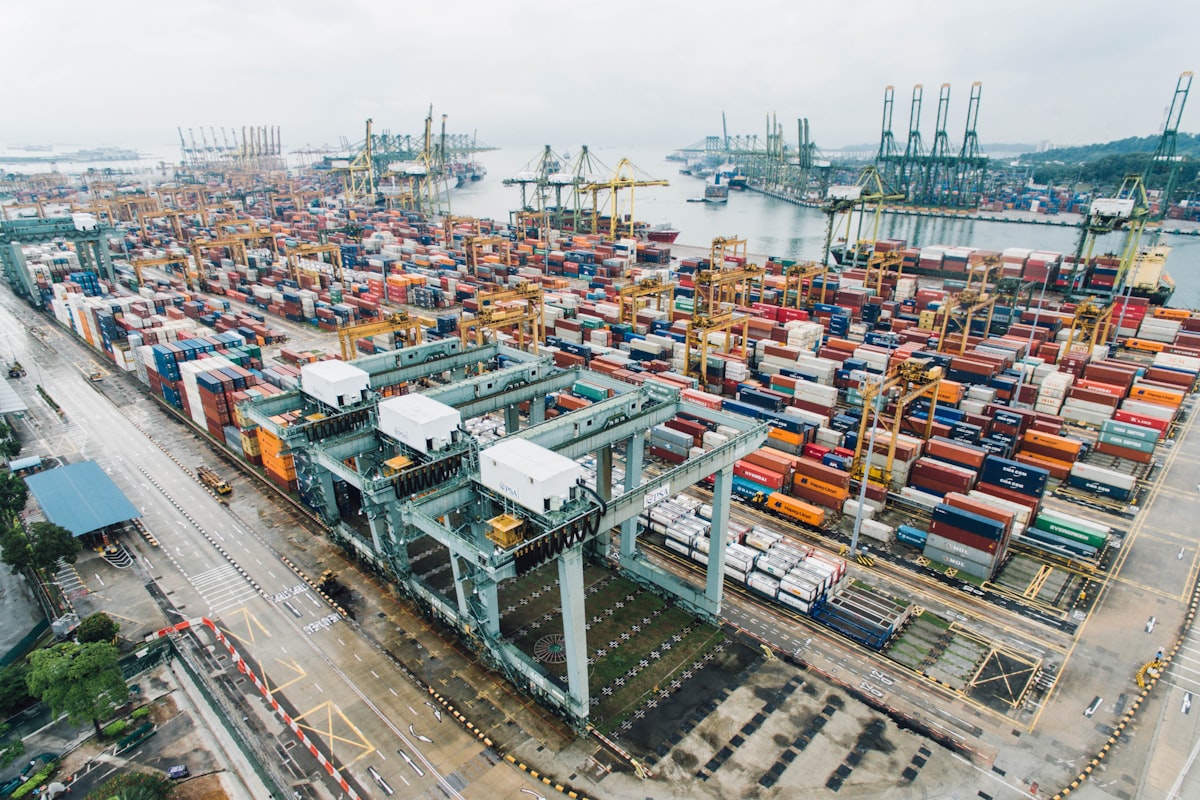
What You Actually Pay When the Container Clears: Duty Plus Consumption Tax
Japan does not tax an import once. Goods imported into Japan are subject to customs duty and consumption tax, and Japan Customs is explicit that the two stack: the consumption tax is charged on top of the duty, not instead of it. Some goods carry internal taxes as well, most obviously liquor tax and tobacco tax, and those sit on top of both. The duty side is friendlier than most first-time importers expect. Japan Customs puts the average applied rate across all goods at 1.8%, with fish and fish products at 4.6%, wood, pulp, paper and furniture at 1.7%, and agricultural products the clear outlier at 10.1%. The applied rate is never the headline General Rate if something better exists: the law applies the lowest of the WTO bound rate, the temporary rate, an EPA rate or a GSP preferential rate. That is why a car enters Japan at 0% and a pair of leather-upper shoes at up to 30%. The consumption tax side is the one that decides your budget. The standard rate is 10%, split into a 7.8% national consumption tax and a 2.2% local consumption tax, and a reduced 8% rate applies to food and beverages, excluding alcohol and restaurant meals. The base is not the goods value alone. It is the customs value plus the duty.
I have been pricing shipments into Yokohama, Kobe and Narita since 2019, and the same mistake shows up on almost every first Japan quote: the importer budgets the duty and forgets that the consumption tax compounds on it. On a JPY 6.7 million footwear consignment I rebuilt for a client, the duty came to JPY 3.87 million and the consumption tax to JPY 1.06 million, because the tax was charged on goods, freight, insurance and duty together. The second thing nobody tells first-time importers is that Japan values imports on a CIF basis. Under the Customs Tariff Law the customs value is the price paid plus the cost of transport and insurance to the port of importation, so your freight is dutiable. Add JPY 3.2 million of air freight to a consignment of 20% fur coats and you have quietly added JPY 640,000 of duty as well. One live question is worth watching: Prime Minister Sanae Takaichi campaigned in the February 2026 general election on a two-year suspension of the consumption tax. As of September 2026 no legislation has taken effect, so every figure in this guide uses the current 10% standard rate.
The JPY 10,000 Rule, and the Five Items It Refuses to Cover
Japan's small-consignment exemption is the cleanest in the world on paper. Per Japan Customs, goods whose total customs value is JPY 10,000 or less are exempt from both customs duty and consumption tax. The counting rules are strict, and they are the reason people lose the exemption without realising it. The JPY 10,000 is measured per declaration, not per item. Where one invoice is split across several declarations, the customs values of all the articles on that invoice are added together. For parcel post it is the total of everything in one package. And where a shipment is divided and sent from one fixed sender to one fixed receiver at the same time, all of the parcels are added up before the test is applied. Two exceptions matter more than the rule itself. Domestic excises are never exempt, so liquor tax and tobacco tax are payable even when the goods are under JPY 10,000. And the exemption simply does not apply to a designated list of goods, however small the order or the parcel is.
A client of mine tried to keep an order of knitted sweaters under the threshold by asking his supplier to ship it as four small parcels on the same day. The parcels left Guangzhou together, landed at Narita together and were assessed together, because they came from one sender to one receiver at the same time and the values were aggregated. The whole order was taxed, and the broker charged four separate handling fees instead of one. If you genuinely want to use the JPY 10,000 rule, ship one parcel, space the shipments out, and check the goods against the exclusion list first. And if the parcel is a gift for private use, the same JPY 10,000 ceiling can still save you on an otherwise excluded item such as a leather bag, provided Customs accepts that it really is a personal gift.
| Item | Status under the JPY 10,000 exemption |
|---|---|
| Leather bags and handbags | Not exempt: duty and consumption tax apply at any value |
| Gloves | Not exempt, including leather gloves |
| Knitted apparel, such as T-shirts and sweaters | Not exempt, even on a parcel worth JPY 8,000 |
| Ski boots | Not exempt |
| Leather shoes and footwear with leather soles | Not exempt: the specific footwear duty bites immediately |
| Books, printed matter, cameras and most electronics | Exempt up to a total customs value of JPY 10,000 |
Under JPY 200,000 There Is a Simplified Tariff Almost Nobody Uses
Between the JPY 10,000 exemption and a full commercial entry there is a middle lane that most small importers never hear about. For general import freight and international parcel post with a total customs value of JPY 200,000 or less, Japan Customs applies a simplified tariff instead of the full schedule. Rather than hunting through thousands of tariff lines, you look up one of six categories plus alcohol, and the rate for the whole consignment follows from that lookup. The simplified rates are broad-brush and they cut both ways. Chemical products, plastics, base metals, furniture and toys sit in the 3% bracket. Salt, ceramics, iron and steel, and paper sit at zero. Meat, fish, dairy, vegetables, fruit, prepared foods and apparel sit at 10%, while coffee and tea land at 15% and fur apparel and ice cream at 20%. Everything not listed falls into a residual 5% category. Alcohol is charged per litre rather than ad valorem.
The catch is that the simplified tariff is not always cheaper, and you are allowed to refuse it. A cotton T-shirt sits at 10% under the simplified tariff, while the general schedule for apparel in chapters 61 and 62 runs from about 7.4% to 12.8% depending on the line, so on some garments the full schedule wins. Japan Customs lets an importer elect the general tariff for the entire consignment, which means it is worth costing both before you file. Three limits are worth knowing as well: the simplified tariff does not include domestic or local excises, it does not apply to duty-free or duty-exempt goods, and it is closed for the goods Japan wants to protect, including leather products, knitted clothing, footwear and refined salt. If your consignment is footwear, the simplified lane is shut and the general rate applies from the first yen.
| Simplified category | Typical goods | Rate |
|---|---|---|
| Alcohol | Wine | JPY 70 per litre |
| Alcohol | Distilled spirits such as shochu | JPY 20 per litre |
| Alcohol | Sake, wine coolers and cider | JPY 30 per litre |
| 20% | Fur apparel, tomato sauces, ice cream and ice candy | 20% |
| 15% | Coffee, tea excluding black tea, gelatin and glue | 15% |
| 10% | Meat, fish, dairy, vegetables, fruit, prepared foods, apparel, knitted fabrics | 10% |
| 5% | The residual category for anything not listed elsewhere | 5% |
| 3% | Chemicals, plastics, base metals, furniture, toys, sporting goods | 3% |
| Zero | Salt, ceramics, iron and steel, paper, rubber | Free |
April 2026 Duty Rates: The Table I Open First
Japan Customs publishes a list of duty rates for the products importers ask about most, and the version in force is dated 1 April 2026. I keep it on a second screen, because the shape of the Japanese tariff is not intuitive. Industrial goods and consumer electronics are largely free, leather and food are not, and footwear is the most aggressively protected consumer line on the list. The table below is the short version I start from.
Read that table the way an importer should and one line jumps out: footwear. Japan charges either 30% of the customs value or JPY 4,300 a pair, whichever is higher, which means the duty bites hardest exactly where the goods are cheapest. A JPY 7,000 pair of leather shoes pays roughly 61% of its own value in duty before a single yen of consumption tax. Compare that with a car, a laptop, a wristwatch or a doll, all of which enter free. If you are planning a footwear programme into Japan and you have not costed a Japanese trade agreement, you have not costed the programme. This is also the table to keep beside a broker's invoice: if a broker quotes you duty on a laptop, ask why.
| Product | Chapter | Duty rate into Japan |
|---|---|---|
| Fur coats | 43 | 20% |
| Fabric coats, jackets, trousers and skirts | 61, 62 | 8.4% to 12.8% |
| Shirts and vests | 61, 62 | 7.4% to 10.9% |
| Leather handbags | 42 | 8% to 16% |
| Watches and clocks | 91 | Free |
| Personal computers | 84 | Free |
| Digital cameras and video recorders | 85 | Free |
| Toys, including dolls | 95 | Free |
| Cars and motorcycles | 87 | Free |
| Leather-upper footwear | 64 | 30%, or JPY 4,300 a pair, whichever is higher |
| Furniture and seats | 94 | Free |
| Carpets | 57 | 6.3% to 8.4% |
| Cheese | 4 | 22.4% to 40% |
| Wine | 22 | JPY 45 to JPY 182 per litre |
| Chocolate | 18 | 10% |
| Tobacco | 24 | Free to 29.8% |
Who Is the Importer of Record, and Why the Broker Is Not Optional
Japan Customs is unambiguous about who owes the money. Duty is paid by the person who imports the goods, and in an import transaction that person is, in principle, the consignee named on the invoice or the bill of lading. If goods of foreign origin are resold before the import declaration is filed, the end buyer becomes the importer. Being named on an invoice is not by itself enough to make someone the importer if they are not a party to the transaction. That matters because there is no Japanese equivalent of an EU EORI number that a seller outside Japan can hold from abroad. Japan Customs also makes the point, in its own valuation guidance, that the primary transaction-value method presupposes a buyer with a domicile, residence or place of business in Japan. In practice a seller outside Japan either uses a Japanese entity or works through a licensed customs broker, who lodges the declaration as the importer's proxy. More than 90% of Japan's import procedures are computerised, and the filing runs through NACCS, the Nippon Automated Cargo and Port Consolidated System.
The paperwork is not exotic, and that is exactly why it gets underestimated. The import declaration, form C-5020, is filed in triplicate with the commercial invoice, the bill of lading or air waybill and the packing list. Add a certificate of origin wherever you are claiming a WTO or preferential rate, and freight and insurance statements whenever the value has to be rebuilt. The documents are not the real cost, though. I have never seen a broker's fee break a Japanese import; I have seen a wrongly classified garment do it, because the goods were declared on a line with a much higher rate and nobody went back to fix it. When I check a Japanese entry for a client, I look at the tariff line first, the origin claim second, and the broker's invoice a distant third.
Node by Node: From the Bonded Area to the Import Permit
This is the part that decides your cash flow, so it is worth walking in order rather than reading as a list of documents. A Japanese import clears through seven nodes, and every one of them has a time cost and a failure mode. Node one is arrival into a Hozei area, a licensed bonded zone, because goods generally cannot be declared until they are inside one. Node two is pre-arrival examination, where the declaration is filed before the vessel or aircraft lands; it is the single biggest time saver available and Japan Customs runs it as a formal system. Node three is the declaration itself, lodged by the importer or their broker through NACCS with quantity, value and classification. Node four is examination, documentary and sometimes physical. Node five is assessment, where duty and consumption tax are computed on the customs value using ad valorem, specific or mixed rates. Node six is payment. Node seven is the import permit, which is the document that releases the cargo from the bonded area and the only one your trucking company will accept.
The order matters because the cheap nodes are the early ones. Pre-arrival examination is free at most brokers and it can take two days off a sea import. Getting the tariff line right at node three is free and it prevents the reassessment at node five. What is not cheap is node four: a physical examination at Yokohama or Kobe puts the container into storage, and storage plus demurrage on a 40-foot box runs from a few thousand yen a day into tens of thousands if it drags toward a week. On the footwear consignment in the next section, node four alone would have decided whether the landed cost was one the buyer could live with.
| Node | Typical time | What it costs | What goes wrong |
|---|---|---|---|
| 1. Arrival into a Hozei bonded area | 0 to 1 day | Terminal handling, often JPY 15,000 to JPY 45,000 per LCL consignment | Cargo sits on the quay because no broker was appointed in advance |
| 2. Pre-arrival examination | Filed before arrival | No separate fee at most brokers | Skipped, so clearance starts only after the vessel berths |
| 3. Import declaration through NACCS | Same day to 1 day | JPY 12,000 to JPY 35,000 broker fee for a standard entry | The wrong tariff line, which resets the entire assessment |
| 4. Customs examination | Hours, or 1 to 3 days if physical | Storage and demurrage while the container is held | An invoice value that cannot be reconciled to the bank transfer |
| 5. Assessment of duty and consumption tax | Hours | Duty plus 10% consumption tax on customs value plus duty | Freight and insurance left out of the customs value, then reassessed |
| 6. Payment | Same day | The tax bill itself | A cash-flow shock on a CIF-plus-duty base |
| 7. Import permit and release | Same day | Inland transport from the port | Delivery booked before the permit, then re-booked |
Where the 0% Rates Come From: EPAs, RCEP and the Origin Trap
Japan runs one of the densest networks of trade agreements in Asia, and the applied duty rate is built to fall to the lowest available option. When an EPA rate, a WTO bound rate or a GSP preferential rate is lower than the general or temporary rate, the lower rate applies. The Japan-EU Economic Partnership Agreement, in force since 1 February 2019, is the EU's largest bilateral free trade agreement and covers roughly 30% of world GDP and 40% of global trade. Japan also has agreements with the United Kingdom, Vietnam, Thailand and India, is a member of RCEP alongside China, Korea, ASEAN, Australia and New Zealand, belongs to the CPTPP, and has a limited trade agreement with the United States. Separately, the GSP scheme gives preferential rates to designated developing countries. None of it is automatic. A preferential rate is claimed at declaration and has to be supported: a certificate of origin, or an exporter's statement of origin on the EPA routes, together with whatever supporting records the scheme requires.
This is where a Japanese import quietly gets expensive. In 2023 I priced two identical consignments of Italian leather goods for one client, same supplier, same tariff line, three weeks apart. The first arrived with a clean origin declaration and cleared at the preferential rate. The second was shipped by a forwarder who consolidated it with goods from a third country, and the certificate never caught up with the cargo. It cleared at the general rate, and the difference on that single entry was larger than the client's entire year of broker fees. The lesson I now give every client is blunter than it sounds: if the goods qualify for an EPA rate, the origin paper is not documentation, it is the product. Treat a missing certificate as a 10% price increase and you will never forget it.
Three Shipments, Three Ledgers: What Japan Charges in Practice
Here is the same arithmetic run on three shipment profiles, using the rates Japan Customs published in April 2026. Every line follows from three inputs: the customs value, the applicable rate, and the fact that consumption tax is charged at 10% on the customs value plus the duty. The third column is the number most people never model, and it is the one that decides whether the order was worth placing.
Two of those three rows have a second version worth pricing. The Italian handbags carry a Japan-EU EPA preferential rate, and if the exporter's statement of origin is in order and the line has been staged to zero, the duty collapses to JPY 0, the consumption tax falls to JPY 128,000 on the JPY 1,280,000 customs value, and the landed cost drops by JPY 168,960 on a single order. The Vietnamese footwear has EPA and RCEP routes of its own, which is the only realistic way to move a JPY 3.87 million duty line. Read the three rows together and the Japanese tariff stops looking average. The parcel paid 15.5% on top of its customs value. The handbags paid 23% at the general rate and 10% with a working origin claim. The footwear paid 73%. That is the verdict I would put in front of anyone planning a Japan import: settle the tariff line and the origin paper before you talk to a forwarder, because in Japan the duty is frequently larger than the freight by an order of magnitude, and the consumption tax is charged on all of it.
| Shipment and customs value | Duty | Consumption tax at 10% | Total tax |
|---|---|---|---|
| Private parcel from Portugal, ceramics and books. Goods JPY 84,000 plus postage JPY 8,000, so customs value JPY 92,000 at the simplified 5% residual rate | JPY 4,600 | JPY 9,660 on customs value plus duty of JPY 96,600 | JPY 14,260, or 15.5% on top of the customs value |
| Small business, leather handbags from Italy by LCL. Goods JPY 1,180,000, freight JPY 96,000, insurance JPY 4,000, so customs value JPY 1,280,000. General rate 12% | JPY 153,600 | JPY 143,360 on customs value plus duty of JPY 1,433,600 | JPY 296,960, or 23% on top of the customs value |
| Importer, 900 pairs of leather-upper footwear from Vietnam in an FCL box. Goods JPY 6,400,000, freight JPY 320,000, insurance JPY 12,000, so customs value JPY 6,732,000. Specific rate JPY 4,300 a pair, against 30% of customs value, so the higher applies | JPY 3,870,000 | JPY 1,060,200 on customs value plus duty of JPY 10,602,000 | JPY 4,930,200, or 73% on top of the customs value |

Frequently Asked Questions
Do I pay any tax on a parcel into Japan worth under JPY 10,000?
No customs duty and no consumption tax, provided the total customs value of the declaration, the parcel, or the split shipment stays at or under JPY 10,000 and the goods are not on Japan's exclusion list. Liquor tax and tobacco tax are never exempt. Leather bags, gloves, knitted apparel such as T-shirts and sweaters, ski boots, and leather-soled or leather-upper footwear stay taxable at any value.
Is Japan's consumption tax 10% or 8% on imported goods?
The standard rate is 10%, made up of 7.8% national consumption tax and 2.2% local consumption tax. A reduced 8% rate applies to food and beverages, excluding alcohol and restaurant meals, and to certain newspapers. On imports the tax is charged on the customs value plus the duty, so the duty itself is taxed.
Can a foreign company be the importer of record in Japan?
There is no Japanese equivalent of an EU EORI number that a seller outside Japan can hold. Duty is owed by the importer, which in an import transaction is normally the consignee on the invoice or bill of lading, and Japan's own valuation guidance assumes a buyer with a place of business in Japan for the primary transaction-value method. In practice overseas sellers either use a Japanese entity or appoint a licensed customs broker who files through NACCS as their proxy.
Does the Japan-EU EPA mean zero duty on everything from Europe?
No. It means a preferential rate applies where the line is covered and has been staged down, and only when the origin requirement is met with a certificate or an exporter's statement of origin. Goods that do not qualify by origin, or arrive without the paper, are assessed at the general or WTO rate. The EPA is broad, but it is a schedule with staging, not a blanket exemption.
What documents does Japan Customs want when my goods arrive?
The import declaration, form C-5020, filed in triplicate, with the commercial invoice, the bill of lading or air waybill and the packing list. Add a certificate of origin if you are claiming a WTO or preferential rate, and freight and insurance statements if the customs value has to be rebuilt. Licences and certificates required by other laws, for food, pharmaceuticals or electrical goods for example, have to be in the file too.
Written by Ace Wang
Founder & Import Operations Specialist
Ace Wang has spent 20 years in cross-border ecommerce operations, managing import supply chains for small and medium businesses. From the early days of Alibaba sourcing to modern multi-country logistics strategies, Ace has helped hundreds of entrepreneurs navigate customs clearance, shipping optimization, and landed cost management. The LandedCostHub calculator and all content on this site are built on real-world experience — not textbook theory. Ace believes that transparent, accurate cost data is every importer's right, not a professional service luxury. More about Ace Wang →
Calculate Your Total Landed Cost
Use our free calculator to estimate your total import costs including duties, shipping, and taxes.
Related Guides
De Minimis Threshold Guide: Import Duty-Free Limits by Country
Complete guide to de minimis thresholds worldwide. Learn how to legally reduce landed costs by staying under duty-free limits.
Read More →Amazon FBA Import Costs: Complete Guide for Sellers
Calculate your total landed costs for Amazon FBA imports. Understand duty, shipping, storage, and FBA fee structures.
Read More →US Customs Duty Rates: Complete Guide for Importers
Comprehensive guide to US customs duty rates. Learn how duties are calculated, find your HTS code, and discover duty reduction strategies.
Read More →