Mexico to Germany Container Costs 2026: Veracruz or Manzanillo
Updated: 2026-09-23
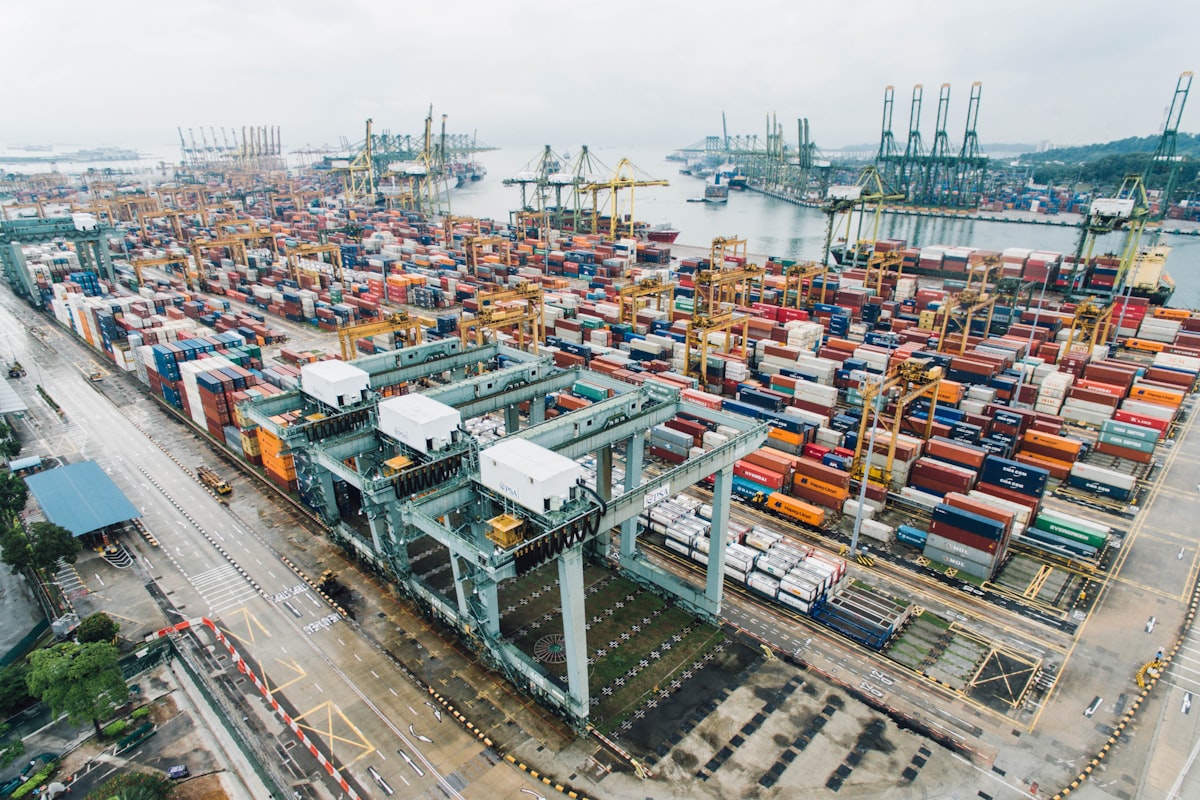
What a Germany-bound container out of Mexico costs in September 2026
Two numbers frame this lane. The first is our own tracked range for Veracruz or Altamira to Hamburg: USD 1,700-2,550 for a 20ft, USD 2,300-3,450 for a 40ft, USD 100-155 per cubic metre for LCL and USD 3.90-5.80 per kilo by air, with 18-25 days of sea transit and one to two working days of German clearance. The second is the market behind those numbers. Drewry put the global average for a 40ft at USD 4,500 on 17 September 2026, Freightos had its index at USD 3,407.40 a day later, and spot pricing on an ad hoc basis was running roughly 135% above September 2025 because carriers were pushing volume out before China's Golden Week. A Mexico-Germany box is not a China-Germany box, but it competes for the same vessels, the same empty containers and the same North European port slots.
I price this lane every month for two clients, and the quote-to-invoice gap is where the arguments start. One aggregator published USD 450-1,850 for a 20ft Mexico-Germany this year. I have never paid USD 450 on this route, and neither has anyone I know. That number is a port-to-port base rate: no origin handling, no terminal handling on either side, no documentation fee, no drayage to the plant. Our ranges sit higher because they describe a bookable door-to-door reality rather than the cheapest line in a comparison table. When you compare forwarders on this lane, make them quote the same eleven cost lines, or you are not comparing anything.
| Item | Working range | Source and date |
|---|---|---|
| 20ft FCL, Veracruz or Altamira to Hamburg | USD 1,700-2,550 | Our Mexico-Germany route tracker, September 2026 |
| 40ft FCL, same lane | USD 2,300-3,450 | Same tracker, September 2026 |
| LCL | USD 100-155 per CBM | Same tracker, September 2026 |
| Air freight | USD 3.90-5.80 per kg | Same tracker, September 2026 |
| Sea transit, port to port | 18-25 days | Same tracker, September 2026 |
| German import clearance | 1-2 working days | Same tracker, September 2026 |
| Global average, 40ft | USD 4,500 | Drewry World Container Index, 17 Sep 2026 |
| Global index | USD 3,407.40 | Freightos index, 18 Sep 2026 |
| Ad hoc spot vs September 2025 | about +135% | Market commentary, September 2026 |
The zero-duty headline is paperwork, not geography
Mexican industrial exports enter the EU duty-free, and that is the single best financial feature of this corridor. It is also conditional. Trade between the two sides is still governed by the 2000 EU-Mexico Global Agreement, and the preference applies only when the preferential origin is documented and declared. German customs is explicit about the mechanism: the relief depends on a documented preferential origin, and the preferential rates themselves sit in the electronic tariff. No document, no preference. Your entry is then assessed at the third-country rate for the HS code you declared, which on our German reference band runs from 0% up to 17% depending on what is inside the box.
The reason this matters in 2026 is the agreement that is not in force yet. The EU and Mexico concluded negotiations on a modernised Global Agreement on 17 January 2025, the European Commission adopted the signature proposals on 3 September 2025, and the modernised Global Agreement plus a separate interim Trade Agreement were signed on 22 May 2026 at the eighth EU-Mexico summit. The interim text exists for one reason: the trade provisions were split out so they can apply without every national parliament ratifying first. Until that happens, your container clears under the 2000 rules, and the Commission's own wording is that the modernised agreement will replace the current one once ratified. Two-way trade passed EUR 100 billion in 2025 and more than 43,000 European companies export to Mexico, so the file is substantial and it will land eventually. Just do not build next quarter's cost model on a deal that has not entered into force, and do not expect German customs to refund duty you paid this year.
| What decides your rate | How it works in practice |
|---|---|
| Preference document | The exporter's origin declaration on the invoice, or an EUR.1 certificate for larger consignments |
| Origin, not loading port | The rule follows where the goods were produced, not where the container was loaded |
| Code consistency | The HS code on the Mexican export declaration has to line up with the German import filing |
| No document at all | The third-country rate applies to the full customs value, freight included |
A 40ft out of Queretaro, line by line
Here is a consignment I helped price in August 2026: precision-machined aluminium housings for a machine builder in Bavaria, made by a supplier in Queretaro, one 40ft container. The supplier quoted EXW, which means his invoice stops at his loading dock and everything after it lands on the German importer.
Look at where the surprise sits. Freight and insurance are not only a logistics cost, they are part of the customs value, which is why German import VAT is charged on them. In this consignment, USD 4,510 of the customs value, being the inland haulage, the ocean freight and the insurance, is EUR 4,175.93 once converted. At 19% that is EUR 793.43 of VAT that exists purely because the transport sits inside the value. German customs guidance is unambiguous on both halves: transport and insurance costs are added to the price actually paid or payable when they are not already included, and the import VAT base is the customs value plus duties plus the transport from the EU border to the first destination in the Union. If you are VAT-registered in Germany, that EUR 17,830.51 is a cash-flow item you recover through your VAT return rather than a permanent cost. If you are not registered, it is simply the price of the goods.
| Line | Amount | Note |
|---|---|---|
| Goods, EXW Queretaro | USD 96,000 | Supplier invoice |
| Inland haulage and export handling, Queretaro to Veracruz | USD 1,450 | Added to the customs value |
| Ocean freight, Veracruz to Hamburg | USD 2,850 | Added to the customs value |
| Marine insurance | USD 210 | Added to the customs value |
| Customs value | USD 100,510 | Converted at 1 EUR = 1.08 USD, so EUR 93,064.81 |
| Customs duty | EUR 0 | 0% with the preferential origin declaration |
| Onward transport, Hamburg to Bavaria | EUR 780 | Inside the import VAT base, outside the customs value |
| Import VAT base | EUR 93,844.81 | Customs value, plus duty, plus transport from the EU border |
| Import VAT at 19% | EUR 17,830.51 | Levied by German customs at import |
| Total cash out at landing | EUR 111,675.32 | Before VAT recovery, if you are VAT-registered |
The month we spent EUR 5,501 protecting a duty-free box
In the third month, the container missed its sailing. The carrier rolled it, and the next Veracruz-Hamburg connection with space was twelve days later and included a transshipment. The customs duty on that container was zero. The cost of the delay was not.
I have watched this pattern repeat for years. Importers obsess over the tariff rate, grind their forwarder on the freight line, then lose more money in a single rolled booking than they saved in the whole year. On a low-frequency corridor like Mexico to North Europe, a missed vessel is not a two-day problem. Services call at a handful of Mexican ports, sailings are weekly at best, and a transshipment adds a second connection that can slip as well. My rule since that month is simple: on this lane, book the inland leg and the ocean leg with the same forwarder so that a rollover is their problem to re-plan, and carry a fourteen-day buffer on any part that can stop a line. Both of those cost nothing until the day they save you five thousand euros.
| Line | Amount | Note |
|---|---|---|
| Air rescue, 120 kg of the two bottleneck parts | EUR 588.89 | 120 kg at USD 5.30 per kg, converted at 1.08 |
| Import VAT on the air shipment | EUR 111.89 | 19% on a customs value of EUR 588.89 |
| Weekend shift to re-sequence assembly | EUR 4,800 | Plant cost, invoiced by the works |
| Total cost of one rolled container | EUR 5,501 | Of which customs duty: zero |
Pacific port or Gulf port: this choice sets your transit time
Mexico has two container coasts and they do not serve the same trades. The Pacific side, meaning Manzanillo in Colima, which moved just over 3.8 million TEU in 2025 and remains the country's leading container port, plus Lazaro Cardenas in Michoacan, is built around Pacific and Asian loops. The Gulf side, Veracruz and Altamira, is where the Atlantic and North European services call. If your cargo is produced in the Bajio or the centre of the country, the Pacific ports are closer by truck and rail, which is why so much of Mexico's Asia-facing volume runs through them. For a Germany-bound box, the Gulf ports are usually the shorter path to a North European service, and the port choice is the one scheduling decision you can make six weeks before the container is loaded.
Hamburg is worth knowing properly, because most German importers default to it without asking why. It sits about 110 kilometres up the Elbe from the North Sea, handled 7.8 million TEU in 2024 against 9.73 million a decade earlier, and ranks third in Europe and roughly 27th worldwide. That scale is the reason the port is rarely the constraint. The constraint is the sailing rather than the berth. With weekly services on this corridor, one missed connection costs more than a week, and the money shows up in your assembly hall rather than in your freight account.
| Port | Coast | Role on this lane |
|---|---|---|
| Manzanillo | Pacific | Mexico's largest container port, just over 3.8m TEU in 2025; central-Mexico gateway |
| Lazaro Cardenas | Pacific | Deep-water Pacific port, rail-linked to the Bajio |
| Veracruz | Gulf | The classic Atlantic gateway for central and southern Mexico |
| Altamira | Gulf | Serves the northern industrial belt: Monterrey, Saltillo, Tamaulipas |
| Hamburg | North Europe | Germany's largest port by volume, third-busiest in Europe after Rotterdam and Antwerp |
| Bremerhaven and Wilhelmshaven | North Europe | Alternative German gateways; confirm the actual discharge port on your booking |
What your German broker needs, and what he cannot fix for you
Customs release in Germany runs through ATLAS, the automated tariff and local customs processing system, and the entry for release into free circulation is filed electronically by your broker. Everything you hand over in advance reduces the chance of a delay you cannot recover.
The last item is the one brokers chase most often, and it is the one importers most often leave blank. Freight and insurance have to be added to the price whenever they are not already inside it, amounts invoiced in dollars or pesos are converted at the exchange rate in force at the relevant date, and the transport from the EU border to the first destination in the Union then goes into the VAT base on top of that. Somebody has to name a number for the final truck or rail leg. If nobody does, the entry sits in a queue while your container burns through free time at the terminal.
- Commercial invoice carrying the exporter's origin declaration wording, signed and dated where required
- EUR.1 movement certificate, or the exporter's own declaration if the consignment qualifies for it
- Packing list and bill of lading, with the discharge port matching the entry
- The HS code used by the Mexican exporter, so the German filing can be checked against it
- The customs value file: invoice plus foreign inland haulage, ocean freight and insurance, in the currency of the contract
- EORI number, plus the cost of moving the goods from the German port to your premises for the import VAT base
The other direction: sending a container from Germany to Mexico
Half the search demand on this corridor runs the opposite way, and it is worth pricing properly because the layers are different. Into Mexico you pay customs duty, which our reference data puts in a 0-20% band depending on the HS code, plus value added tax at 16% on the import. Clearance is done through a Mexican customs broker on a pedimento, the import declaration that carries the classification, the value and the tax, and the importer of record generally has to be registered in Mexico's importer registry before the first shipment rather than during it. On the German side you also have an export declaration to file. None of that is exotic, but all of it takes weeks to arrange the first time, which is why the exporters I know who ship to Mexico on a schedule keep one broker relationship instead of shopping per container.
The cost of waiting, and how to price it before you book
One rolled container cost EUR 5,501. Not every delay costs that much, and the difference is arithmetic you can do before you sign anything. Take the value of what is inside the box, apply your cost of capital, divide by 365, and you have the daily cost of a container sitting on water or on a terminal instead of in your racks.
Read those three rows together and the decision rule writes itself. The more expensive the box, the more a roll costs you in capital, but even EUR 92 a day is small next to an air premium. On this route air runs USD 3.90-5.80 per kilo while the sea leg works out closer to USD 0.05 per kilo, so airing 300 kg of one part costs about EUR 1,473 while rolling an entire EUR 93,064.81 container for two weeks costs EUR 286. The honest conclusion is that for most industrial cargo on this lane, waiting is cheaper than flying, and the real money is lost neither in the tariff nor in the freight rate but in the production you had to stop because you carried no buffer. Price the buffer before you price the freight.
| Cargo in one 40ft | Container value | Capital cost per day at 8% | Cost of a 14-day roll | What I would do |
|---|---|---|---|---|
| Machined housings, this case | EUR 93,064.81 | EUR 20.40 | EUR 286 | Buffer the schedule, do not air |
| Electronic control units | EUR 420,000 | EUR 92.05 | EUR 1,289 | Air the critical SKUs only |
| Low-value consumer goods | EUR 24,000 | EUR 5.26 | EUR 74 | Pure scheduling problem; hold more stock |
What I would tell my own self two years ago
Three things, in this order. Get the origin paperwork right before you negotiate anything else, because 0% and 17% are the same container with different paper attached. Stop shopping this corridor on a single rate line, because the number that matters is door to door and the cheapest published figure is almost never the cheapest invoice. And put the fourteen-day buffer on the schedule rather than on the invoice, because on a weekly transatlantic service the roll is not the exception, it is Tuesday. Mexico to Germany is a genuinely good lane to import from: the tariff is beatable, the ports are capable and the transit is predictable when nothing goes wrong. Your margin lives in what you do when something does.

Frequently Asked Questions
Do I pay customs duty on a container from Mexico to Germany?
Usually no, if the cargo has a documented Mexican preferential origin under the 2000 EU-Mexico Global Agreement. With the exporter's origin declaration or an EUR.1 certificate, industrial goods enter at 0%. Without it, German customs assesses the third-country rate for your HS code, which on our reference band for Germany runs from 0% to 17%.
Is the new EU-Mexico trade agreement in force yet?
No. The modernised Global Agreement and the separate interim Trade Agreement were signed on 22 May 2026. The interim text was designed so the trade provisions can apply before every national parliament ratifies, but until that happens clearances run under the current rules. Budget on today's regime and treat any improvement as upside.
How long does shipping from Veracruz to Hamburg take?
18-25 days port to port on the lane data our route page tracks, plus one to two working days for German customs clearance. Door to door, allow four to six weeks including the inland legs at both ends, and longer if your vessel transships at a hub on the way.
Does German import VAT apply to the freight I paid?
Yes. Transport and insurance up to the EU border are added to the customs value, and import VAT is charged on the customs value plus duty plus the transport from the border to the first destination. On a EUR 93,064.81 customs value with USD 4,510 of freight and insurance inside it, that is EUR 793.43 of VAT caused only by the transport.
What does a 40ft from Mexico to Germany cost right now?
Our tracked range for a 40ft from Veracruz or Altamira to Hamburg is USD 2,300-3,450, with LCL at USD 100-155 per CBM and air at USD 3.90-5.80 per kilo. Add origin handling, destination charges, clearance and the inland leg before comparing that with a door-to-door quote from a forwarder.
Written by Ace Wang
Founder & Import Operations Specialist
Ace Wang has spent 20 years in cross-border ecommerce operations, managing import supply chains for small and medium businesses. From the early days of Alibaba sourcing to modern multi-country logistics strategies, Ace has helped hundreds of entrepreneurs navigate customs clearance, shipping optimization, and landed cost management. The LandedCostHub calculator and all content on this site are built on real-world experience — not textbook theory. Ace believes that transparent, accurate cost data is every importer's right, not a professional service luxury. More about Ace Wang →
Main departure hubs in Mexico
Most Mexico export freight moves through Manzanillo, Veracruz. The hub you book from drives transit time, departure frequency and often the rate itself — two gateways in the same country can differ by hundreds of dollars on a container.
Sea freight loads at the container port, air freight at the international airport. Ask your forwarder which hub the quote is based on before comparing rates.
Import cost on key routes
View shipping rates, duty rates, and total landed cost estimates.
Calculate Your Total Landed Cost
Use our free calculator to estimate your total import costs including duties, shipping, and taxes.
Related Guides
Sea vs Air vs Express Shipping: Which Method Should You Choose?
Compare sea freight, air freight, and express courier shipping costs and transit times for your import business.
Read More →FCL vs LCL Shipping: Which Container Option Saves You Money?
Compare Full Container Load vs Less than Container Load shipping. Find the most cost-effective option for your cargo volume.
Read More →Shipping from China: Complete Cost Breakdown for 2026
Detailed breakdown of shipping costs from China. Compare sea freight, air freight, and express courier pricing with real examples.
Read More →Popular Routes
Calculate import costs from this country.