Taiwan to Singapore Shipping Cost 2026: Four Routes, One 9% Tax
Updated: 2026-09-22
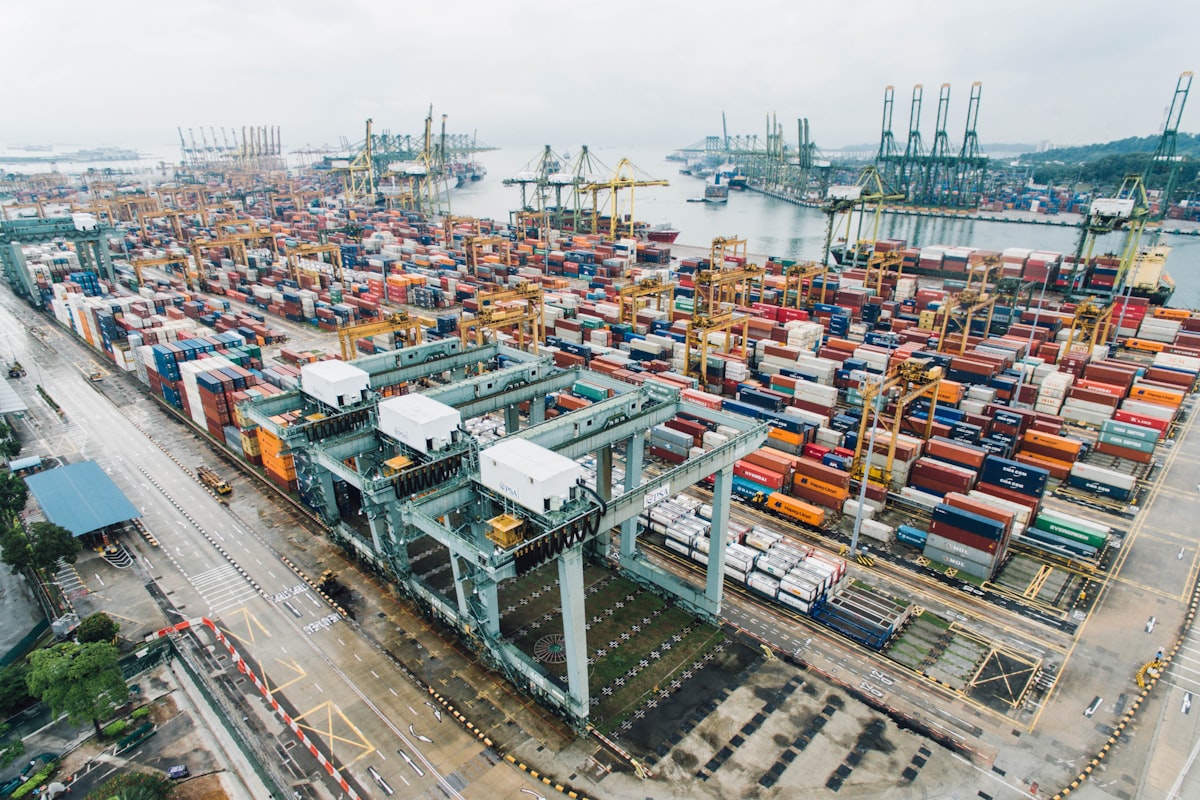
Four ways to move the same consignment, and one tax that decides all of them
Shipping from Taiwan to Singapore looks like the easiest lane in Asia to price. It is roughly 1,600 nautical miles, four to six days port to port from Kaohsiung, and it lands in a country where duty is zero on almost everything. The freight is cheap enough to be uninteresting: base port-to-port ocean freight on this lane was quoting around USD 476 for a 20ft, USD 670 for a 40ft and USD 732 for a 40HC in the rate base our route page tracked in August 2026, and a 40HC works out at under USD 10 per cubic metre. Then you add the part that no forwarder quotes. Singapore charges Goods and Services Tax at 9% on a value that includes your freight and insurance, which means a cheap freight quote buys a bigger tax bill. The same base gets inflated by Customs' own flat rate if you cannot show what the freight actually cost, and a sea-freight box does not get the SGD 400 import relief that half the internet still attributes to it.
I re-priced a client's replenishment order in August 2026 to make this point concrete. She runs a hardware distribution business in Singapore and buys brass hinges and lock sets from a factory near Taichung, about 2.8 cubic metres and 420 kilograms a month. Her previous forwarder quoted on FOB terms and never put a freight figure on the invoice, so the declaring agent fell back on Singapore Customs' flat rate for goods from Chinese Taipei: 15.5% of FOB value. On her SGD 9,600 invoice that added SGD 1,488 to the GST base and SGD 112 to the tax, every single month, for a year, because nobody asked the forwarder for the ocean invoice. The tariff on her cargo was zero the whole time. On this lane the duty is free and the paperwork is not, and that is the entire article in one invoice line.
| Route | All-in cost, 2.8 m3 / 420 kg | Door-to-door transit | What it wins on |
|---|---|---|---|
| LCL sea freight | SGD 11,558 | 8-14 days | Cost per cubic metre, and it scales down as the order shrinks |
| 20ft FCL | Not viable at 2.8 m3 | 7-11 days | Volume above roughly 10 m3; USD 14.60 per m3 of box space |
| Air freight | SGD 13,061 | 3-5 days | Fixed deadlines on cargo that is light relative to its value |
| Express courier | SGD 15,150 | 2-4 days | Samples, spares and anything a customer is already waiting for |
Route 1: LCL sea, the option that wins on cost and loses on time
Less-than-container-load is quoted per cubic metre or per 1,000 kilograms, whichever is greater, with a minimum charge of one or two cubic metres. The ocean part of that rate is the number people compare: our route snapshot put LCL ocean freight at USD 45-75 per cubic metre, while all-in market ranges for the same lane run USD 120-250 per cubic metre once origin consolidation, CFS handling, documentation and destination deconsolidation are loaded in. The gap between those two numbers is the whole LCL business. For my client's 2.8 cubic metres it priced out at USD 55 per cubic metre of ocean freight, which is USD 154, plus USD 180 of Taiwan origin charges for the export declaration, CFS receiving and the bill of lading, plus SGD 420 of Singapore charges for deconsolidation, the TradeNet permit filed by her declaring agent and the delivery order release, plus SGD 180 of local haulage and SGD 48 of cargo insurance at 0.5% of the invoice value.
The cost that does not show up in a rate table is time, and on LCL it is charged twice: three to seven days at each end for consolidation and deconsolidation, on top of the four to six days of sailing. That is how an eight-day lane becomes a fourteen-day delivery, and it is why LCL suits replenishment stock rather than anything with a customer name on it. The second surprise is free time. LCL cargo sits in a CFS rather than on a chassis, and the storage clock starts when it lands, not when you get round to collecting it. I have seen a five-day delay in Singapore produce SGD 260 of CFS storage, which is more than the freight on the shipment. If you are comparing an LCL quote against a consolidated air rate on a lane this short, put the days next to the dollars before you decide.
| LCL cost line, 2.8 m3 / 420 kg | Amount | Basis |
|---|---|---|
| Ocean freight, 2.8 m3 at USD 55/m3 | SGD 196 | Per cubic metre, minimum 1-2 m3 |
| Taiwan origin charges | SGD 229 | Export declaration, CFS receiving, bill of lading |
| Singapore destination charges | SGD 420 | Deconsolidation, TradeNet permit, delivery order |
| Local haulage, terminal to warehouse | SGD 180 | Zone dependent, one shift |
| Cargo insurance at 0.5% of FOB | SGD 48 | Optional but cheap on a short lane |
| GST at 9% on CIF of SGD 9,844 | SGD 886 | Base = goods + international freight + insurance |
| Total landed cost | SGD 11,558 | SGD 7.22 per lock set on 1,600 sets, against SGD 6.00 FOB |
Route 2: the 20ft, and where its break-even actually sits
A 20ft container carries about 32.6 cubic metres of usable volume, a 40ft about 67.7 and a 40HC about 76, and on this lane the per-cubic-metre maths is unusual because the distance is so short. At the August 2026 base rate, box space cost USD 14.60 per cubic metre in a 20ft against USD 9.90 in a 40ft and USD 9.63 in a 40HC, so the high cube is the cheapest space on the water by a third. The catch is that a 20ft booked for 2.8 cubic metres works out at USD 170 per cubic metre of actual cargo, which is why the break-even between LCL and a 20ft sits at roughly 8 to 12 cubic metres here, lower than the 15-plus you would expect on a transpacific lane. The 20ft also stops being about volume once the cargo is dense: plate ratings are around 28 tonnes of payload for a 20ft and 26 to 27 for a 40ft, so past roughly 850 kilograms per cubic metre you hit a weight ceiling before a volume ceiling.
Here is the same arithmetic on a bigger order, which is the stage at which I would move a client off LCL. Eighteen cubic metres and 2,700 kilograms of the same hardware family, FOB Kaohsiung SGD 62,000. Ocean freight on a 20ft at the base rate is SGD 605, Taiwan origin charges - terminal handling, export declaration, bill of lading, VGM filing and local drayage from Tainan - came to SGD 603, Singapore destination charges SGD 485 and terminal-to-warehouse haulage SGD 400. Insurance at 0.5% adds SGD 310 and GST at 9% on the resulting CIF base of SGD 62,915 comes to SGD 5,662. Total landed SGD 70,065, or 13% above the invoice value and SGD 3,893 per cubic metre. The same goods sent LCL at an all-in USD 150 per cubic metre would have cost roughly SGD 3,430 in pure freight and handling before the GST, so the box wins, but not by the margin people assume.
| Container | Usable volume | Base rate Kaohsiung-Singapore | USD per m3 | Payload ceiling |
|---|---|---|---|---|
| 20ft standard | 32.6 m3 | USD 476 | USD 14.60 | About 28 tonnes |
| 40ft standard | 67.7 m3 | USD 670 | USD 9.90 | About 26-27 tonnes |
| 40HC high cube | 76.0 m3 | USD 732 | USD 9.63 | About 26-27 tonnes |
| LCL, 2.8 m3 | 2.8 m3 booked | USD 154 ocean, SGD 1,025 all-in | USD 55 ocean | 1,000 kg per m3 rule |
Routes 3 and 4: air and express, where the cost per kilogram is the whole story
Air freight on this lane was quoting USD 2.10-3.20 per kilogram in the route snapshot and USD 3.50-5.50 per kilogram all-in through a forwarder, and express couriers were at USD 6-9 per kilogram. Those rates are charged on chargeable weight, not actual weight, and for anything bulky the difference is brutal. Air freight divides volume by 6,000, so 2.8 cubic metres becomes 468 chargeable kilograms against 420 actual; express couriers divide by 5,000, which turns the same cargo into 560 chargeable kilograms. At USD 3.50 per kilogram the air option costs SGD 2,080 in freight and lifts the CIF base for GST to SGD 11,728, and at USD 6.00 per kilogram express costs SGD 4,267. The result on one identical consignment: air landed at SGD 13,061 and express at SGD 15,150, against SGD 11,558 for LCL sea. Air adds SGD 1,503 and express adds SGD 3,592, which is 15.7% and 37.4% of the goods value respectively.
Those two numbers decide the question better than any rate table, because they tell you what speed has to be worth. On a 2.8 cubic metre shipment of hinges, air freight only makes sense if the cost of waiting exceeds SGD 1,503, and express only if it exceeds SGD 3,592. I have signed off on both kinds of booking this year, and the honest pattern is this: the air bookings that were right were spares and production-stop items, where the customer's line was idle and the daily loss was larger than the freight; the ones that were wrong were bulky, low-value cargo ordered late, where nobody had costed the 9% GST on the air freight itself. That last point catches people out every time. Fly the goods instead of sailing them and you have also increased the GST base, because Singapore charges the 9% on a value that includes the freight you just paid a premium for.
| Mode | Chargeable weight | Freight | CIF base | GST at 9% | Total landed | Extra vs LCL |
|---|---|---|---|---|---|---|
| LCL sea | Not applicable | SGD 196 | SGD 9,844 | SGD 886 | SGD 11,558 | - |
| Air freight at USD 3.50/kg | 468 kg | SGD 2,080 | SGD 11,728 | SGD 1,056 | SGD 13,061 | SGD 1,503 |
| Express at USD 6.00/kg | 560 kg | SGD 4,267 | SGD 13,867 | SGD 1,248 | SGD 15,150 | SGD 3,592 |
The 9% GST, and the two bases Singapore is allowed to charge it on
GST in Singapore is 9%, and it is charged on the customs value of the goods plus any duty, or on the last selling price if the goods were sold more than once before import and the last buyer is the party taking out the payment permit. Singapore Customs publishes both mechanisms with worked examples. For non-dutiable goods the formula is the rate times the customs value or the last selling price; their illustration is a company buying vitamins at SGD 900 FOB with SGD 100 of freight, handling and insurance that resells them to another company for SGD 1,500 before the goods arrive, in which case the 9% is charged on the SGD 1,500, not on the SGD 1,000 it cost to land. For dutiable goods the base grows again because duty is added first: their motor car example takes a SGD 100,000 vehicle with SGD 1,000 of freight and insurance, taxes it at 20% for SGD 20,200 of duty, then charges 9% on SGD 121,200, which is SGD 10,908.
The last-selling-price rule is the one that changes behaviour, because it is the difference between declaring what the goods cost you and declaring what they cost your customer. If your Singapore entity resells an import to a local buyer before the vessel berths, and that buyer is the one filing the payment permit, the tax attaches to the local sale price. On a 40% margin that is a 40% larger GST bill on the same box, and it is a legitimate, documented rule rather than an accident. The other lever is timing. Import GST Deferment Scheme traders bring non-dutiable goods in on an In-Non-Payment permit with the Approval Premises or Schemes declaration type and the IGDS place of receipt code, and account for the GST in the periodic return instead of paying it at the port; on a monthly SGD 62,000 programme that is SGD 5,662 of working capital that stays in the business instead of sitting in a customs account for a month.
| Case | Value used for GST | 9% payable | Why |
|---|---|---|---|
| Simple import, one buyer | CIF: goods + international freight + insurance | 9% of CIF | Standard rule for non-dutiable goods |
| Resold before arrival, last buyer declares | Last selling price | 9% of the local sale price | CIF is replaced by the final sale value |
| Dutiable goods | Customs value + duty | 9% of the combined figure | Duty is inside the GST base, not beside it |
| Import GST Deferment Scheme trader | Same base, different timing | 9% on the periodic return | No cash payment at the point of import |
Duty applies to four families of goods, and your cargo is almost certainly not one of them
Singapore is a free port with four exceptions: intoxicating liquors, tobacco products, motor vehicles, and petroleum products and biodiesel blends. Everything else enters at zero duty, which means the tariff question that dominates almost every other trade lane is academic here. Singapore Customs publishes its own worked examples for each of the four families. Seventy-five litres of stout at 5% alcoholic strength, taxed at SGD 16 per litre of customs duty plus SGD 60 per litre of excise duty on alcohol, comes to SGD 285. One hundred kilograms of tobacco stems at SGD 535 per kilogram comes to SGD 53,500. One hundred cigarette sticks weighing 1.5 grams each are charged on 2 grams per stick at SGD 0.589 per gram, or SGD 117.80. A motor car declared at SGD 101,000 pays 20% excise duty of SGD 20,200 and then 9% GST on the combined SGD 121,200. One hundred litres of RON 97+ petrol pays SGD 7.90 per decalitre, or SGD 79.
Taiwan-origin industrial cargo clears at zero duty, and the trade agreement does not change that. Taiwan and Singapore finalised an economic partnership agreement, ASTEP, on 7 November 2013 - Taiwan's first with an ASEAN member - and its tariff value is almost entirely in the other direction, on Taiwanese duties applying to Singapore-origin goods going north. So if an agent offers to build you an origin file for a southbound container, ask what it is for before you pay for it. What genuinely needs checking on this lane is the controlled goods list rather than the tariff: health products, telecommunications equipment, food, chemicals and strategic goods all need a competent authority's approval before the permit will issue, and that approval is what sets the clearance timeline.
| Dutiable family | How duty is charged | Singapore Customs' published example |
|---|---|---|
| Intoxicating liquors | Per litre of alcohol, ad valorem or specific | 75 litres of stout at 5%: 75 x (SGD 16 + SGD 60) x 5% = SGD 285 |
| Tobacco products | Per kilogram, or per stick by rounded weight | 100 kg of tobacco stems at SGD 535/kg = SGD 53,500; 100 sticks at SGD 0.589/g = SGD 117.80 |
| Motor vehicles | Ad valorem on the customs value | SGD 101,000 customs value at 20% = SGD 20,200 duty, plus SGD 10,908 GST |
| Petroleum and biodiesel blends | Per decalitre or per kilogram | 100 litres of RON 97+ at SGD 7.90 per decalitre = SGD 79 |
The SGD 400 relief, the 15.5% flat rate, and the numbers people quote wrong
The SGD 400 figure is real but narrower than it is usually described. Import GST relief is granted for goods arriving by air or post, not liquor or tobacco, with a total CIF value not exceeding SGD 400, and the sales value that determines low-value status counts the goods only, not the transport or the insurance. Read the conditions in order, because the second one is the one that gets dropped: goods imported by sea sit outside the relief entirely, so a box that comes into Singapore on a vessel pays GST on its full value with no SGD 400 cushion, and sites that promise duty-free entry under SGD 300 or SGD 400 for all shipments are describing an air and postal rule as if it were general. There is a second piece of arithmetic on the same page, and it applies to every sea shipment: if the transaction is quoted FOB and the actual freight and insurance are not known or not available to the importer, Customs applies flat rates by place of export, and for China, Chinese Taipei, Korea, Sri Lanka, India and Pakistan that flat rate is 15.5% of FOB value.
The flat rate is a trap rather than a shortcut, and the size of it is worth calculating. On my client's SGD 9,600 invoice, the 15.5% flat rate produced a deemed freight and insurance figure of SGD 1,488, a GST base of SGD 11,088 and tax of SGD 998, against SGD 886 on the true CIF base of SGD 9,844, so the default cost her SGD 112. On the eighteen-cubic-metre container the same default inflates the base from SGD 62,915 to SGD 71,610 and the tax from SGD 5,662 to SGD 6,445, a difference of SGD 783 on one shipment. The fix costs nothing: put the freight on the commercial invoice or attach the forwarder's invoice, and make sure the declared value includes freight and insurance, which is exactly what Singapore Customs lists in its best-practice guidance for importers. The reason people skip it is that the flat rate feels safer when the forwarder has not sent the invoice yet. It is not safer. It is just more expensive.
| Place of export | Flat rate, % of FOB value |
|---|---|
| Africa, Canada and USA | 24.5% |
| Europe | 19% |
| Japan, Australia and New Zealand | 19% |
| China, Chinese Taipei, Korea, Sri Lanka, India and Pakistan | 15.5% |
| Myanmar, Thailand, Cambodia, Laos, Vietnam, Hong Kong, Philippines and Indonesia | 9.5% |
| Peninsular Malaysia | 5% |
The permit is the part of the bill that carries a five-figure tail
Every import into Singapore needs a customs permit, filed through TradeNet before the goods are imported, and the party named as the importer matters more than most first-time importers expect. If an overseas company sells to a local company that is named as the consignee on the commercial invoice, that local company is the importer, and the permit has to be taken out accordingly. The filing is done by a declaring agent, who needs your UEN and an activated Customs account, and the charge is small - SGD 30 to 80 including the agent's fee. The penalty structure behind it is not. Making an incorrect declaration carries a fine of up to SGD 10,000 or the equivalent of the duty and GST payable, whichever is higher, or up to 12 months in prison, or both. Importing without a permit is a first-conviction fine of up to SGD 100,000 or three times the value of the goods, whichever is greater, rising to SGD 200,000 or four times the value on a second conviction. Minor offences can be compounded at up to SGD 5,000 each.
The offences Singapore Customs lists as common are documentation offences, not evasion: an insurance charge omitted from the payment permit, free gifts from an overseas supplier left off the declaration, samples declared at a nominal value, the port of loading declared as the country of origin, an invoice or bill of lading or certificate of origin that cannot be produced on request. Trade documents have to be kept for five years. The one I would add from practice is the amended permit: once a permit has been used for cargo clearance, amendment and cancellation are generally not allowed, and the route back is a voluntary disclosure rather than a quiet correction. On a five-day lane there is no slack for that, because the container is already sitting in the terminal while the paperwork argument happens, and demurrage on this route runs from free time of five to seven days that starts shortly after discharge.
| Offence | Penalty on conviction |
|---|---|
| Incorrect declaration of value or details | Fine up to SGD 10,000 or the duty and GST payable, whichever is higher, or up to 12 months' imprisonment, or both |
| Failure to declare imported goods | Same penalty as an incorrect declaration |
| Failure to produce trade documents | Same penalty as an incorrect declaration |
| False declaration under the Regulation of Imports and Exports Act | Fine up to SGD 10,000 or up to 2 years' imprisonment, or both |
| Importing without a permit, first conviction | Fine up to SGD 100,000 or 3 times the value of the goods, whichever is greater, or up to 2 years, or both |
| Importing without a permit, second conviction | Fine up to SGD 200,000 or 4 times the value of the goods, or up to 3 years, or both |
| Minor offences, compounded | Up to SGD 5,000 per offence |
When to switch: five triggers I check before I price this lane
The matrix at the top of this article is not a rate table, it is a set of thresholds, and the thresholds only move when one of five things changes. If volume crosses into double digits, the box stops being overkill. If a fixed delivery date lands inside ten days, LCL stops being viable and you are choosing between air and express. If your cargo falls into one of the four dutiable families, the entire conversation changes, because duty enters the base before the 9% does. If your Singapore entity is not GST-registered, the 9% is a real cost rather than a cash-flow item, and it should be in your landed cost sheet from the first quote instead of appearing at clearance. And if you resold the goods before they arrived, the last selling price rule decides the base, so the declaration and the invoice have to agree before the vessel sails.
My own order of operations on this lane, after a year of these shipments, is deliberately boring. Get the actual freight figure on paper before the goods leave Taiwan, because the 15.5% flat rate is the one avoidable cost that runs every month. Price the GST on CIF rather than on FOB, because on a cheap freight lane the tax is a bigger line than the freight itself. Treat the permit as a deadline rather than a form, because clearance in Singapore takes about one business day when the paperwork is right and the sailing only took five. And keep the insurance charge in the value, because Customs lists its omission as a common offence and compounding starts at SGD 5,000, which is more than the insurance and the GST on it combined. The freight on this lane is the cheapest part of the decision. The discipline around it is the expensive part, and it is the only part you control.
| Trigger | What it means | What I would do |
|---|---|---|
| Order crosses about 10 m3 | The 20ft break-even has been passed | Book the box and re-quote the customer on a lower cost per unit |
| Delivery needed inside 10 days | LCL cannot deliver it | Compare air at USD 3.50-5.50/kg against express at USD 6-9/kg by chargeable weight |
| Goods are liquor, tobacco, a vehicle or petroleum | Duty enters the GST base before the 9% | Re-run the landing cost with duty, and check the HS/CA product code for the live rate |
| Your entity is not GST-registered | The 9% is a cost, not a float | Put GST in the landed cost from the first quote rather than discovering it at clearance |
| Goods were resold before arrival | GST attaches to the last selling price | Confirm who files the payment permit and reconcile it with the local sale invoice |
| Freight figure is missing from the file | Customs may apply the 15.5% flat rate for Chinese Taipei | Attach the forwarder's invoice so the declared value uses actual freight and insurance |

Frequently Asked Questions
Do I pay import duty on goods shipped from Taiwan to Singapore?
Almost never. Singapore charges customs and excise duty on only four families of goods - intoxicating liquors, tobacco products, motor vehicles, and petroleum products and biodiesel blends - and everything else enters at zero duty. That is a property of the destination, not of the origin, so the ASTEP agreement Taiwan and Singapore finalised on 7 November 2013 mostly matters on the northbound leg. Run your HS code through Singapore Customs' HS/CA Product Code Checker if your cargo is anywhere near those four families, and treat any other duty line on a quote as something to question.
How long does shipping from Taiwan to Singapore take?
Port to port, Kaohsiung to Singapore is four to six days on a direct intra-Asia service, and the market ranges we track quote four to seven. Keelung adds two days because it has fewer direct strings and often feeds through Kaohsiung, and Taipei Port and Taichung sit at six to nine days. Add three to five days at the Taiwan end for pickup, export clearance and loading, and about one business day for Singapore permit clearance plus the road leg. Air freight runs one to two days in the air and three to five door to door, and express couriers quote two to four.
If my shipment is worth less than SGD 400, is it tax free?
Only if it arrives by air or post. Import GST relief applies to non-dutiable goods with a total CIF value of SGD 400 or less arriving by air or post, and the SGD 400 counts the goods only, not the freight or the insurance. Goods imported by sea fall outside that relief and pay GST on the full value, which is why a small sea-freight box often carries a tax bill a parcel of the same value would not. If you buy several items that are each SGD 400 or less from a GST-registered seller, each item is assessed separately rather than the shipment as a whole.
Can I just declare the goods at a lower value to reduce the GST?
No, and the arithmetic is not worth the risk. Under-declaring value is an incorrect declaration under section 128 of the Customs Act, which carries a fine of up to SGD 10,000 or the equivalent of the duty and GST payable, whichever is higher, or up to 12 months in prison, and Singapore Customs lists omitted insurance charges and nominal values on samples among its common offences. It also fails on its own terms: if you quoted FOB and cannot show the actual freight, Customs applies a flat rate of 15.5% of FOB value for goods from Chinese Taipei, so the declared value is reconstructed whether you like it or not.
Who is the importer of record, my forwarder or my company?
The party bringing the goods in, which in a normal sale means the company named as consignee on the commercial invoice - not the overseas seller and not usually the forwarder. The TradeNet permit has to be taken out in that entity's name and UEN, filed by a declaring agent, and the importer is the party liable for the duty and GST. Getting it wrong is one of the documented common errors, and a replacement permit with the correct importer may be required while the container waits in the terminal and demurrage runs.
Written by Ace Wang
Founder & Import Operations Specialist
Ace Wang has spent 20 years in cross-border ecommerce operations, managing import supply chains for small and medium businesses. From the early days of Alibaba sourcing to modern multi-country logistics strategies, Ace has helped hundreds of entrepreneurs navigate customs clearance, shipping optimization, and landed cost management. The LandedCostHub calculator and all content on this site are built on real-world experience — not textbook theory. Ace believes that transparent, accurate cost data is every importer's right, not a professional service luxury. More about Ace Wang →
Main departure hubs in Taiwan
Most Taiwan export freight moves through Kaohsiung, Taipei. The hub you book from drives transit time, departure frequency and often the rate itself — two gateways in the same country can differ by hundreds of dollars on a container.
Sea freight loads at the container port, air freight at the international airport. Ask your forwarder which hub the quote is based on before comparing rates.
Import cost on key routes
View shipping rates, duty rates, and total landed cost estimates.
Calculate Your Total Landed Cost
Use our free calculator to estimate your total import costs including duties, shipping, and taxes.
Related Guides
De Minimis Threshold Guide: Import Duty-Free Limits by Country
Complete guide to de minimis thresholds worldwide. Learn how to legally reduce landed costs by staying under duty-free limits.
Read More →Amazon FBA Import Costs: Complete Guide for Sellers
Calculate your total landed costs for Amazon FBA imports. Understand duty, shipping, storage, and FBA fee structures.
Read More →US Customs Duty Rates: Complete Guide for Importers
Comprehensive guide to US customs duty rates. Learn how duties are calculated, find your HTS code, and discover duty reduction strategies.
Read More →Popular Routes
Calculate import costs from this country.
Taiwan → Japan
View import costs and calculator
Taiwan → South Korea
View import costs and calculator
Taiwan → Mexico
View import costs and calculator
Taiwan → Spain
View import costs and calculator
Taiwan → Italy
View import costs and calculator
Taiwan → Poland
View import costs and calculator
Taiwan → Belgium
View import costs and calculator
Taiwan → Sweden
View import costs and calculator
Taiwan → Switzerland
View import costs and calculator