Turkey to UK Shipping Costs 2026: Road, Sea and the A.TR Rule
Updated: 2026-10-19
Six Ways Out of Turkey, Priced for October 2026
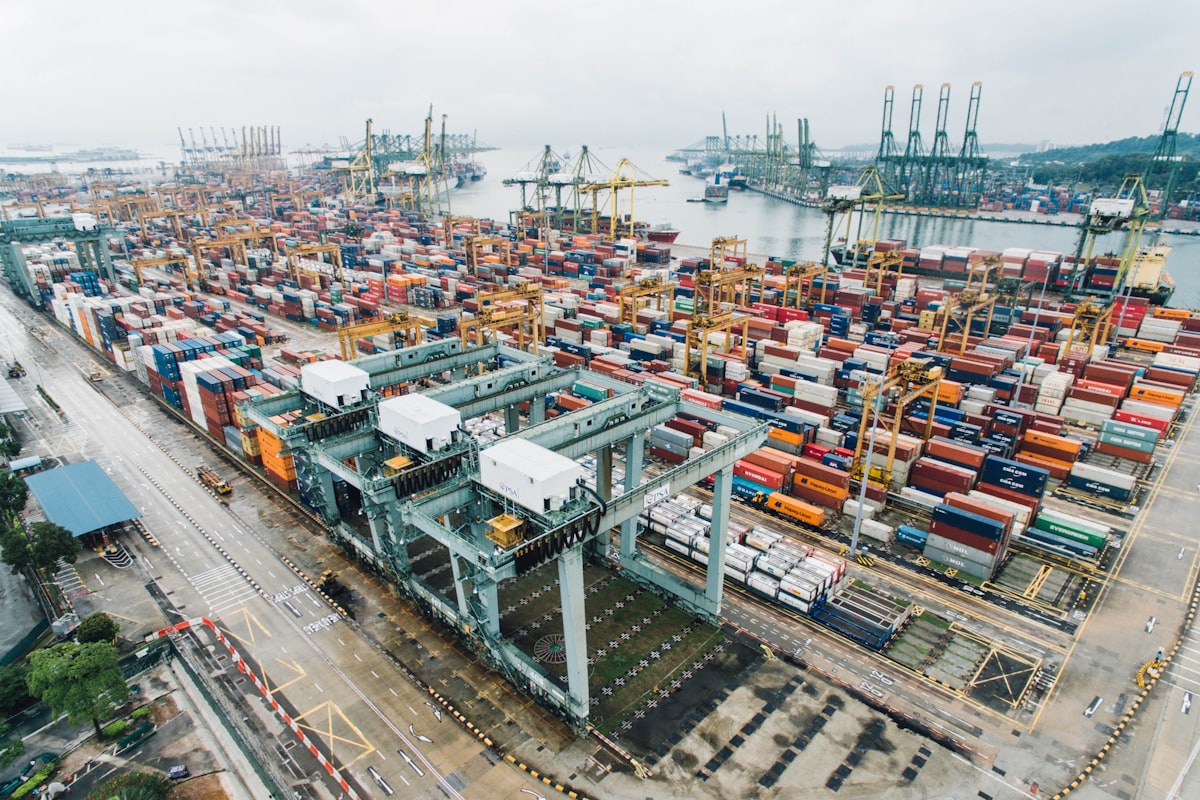
A Turkish supplier will quote you FOB Istanbul and leave you to solve the rest. That is where the arguments start, because this is one of the few lanes into Britain where road freight is the default and sea freight is the exception. A 2026 rate card from a Turkish forwarder running Istanbul to Greater London puts a full trailer at EUR 3,200 to 4,500 door to door in 6 to 8 days, a single pallet of up to 300 kg at EUR 150 to 300 in 8 to 11 days, and an express minivan of up to 1,300 kg at EUR 1,800 to 2,600 in 48 to 72 hours. A refrigerated trailer sits at EUR 3,600 to 5,000. Sea freight leaves Ambarli, Gebze, Gemlik, Izmir or Mersin and reaches Felixstowe, London Gateway or Southampton in about two weeks port to port. Air is 1 to 3 days and priced per kilo, which makes it the most expensive way to buy time on this corridor.
I stopped quoting this lane off a per-kilo spreadsheet three years ago. A customer in Bursa had 14 pallets of dyed cotton jersey going to a warehouse in Manchester, and I had been trained on sea freight arithmetic where the unit is the cubic metre. The forwarder came back with EUR 3,650 for a whole trailer, which looked absurd next to the EUR 1,140 the same volume would have cost as an LCL booking out of Shanghai. It was not absurd. It was four days faster, it never touched a container yard, and it arrived at the customer's door instead of a terminal in the Midlands. On this lane you are not buying space. You are buying a driver, a trailer and a border slot.
| Mode | Typical 2026 rate | Door-to-door transit | Best for | What the rate leaves out |
|---|---|---|---|---|
| Road, full trailer (FTL) | EUR 3,200-4,500 per trailer | 6-8 days | 12+ pallets, or anything over 8 tonnes | Customs clearance fee, duty, VAT, UK delivery surcharges |
| Road, groupage (LTL) | EUR 150-300 per pallet up to 300 kg | 8-11 days | 1-6 pallets, samples, repeat small orders | Per-pallet minimum, waiting days, pallet exchange |
| Express minivan | EUR 1,800-2,600 up to 1,300 kg | 48-72 hours | Line-down parts, samples with a hard deadline | Anything above 1,300 kg or oversized pieces |
| Refrigerated trailer | EUR 3,600-5,000 | 6-8 days | Chilled and frozen food, pharma, cosmetics | Temperature logging, ATP certificate, cleaning fee |
| Sea, FCL or LCL | Quoted per container or per CBM | About 14 days port to port | Heavy, low-value cargo with no deadline | Terminal handling both ends, UK inland haulage, port fees |
| Air | Quoted per chargeable kilo | 1-3 days airport to airport | Under 300 kg with a deadline you cannot move | Fuel and security surcharges, terminal fees, UK delivery |
Why Nobody Quotes You a Price Per Kilo on This Lane
A standard European trailer takes 33 euro pallets or roughly 24 tonnes, and that single fact explains most of the pricing. Divide a EUR 3,200 trailer rate by 33 pallets and the floor is about EUR 97 per pallet. Divide the top of the range, EUR 4,500, and you get EUR 136. Groupage runs EUR 150 to 300 per pallet because somebody else has to consolidate it, wait for the trailer to fill and handle it twice. So the break-even between groupage and a dedicated trailer lands between 11 and 21 pallets depending on where in the rate band both quotes fall. Below 11 pallets, groupage wins almost every time. Above 21, a full trailer is cheaper than groupage and it is not close.
The express van is the other number people misread. At EUR 1,800 for 1,300 kg the rate is EUR 1.38 per kilo, and at the top of the band it is EUR 2.00. That sounds expensive until you price the alternative: air freight out of Istanbul runs roughly EUR 3 to 5 per chargeable kilo before fuel and security surcharges, and it still lands at a cargo terminal rather than a door. So under 1,300 kg with a 72-hour deadline, the van usually beats air. Above 1,300 kg the van stops existing and you are back to a trailer. I have watched buyers book air freight for 900 kg of urgent zips and pay twice what the van would have cost, simply because their forwarder did not offer it.
- Full trailer at EUR 3,200 on 33 pallets: EUR 97 per pallet, before clearance
- Full trailer at EUR 4,500 on 33 pallets: EUR 136 per pallet, still under most groupage quotes
- Groupage at EUR 150-300 per pallet: break-even against a trailer at 11 to 21 pallets
- Express van at EUR 1,800-2,600 for 1,300 kg: EUR 1.38-2.00 per kilo, cheaper than air under 1.3 tonnes
The Route Your Trailer Actually Takes
There is no direct land bridge between Turkey and Britain, so every road shipment is a chain rather than a journey. The standard line runs from Istanbul or Bursa to Kapikule on the Bulgarian border, through Bulgaria, Serbia, Hungary, Austria, Germany and France to Calais, then across the Channel by ferry or Eurotunnel to Dover. That is two non-EU land borders before the goods even reach the European Union proper, plus a sea crossing into a third customs territory. Each border crossing eats 4 to 12 hours on a good day. The Channel leg adds 35 minutes on Eurotunnel or around 90 minutes on a ferry, and then whatever the Dover freight lanes are doing that morning.
My booking buffer used to be two days. It is four now, and the reason was a February trailer of upholstery fabric that sat at Kapikule for 19 hours because a transit document had the wrong customs office code on it. The goods were fine, the paperwork was nearly fine, and a customer in Leicester lost a production day. Nobody refunds you for that. The second thing I learned is that the haulier needs a Goods Movement Reference from the Goods Vehicle Movement Service before the trailer is allowed to board at Calais. No GMR, no crossing, no discussion. If your forwarder cannot tell you who generates that reference and when, you have not actually booked a road shipment yet.
- Kapikule, Turkey into Bulgaria: the busiest land gate on the corridor, 4 to 12 hours
- Serbian transit: a second non-EU border, usually faster but not reliably so
- EU transit to Calais: Hungary, Austria, Germany and France under a T1 declaration
- Channel crossing: Eurotunnel about 35 minutes, ferry about 90 minutes
- Dover: Goods Movement Reference required before boarding, generated in GVMS
- Total door to door: 6-8 days for a trailer, 8-11 days for groupage
The Zero Per Cent That Is Not Automatic
Turkey is in a customs union with the European Union, not a free trade area, and the UK deal signed in Ankara on 29 December 2020 replicated that arrangement rather than inventing a new one. It applied from 1 January 2021 and entered into force on 20 April 2021. The practical consequence is that Turkish industrial goods enter Britain at zero duty, but only if the shipment carries a valid A.TR movement certificate, form C1232 on the UK side. That certificate does not prove where the goods were made. It proves they are in free circulation in the customs union. If the A.TR is missing, wrongly completed or names the wrong consignee, the shipment does not fall back to a slightly worse rate. It falls back to the UK Global Tariff, which on clothing and footwear is a real number.
A client of mine found this out with a EUR 40,000 order of cotton T-shirts and jersey dresses from a factory outside Izmir. The A.TR arrived, the box was ticked, the trailer sailed through Kapikule, and then the declaration was rejected at Dover because the certificate named the Turkish exporter as consignee instead of the UK company that was actually importing. That is a formatting error, not a smuggling attempt, and it still cost two days and GBP 340 in storage while a replacement certificate was issued in Turkey. The duty exposure on that shipment would have been EUR 4,800. The lesson is that the A.TR is a data-matching exercise, and the data has to match the commercial invoice, the packing list and your EORI record, not just the product.
| Product | UK commodity code | UK Global Tariff | With valid A.TR |
|---|---|---|---|
| Cotton T-shirts | 6109.10 | 12% | 0% |
| Synthetic fibre dresses | 6204.43 | 12% | 0% |
| Leather footwear, covering the ankle | 6403.51 | 8% | 0% |
| Passenger cars, 1,500-3,000 cc | 8703.23 | 10% | 0% |
| Light goods vehicles under 5 tonnes | 8704.21 | 10% | 0% |
| Steel structures and parts | 7308.90 | 0% | 0%, so the certificate saves nothing here |
What the Deal Covers, What It Leaves Out, and What Is Being Renegotiated
The agreement is a goods deal. It covers industrial products and a limited list of processed agricultural goods, and it mirrors the customs union terms Turkey already had with the EU. It does not cover services, which is the single biggest reason both governments keep talking about an enhanced version. The numbers behind that conversation are not small: trade between the two countries was around GBP 28 billion in 2024, Turkey is the UK's 16th largest trading partner, and the UK is the second biggest importer of Turkish goods after Germany. Around 8% of everything Turkey exports goes to Britain, into a market of 86 million people on the other side.
Two things changed in 2025 and both matter to an importer. First, the technical barriers to trade chapter was replaced. The review concluded on 7 May 2025 and the exchange of letters was laid before Parliament in September 2025, adding sector annexes on chemicals and on motor vehicles and parts. That is the machinery that decides whether a Turkish-built vehicle or a chemical batch needs extra testing to enter Britain. Second, the enhanced free trade agreement negotiations moved: the second round was held in London in the week of 15 September 2025, with a third round expected in late autumn. My view is simple. Price the deal you can claim today, because a signed 2027 agreement will not refund a 2026 duty payment, and neither agreement has ever been retroactive.
- Covered: industrial goods under the customs union arrangement, with an A.TR certificate
- Covered: a limited list of processed agricultural products, with tighter rules
- Not covered: services, which is what the enhanced agreement is meant to fix
- Changed in 2025: a new technical barriers to trade chapter plus chemicals and motor vehicle annexes
- In progress: enhanced FTA round two in London in September 2025, round three expected late autumn
The 20 Per Cent That Survives Every Certificate
Import VAT is the number that does not care about your A.TR. The standard rate is 20%, and it is charged on the goods value plus postage, packaging, insurance and any duty you owe. So a zero-duty shipment still arrives with a VAT bill, and the freight you paid is inside the base. On a EUR 54,000 consignment with EUR 3,900 of road freight and no duty, the VAT is EUR 11,580. If you are VAT-registered in the UK you can usually recover that, but recovering it three weeks later is not the same as not paying it at the border, and for a small importer the cash flow difference is the whole margin on the order.
This is where postponed VAT accounting earns its keep. If you are UK VAT-registered, you can account for import VAT on your periodic return instead of paying at the frontier, which keeps 20% of the shipment value in your business for another month or two. It does not need prior approval, but it does need you to instruct your customs agent in writing before the declaration is filed, and if you are not established in the UK the rules push you towards using a representative. I have also seen the opposite mistake: a Turkish seller shipping direct to British consumers assumes the 20% is the buyer's problem. It is not. For consignments valued at GBP 135 or less sold to consumers, the seller is expected to register for UK VAT and charge it at checkout, and most small Turkish exporters have never heard of the rule.
- Standard VAT rate: 20%, charged on goods plus postage, packaging, insurance and duty
- Consignments of GBP 135 or less, sold to consumers: the seller should charge UK VAT at checkout
- Consignments above GBP 135: import VAT is collected at the border or through postponed accounting
- Gifts worth GBP 39 or less are the narrow exception, and commercial samples are not gifts
- Couriers normally hold an unpaid parcel for about three weeks before returning it
The Same Three Bookings, With and Without the Certificate
Numbers settle arguments faster than opinions, so here are three shipments I priced this autumn, with the same duty rate applied twice: once with a valid A.TR and once without. In every case the freight is the same, the goods are the same and the only difference is one certificate. The third column is the one that gets ignored in a quote comparison, because VAT is charged on the duty as well, which means a missing certificate costs you more than the duty line suggests, even if you later recover the VAT.
The apparel shipment is the clearest case. Duty of EUR 6,480 is gone forever, and it also drags EUR 1,296 of extra VAT into the border bill, so the cash difference on the day is EUR 7,776 on a EUR 54,000 order. The footwear samples are small enough that the duty looks trivial at EUR 720, until you notice that the samples were sent by groupage because the whole point was speed, and an A.TR for a 300 kg consignment costs a phone call, not a project. The automotive parts container is the one where people assume the certificate is automatic because the buyer is a Tier 1 supplier with a compliance department. It is automatic only if somebody requests it before the goods leave Gemlik.
| Shipment | Goods value | Freight | Duty with A.TR | Duty without | Import VAT at 20% |
|---|---|---|---|---|---|
| 18 pallets cotton T-shirts, Bursa to Manchester, full trailer | EUR 54,000 | EUR 3,900 | EUR 0 | EUR 6,480 at 12% | EUR 11,580 |
| 300 kg leather footwear samples, Izmir to London, groupage | EUR 9,000 | EUR 280 | EUR 0 | EUR 720 at 8% | EUR 1,856 |
| 1 x 40ft container of automotive parts, Gemlik to Southampton | EUR 120,000 | EUR 1,850 | EUR 0 | EUR 12,000 at 10% | EUR 24,370 |
Before You Sign: Reverse-Engineering the Quote
A Turkey-to-UK quote is easy to check if you divide it by the right unit. Every line has a unit that should produce a number inside a known band, and if it does not, the line is either padded or hiding something. This takes four minutes and it has saved me more money than any negotiation. The rule I use is that a quote should tell you three things separately: the freight, the customs service and the VAT. A single all-in number that mixes them is not a quote, it is a hope.
My closing opinion is not popular with procurement teams. The cheapest quote on this corridor is almost never the cheapest shipment, because the savings are usually taken out of the two things that decide whether the goods arrive: whether the A.TR is issued before the trailer reaches Kapikule, and whether the customs line is handled by someone who has read the consignee field. I would pay EUR 300 more for a forwarder who gets those two things right, every single time, and I have the storage invoices to prove why.
| Line in the quote | Divide by | Sane range in 2026 | If it comes out higher |
|---|---|---|---|
| Trailer rate | Pallets, 33 maximum | EUR 97-136 per pallet | You are being charged groupage for a trailer |
| Groupage rate | Pallets, part pallets allowed | EUR 150-300 per pallet | Compare it against a part-load before you accept |
| Express van rate | Chargeable kilos, 1,300 maximum | EUR 1.38-2.00 per kilo | Air is the better buy above that weight |
| Sea LCL rate | Cubic metres | Ask for the origin and destination splits | The destination handling charge is hiding |
| Customs clearance | Declarations, not shipments | One fee per declaration | You are paying per document, not per consignment |
| VAT line | Goods plus freight plus duty | Must equal exactly 20% | The base is wrong, and it will be wrong again next month |

Frequently Asked Questions
Do I pay customs duty on goods shipped from Turkey to the UK?
Not on industrial goods, provided the shipment carries a valid A.TR movement certificate under the UK-Turkey agreement that entered into force on 20 April 2021. Without that certificate the UK Global Tariff applies, which means 12% on cotton T-shirts and synthetic dresses, 8% on leather footwear and 10% on cars and light goods vehicles.
Is an A.TR the same as a certificate of origin?
No. An A.TR proves that goods are in free circulation in the EU-Turkey customs union, and the UK agreement replicates that arrangement rather than applying ordinary origin rules. A EUR.1 is a rules-of-origin certificate used where goods do not travel under the customs union arrangement. Ask your forwarder which document your invoice actually supports, because the wrong certificate is worth the same as no certificate.
How long does road freight from Turkey to the UK take?
Six to eight days door to door for a full trailer from Istanbul to London, eight to eleven days for groupage, and 48 to 72 hours for an express van carrying up to 1,300 kg. The range comes from two non-EU land borders at Kapikule and in Serbia, the European transit leg, and the Channel crossing, where the trailer needs a Goods Movement Reference before it can board.
Do I still pay VAT if the duty rate is zero?
Yes. Import VAT is 20% and it is charged on the goods value plus postage, packaging, insurance and any duty, so a zero-duty shipment still carries a VAT bill. A UK VAT-registered importer can use postponed VAT accounting to declare it on the periodic return instead of paying at the border, but the instruction has to be given to the customs agent in writing before the declaration is filed.
Can I send a 200 kg parcel from Turkey without a customs broker?
You can, but not cheaply. Any consignment above GBP 135 needs an import declaration, and the courier will file it as your agent and add a handling charge. Below GBP 135 the seller is expected to register for UK VAT and charge it at checkout, which most small Turkish sellers do not do, so the parcel arrives with a bill and a handling fee attached.
Written by Ace Wang
Founder & Import Operations Specialist
Ace Wang has spent 20 years in cross-border ecommerce operations, managing import supply chains for small and medium businesses. From the early days of Alibaba sourcing to modern multi-country logistics strategies, Ace has helped hundreds of entrepreneurs navigate customs clearance, shipping optimization, and landed cost management. The LandedCostHub calculator and all content on this site are built on real-world experience — not textbook theory. Ace believes that transparent, accurate cost data is every importer's right, not a professional service luxury. More about Ace Wang →
Main departure hubs in Turkey
Most Turkey export freight moves through Istanbul, Mersin. The hub you book from drives transit time, departure frequency and often the rate itself — two gateways in the same country can differ by hundreds of dollars on a container.
Sea freight loads at the container port, air freight at the international airport. Ask your forwarder which hub the quote is based on before comparing rates.
Import cost on key routes
View shipping rates, duty rates, and total landed cost estimates.
Calculate Your Total Landed Cost
Use our free calculator to estimate your total import costs including duties, shipping, and taxes.
Related Guides
Sea vs Air vs Express Shipping: Which Method Should You Choose?
Compare sea freight, air freight, and express courier shipping costs and transit times for your import business.
Read More →FCL vs LCL Shipping: Which Container Option Saves You Money?
Compare Full Container Load vs Less than Container Load shipping. Find the most cost-effective option for your cargo volume.
Read More →Shipping from China: Complete Cost Breakdown for 2026
Detailed breakdown of shipping costs from China. Compare sea freight, air freight, and express courier pricing with real examples.
Read More →Popular Routes
Calculate import costs from this country.
Turkey → Nigeria
View import costs and calculator
Turkey → Kenya
View import costs and calculator
Turkey → Egypt
View import costs and calculator
Turkey → Chile
View import costs and calculator
Turkey → Colombia
View import costs and calculator
Turkey → Peru
View import costs and calculator
Turkey → Argentina
View import costs and calculator
Turkey → New Zealand
View import costs and calculator
Turkey → Israel
View import costs and calculator