Importing to the Netherlands in 2026: Duty, 21% BTW and the Article 23 Permit
Updated: 2026-09-30
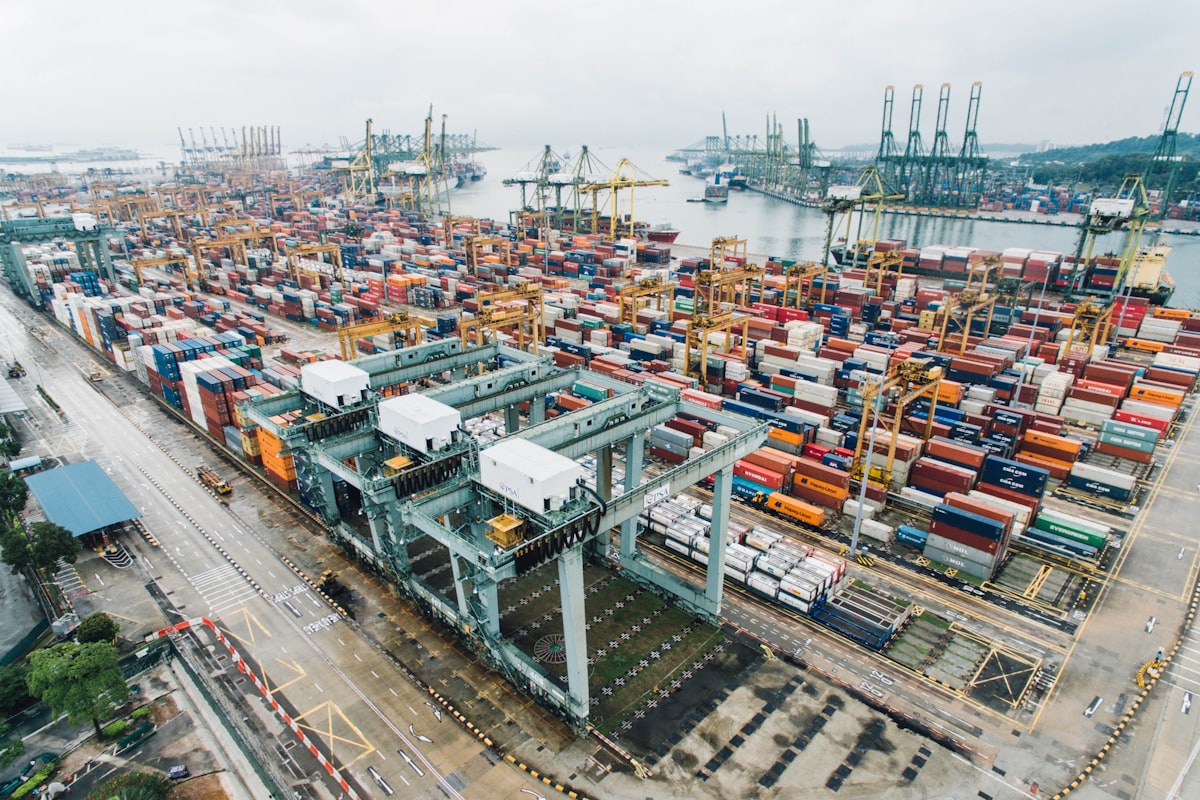
How much import duty do you actually pay on goods entering the Netherlands in 2026?
The rate is set by the EU common external tariff, in Dutch the gemeenschappelijk buitentarief, and it is identical in every member state. A Dutch importer and a Polish importer pay the same duty on the same goods, and that single rule kills most of the folklore about one European gateway being cheaper than another. What does change by country is the VAT rate, the fixed fees the carriers charge, and how many days your container sits before somebody moves it. For shipments out of China, the table below covers the great majority of what small and mid-sized Dutch importers bring in.
I price Dutch import costs most weeks, and the question that arrives first is always whether Rotterdam beats Antwerp or Hamburg. It does not, and anybody who tells you otherwise is quoting their own fee rather than the duty. The exemptions are worth memorising because they compress a lot of quote requests into one sentence: books, laptops and phones enter duty-free, most Turkish products come in duty-free but only with proof of Turkish origin, and every trade agreement I have ever claimed a benefit under needed an origin document to trigger it. Without that paper your goods are assessed at the normal rate and you find out after the container has already been unloaded. The difference between a weak importer and a strong one on this point is not knowledge of the tariff. It is knowing which document converts the tariff into something lower.
- Books, laptops and phones enter the Netherlands duty-free, but never VAT-free
- Turkish goods are mostly duty-free only with proof of Turkish origin
- A trade agreement rate only exists once the origin document exists
- A wrong HS classification moves your rate more than any negotiation with a forwarder
| Product and HS heading | MFN duty rate | On a EUR 10,000 shipment | What to watch |
|---|---|---|---|
| Ceramic tableware and kitchenware, 6912 | 7% | EUR 700 | The one family on this list where EU anti-dumping measures can sit on top of the tariff |
| Cotton T-shirts and knitted tops, 6109 | 12% | EUR 1,200 | Charged per garment type, not per fabric weight |
| Man-made fibre dresses, 6204 | 12% | EUR 1,200 | Womenswear sits at the same ceiling as knitwear, so mixing a cart does not lower it |
| Footwear with leather uppers, 6403 | 0% to 17% | EUR 0 to 1,700 | The widest spread inside a single heading, and it is decided by the upper material |
| LED lamps and luminaires, 9405 | 0% to 5% | EUR 0 to 500 | Part of this chapter already enters at zero, which is why lighting quotes look inconsistent |
| Toys, 9503 | 0% to 4.7% | EUR 0 to 470 | The low end is the reason toy imports get described as duty-free |
| Wooden furniture, 9403 | 0% to 4% | EUR 0 to 400 | Four percent is easy to forget until you are importing a full container of it |
The EUR 3 rule: who pays it, when it ends, and why it is charged per line
Douane states it plainly on its own page: since 1 July 2026 a declarant pays EUR 3 of import duty for e-commerce consignments from outside the EU with a value up to EUR 150. Before that date the flat exemption applied and most of those parcels entered free of duty. The window runs to 1 July 2028, and the charge is not a parcel fee. The EU legal text applies it per declared tariff line, which is where the arithmetic stops matching what buyers expect. Four identical pairs of socks are one line and one charge. Four pairs of socks, a plush toy and a charging cable are three lines and three charges. Nothing about the box matters, because the count is taken from the categories you declare.
Here is the trap I watch people walk into. Somebody reads that the charge is EUR 3 and assumes the unit is the parcel, so they split one three-line order into three boxes and expect the bill to fall from EUR 9 to EUR 3. It does not fall at all, because the line count does not change, and it rises by two extra handling amounts from the carrier. Douane describes the later-calculated costs as btw, invoerrechten, accijns and afhandelingskosten together, and only the first three of those are taxes. The last one is a commercial charge, and it is charged per parcel regardless of what is inside. Splitting a shipment to defeat a per-line duty is a way to pay more, not less. If you sell into the Netherlands from outside the EU, the part that matters commercially is who counts as the declarant, because that is the party the EUR 3 is assessed on, and it is not the customer standing at the door with the carrier's invoice in hand.
- The flat EUR 3 runs from 1 July 2026 to 1 July 2028
- It is counted per declared tariff line, not per parcel or per item
- It is assessed on the declarant, which in practice is the seller, the platform or their representative
- The carrier's handling amount sits outside the tax and moves with the parcel count
| What is in the order | Declared lines | Flat duty | BTW | What lands after delivery |
|---|---|---|---|---|
| Four identical pairs of socks, EUR 22 | 1 | EUR 3 | 21% on the duty-inclusive value | Duty plus BTW plus the carrier's own handling amount |
| Socks, a plush toy and a charging cable, EUR 38 | 3 | EUR 9 | 21% on the same base | The duty is the small line here, the handling fee is not |
| A EUR 89 cart: jacket, two identical T-shirts, one phone case | 3 | EUR 9 | EUR 23.10 of BTW on a EUR 101 value plus duty | A EUR 89 order arrives with roughly EUR 38 in costs on top |
| A bicycle part at EUR 620 | Not applicable | The normal rate for that HS code | 21% on the duty-inclusive value | Above EUR 150 the flat rate never applies |
Why does the Netherlands charge 21% on the freight you have already paid?
Because Dutch import VAT is not charged on the invoice you sent your supplier. The base is the customs value, which is built from the price actually paid plus transport and insurance up to the EU border, and then the import duty is added on top. That means two separate taxes sit on your freight: the duty is assessed on a value that already contains it, and the 21% is assessed on a value that contains both. The Netherlands applies three VAT rates. The general rate is 21%, the low rate is 9% and covers food, medicines, books including e-books, newspapers and magazines, and the 0% rate applies to a defined set of cross-border services and supplies. For an ordinary commercial import, the number that matters is 21% of customs value plus duty.
Look at the third line again and then do one small piece of arithmetic. The EUR 2,221.93 you paid to move and insure those pallets carries EUR 155.54 of duty, and then EUR 499.27 of BTW on the duty-inclusive amount, so the transport cost alone generates EUR 654.81 of tax before a single pallet reaches Breda. I have watched two importers with the same product from the same factory, at the same per-unit price, land with margins eleven points apart, and the entire gap came from how they treated freight. One of them negotiated the ocean rate and treated the rest as inevitable. The other one negotiated the same rate and then sat down with a calculator and realised that every euro of freight carries about 29.5 cents of Dutch tax, because 7% duty is charged first and 21% VAT is then charged on that duty-inclusive amount. If you take nothing else from this page, take that: freight in the Netherlands is not neutral, it is taxable, and the tax is charged twice over on the same euro.
- Import VAT base: customs value plus import duty
- Customs value: price paid plus transport plus insurance to the EU border
- 21% general, 9% on food, medicines and books, 0% on defined cross-border services
- Every euro of freight attracts duty and then VAT on the duty-inclusive amount
| Line | Amount | How it is calculated |
|---|---|---|
| Goods, FOB Shenzhen | EUR 18,400 | Supplier invoice, the price actually paid |
| Ocean freight to Rotterdam | EUR 2,150 | Carrier invoice, for the leg that reaches the EU border |
| Marine insurance | EUR 71.93 | 0.35% of goods plus freight |
| Customs value | EUR 20,621.93 | Price paid plus transport plus insurance |
| Duty at 7%, ceramics | EUR 1,443.54 | 7% of the customs value |
| BTW at 21% | EUR 4,633.75 | 21% of customs value plus duty |
| Terminal handling, Rotterdam | EUR 165 | Charged per container at the terminal |
| Customs agent | EUR 95 | Declaration fee, and paperwork you can also do yourself |
| Inland delivery to Breda | EUR 280 | Trucking from the terminal to the warehouse |
| Total beyond the goods | EUR 8,839.22 | 48% on top of the FOB price |
What does inklaringskosten actually contain, and who is allowed to bill it?
Douane's own wording is the best definition available. Costs calculated later include btw, invoerrechten, accijns and afhandelingskosten, and together those are called inklaringskosten. You normally pay them before the parcel is delivered or at the moment of delivery. Then comes the sentence that explains a thousand customer service arguments: the parcel carrier reports your parcel to customs and charges handling costs for doing it, and every carrier uses its own fixed amount. That is Douane saying there is no single national clearance fee. Three of the four lines are taxes with a published basis, and the fourth is a commercial price that varies by carrier and by country.
The fee is the line nobody negotiates and everybody complains about, and on small orders it is the line that decides whether the purchase was rational. On a EUR 140 jacket it can be a fifth of the total arrival cost. On a twelve-pallet container it is a rounding error next to the duty. That flatness is why I tell small sellers to look at the fee structure before they look at the duty rate, and why I tell container importers to ignore it entirely. I have also seen the advance fee surprise people who assumed their carrier was doing them a favour by paying the tax at the border. The carrier is lending you money for a few weeks and charging for the service. If you import regularly, the structural fix is not to argue about the fee, it is to stop needing somebody to advance tax on your behalf, which brings the next question into play.
- Douane names four components: btw, invoerrechten, accijns and afhandelingskosten
- Only three of them are taxes, the fourth is a commercial fee
- Each carrier sets its own fixed handling amount, so there is no national rate to quote
- An advance fee appears whenever the carrier pays the tax before you do
| Line you are billed | Who calculates it | What it moves with |
|---|---|---|
| Invoerrechten, the duty | Douane, on the declared HS code and value | The tariff and the customs value, never the carrier's mood |
| Btw, the VAT | Douane, on the duty-inclusive value | 21% general, 9% on food, medicines and books |
| Accijns, the excise | Douane, on alcohol and tobacco | Always due on alcohol orders, whether or not the seller collected it |
| Afhandelingskosten, handling | The carrier, as a fixed amount per parcel | The only line with no published national rate |
| Advance or disbursement fee | The carrier, when it fronts the tax for you | Common where you did not arrange a permit or an account |
Can you keep the 21% out of the payment at the border? The Article 23 permit
Yes, if you are a business, and Douane and the Belastingdienst both describe the mechanics openly. In the default route you pay the BTW at the border through the import declaration, and then you deduct that same BTW as voorbelasting in your Dutch VAT return if you are entitled to deduct it. In the alternative route you apply in writing to your tax office for an Article 23 permit, vergunning artikel 23, and from then on you declare the import VAT in your VAT return instead of paying it to Douane. Where you have full deduction rights, the import nets out to no VAT at all, and the cash that would have gone to the border stays in the business. The conditions around establishment and administration are real, and the practical answer is to ask your own tax office before you price a deal on the assumption that you hold one.
The first time an Article 23 permit genuinely changed a client's quarter, the numbers were boring and that was exactly the point. A Rotterdam-registered importer running four containers a month was advancing roughly EUR 19,000 of import VAT per month and waiting six to ten weeks to see it again. Nothing about the tax changed when the permit arrived. What changed was that the working capital stopped leaving the bank account, which is the difference between financing your supplier and financing the Dutch tax office. The mistake I see most often is treating the permit as a discount. It is not one. You still declare the VAT, you still need full deduction rights, and if you hold partial deduction rights the arithmetic is less exciting than the brochure version. The second mistake is pricing a tender as though the permit already exists. It takes an application, and the answer to the next question should not be that nobody checked.
- Default route: pay BTW at the border, then deduct it as voorbelasting
- Permit route: apply in writing for an Article 23 permit and declare the import VAT in your return
- With full deduction rights the import nets out to zero VAT
- The permit is a cash-flow instrument, not a rate reduction
| Situation | Payment at the border | What appears in your VAT return | Net cash effect |
|---|---|---|---|
| Consumer buying from a seller outside the EU | Duty plus 21% on the duty-inclusive value plus the carrier's handling amount | Nothing, a consumer cannot deduct | Every euro is a real cost |
| Business without an Article 23 permit | Duty plus 21%, often advanced by the agent or the carrier | Import VAT as voorbelasting, where you have deduction rights | The VAT comes back in a later return, the duty never does |
| Business holding an Article 23 permit | Duty plus the agent's fee only | Import VAT declared and deducted in the same return | On the example above, EUR 4,633.75 stays in the business |
| Business selling into the EU under a distance-selling scheme | Depends on the scheme used for the sale, not on the shipment | Handled through the scheme rather than per consignment | The scheme decides who is the declarant |
Rotterdam or Schiphol: does your entry point change the bill?
It changes the fees and the days, and it cannot change the duty. Rotterdam moved 428.4 million tonnes of cargo in 2025, down 1.7% on the year, while container throughput rose 3.1% in TEU to 14.2 million and slipped 0.2% in tonnage, which tells you the same boxes are carrying slightly less weight. Dry bulk fell 6.5% and coal came in at 17.3 million tonnes, down 8.7%. The first half of 2026 came in at 212.0 million tonnes, up 0.4%, and the first quarter alone was 103.0 million tonnes against 103.7 million in the same quarter of 2025. The port authority invested EUR 291.4 million. On the air side, Schiphol handled 68.8 million passengers in 2025, the fourth busiest airport in Europe behind Heathrow, Istanbul and Paris Charles de Gaulle, and it remains where the fast, high-value, low-weight consignments go.
I moved a client off Rotterdam once, and the reason had nothing to do with tax. His containers were sitting in the terminal long enough that the demurrage was eating the margin, and the fix was a different gateway with a shorter dwell and a shorter truck run. The duty was identical to the cent, because it always is. The same importer had spent the previous three months negotiating ocean rates on a route where the terminal and inland legs were the actual problem, which is the most common misallocation of effort I see in this trade. Rotterdam also deserves one caution for anyone reading the 2025 numbers as a pure growth story: the port authority itself flags the pressure on chemical and logistics businesses in the port, plus competition from Chinese production and the effect of the closure of the Strait of Hormuz, which mattered because Rotterdam had been drawing 10% of its crude oil and 14% of its oil products from the Persian Gulf. Capacity is not the constraint. Cost structure is.
- Rotterdam 2025: 428.4 million tonnes, down 1.7%, containers up 3.1% in TEU to 14.2 million
- Rotterdam first half 2026: 212.0 million tonnes, up 0.4%
- Schiphol 2025: 68.8 million passengers, fourth busiest in Europe
- The entry point changes fees and days, never the duty rate
| Entry point | What it is best for | What drives your cost there | The 2026 signal |
|---|---|---|---|
| Rotterdam, deep-sea containers | Full containers, palletised LCL, bulk | Terminal handling, dwell days and demurrage risk, distance to your warehouse | 428.4 million tonnes in 2025, container volume up 3.1% in TEU |
| Schiphol, air cargo | High-value goods, hard deadlines, small parcels | Chargeable weight, security screening, and a shorter queue | 68.8 million passengers in 2025, fourth busiest in Europe |
| Moerdijk and the North Sea ports | Projects, breakbulk, chemicals | Berth availability and specialised handling | Bulk and breakbulk are what moved the 2025 totals |
| Any of them, for duty purposes | Nothing at all | The tariff behaves as a single EU rate | Move for fees and days, never for the duty rate |
Which documents does Douane ask for, and which one settles most disputes?
The commercial invoice, the packing list, the transport document, and the data on the declaration itself: HS code, value and origin. If you declare in your own name you also need an EORI number, and before you can file anything yourself you have to register for electronic message traffic, which is arranged through the Nationale Helpdesk Douane on 088 - 156 66 55. Declaration traffic runs through Douane's own systems, and AGS has been migrated to DMS, so anybody still building an internal process around the older system is working from a retired map. Douane has been a separate directorate-general under the Ministry of Finance since 1 January 2021, which is worth knowing when you are trying to work out who actually answers a question about your consignment. Excise on alcohol is reported separately, through a day declaration in Mijn Douane, after the order reaches you.
The document that settles the most disputes is not the invoice. It is the origin proof, and it is the one importers treat as optional until it is expensive. I have seen a Dutch buyer pay the full rate on a Turkish shipment because the certificate of origin never left the supplier's office, and I have seen the reverse, where a single correctly issued document turned a 12% assessment into nothing. Classification runs it close. If your invoice says the product is a glove and the customs officer decides it is a mitten, you have a rate dispute on your hands, and the reasoning you wrote down six months earlier is the only thing that helps. My rule is unfashionable but effective: write the classification logic into your own records on the first shipment, not the tenth, because the tenth is when the officer asks.
- Invoice, packing list, transport document, and a written classification rationale
- EORI number plus registration for electronic message traffic if you declare yourself
- Douane declaration traffic runs on DMS after the migration from AGS
- The origin document is the one that converts a rate from normal to preferential
| Document | What is read off it | What goes wrong without it |
|---|---|---|
| Commercial invoice | The price actually paid, the currency, the delivery terms | The value gets estimated by somebody else and the assessment moves against you |
| Packing list | Package count, weights, how the value splits across lines | A mixed cart collapses into one line and the duty stops matching the goods |
| Bill of lading or air waybill | Route, entry point, consignee, transport cost to the border | Freight cannot be verified, so it gets added to the customs value anyway |
| Proof of origin or an origin declaration | Whether a preferential rate can be claimed at all | Turkish or trade-agreement goods get assessed at the normal rate |
| EORI number and declaration registration | Who is the declarant and who carries the liability | You cannot declare in your own name |
| HS classification, with the reasoning written down | Which duty rate applies and which controls bite | The rate is decided by somebody who never sees the product |
How do you build the landed cost before you place the order?
Four steps, in this order. First, the customs value: goods plus freight plus insurance to the EU border. Second, the duty: the rate for your HS code applied to that value. Third, the import VAT: 21% of the customs value plus the duty. Fourth, everything that is not a tax: terminal handling, agent fee, inland delivery, and the carrier's handling amount if this is parcel-scale. That sequence avoids the error I see most, which is applying VAT to the goods price only and then being surprised by a bill that is a fifth larger than the estimate. The example further up this page runs to 48% on top of the FOB price, and none of it is exotic. It is simply four lines of arithmetic that most people do in the wrong order, or do after the purchase order has already gone out.
The order matters more than any single number. I have watched people win a freight negotiation worth EUR 180 and lose the same shipment to a four-day terminal dwell and a reworked declaration, which is a considerably more expensive way to feel like you are managing costs. Run the customs value first, then the duty, then the VAT, then the non-tax lines, and the only surprises left are the ones nobody can predict, like a container that gets selected for a physical inspection. If you want the four steps already wired up so you can change the goods value, the freight and the duty rate and watch the total move, use our landed cost calculator for the Netherlands instead of rebuilding the arithmetic in a spreadsheet every time a supplier sends a new price list. Then keep one habit: before you approve a purchase order, write down who pays the duty, who holds the origin document, and who holds the Article 23 permit. Those three answers decide the shape of your invoice, and none of them are decided at the port.
- Step one: customs value, goods plus freight plus insurance to the border
- Step two: duty, the HS code rate applied to the customs value
- Step three: 21% import VAT on the customs value plus the duty
- Step four: non-tax lines, terminal, agent, inland delivery and handling
| Ask yourself | If yes | If no |
|---|---|---|
| Is the consignment worth more than EUR 150? | The flat EUR 3 does not apply: your HS code sets the rate | The EUR 3 applies for each declared tariff line, through to 1 July 2028 |
| Are you a business with full deduction rights? | Apply for the Article 23 permit and keep the 21% out of the border payment | Treat the 21% as a real cost from the first price you quote |
| Were your goods made where the invoice claims? | Get the origin proof before you book, and claim the preferential rate | Price the normal rate and never promise your customer a zero |
| Is your freight a large share of the landed cost? | Recheck the mode, because freight is taxed twice in the Netherlands | Spend your time on the origin file instead of the ocean rate |

Frequently Asked Questions
Is it cheaper to clear goods into the Netherlands than into Germany or Belgium?
The duty is the same everywhere in the EU, because the common external tariff sets a single rate that every member state applies. What genuinely differs is the VAT rate, the fixed fees charged by carriers and agents, the terminal handling cost at each port, and how many days your container waits before it is released. If somebody offers you a cheaper clearance country in the sense of a lower duty rate, they are describing something that does not exist. Compare gateways on total days and total fees, then decide.
Do I still pay the 21% BTW when the duty rate is zero?
Yes, and this is the mistake that makes people believe a supplier misled them. Books, laptops and phones enter the Netherlands free of duty, but they are not free of VAT, and the 21% is charged on the customs value plus the duty, which in a zero-duty case simply means the customs value. Books are one of the exceptions because they fall into the 9% low rate. Zero duty changes one line of the bill. It never removes the VAT line.
Can I split one order into several parcels to pay less of the EUR 3 duty?
You would pay the same or more. The flat charge is applied per declared tariff line, not per parcel, so a three-category cart is three charges whether it arrives in one box or three. Splitting it adds two more carrier handling amounts, and those are commercial fees with no published national rate, so the outcome is a larger bill rather than a smaller one. Split a shipment for customs reasons only when a genuine regulatory or logistics reason exists, not to chase the flat rate.
What does an Article 23 permit actually change about my import VAT?
It changes when you pay, not how much. Without the permit you pay the BTW at the border on the import declaration and then deduct it as voorbelasting in your Dutch VAT return if you have deduction rights, which can mean several weeks of working capital sitting with the tax office. With the permit you declare that import VAT in your VAT return instead, so with full deduction rights the import nets out to no VAT and the cash stays available for stock. The application is made in writing to your tax office, and the conditions should be confirmed with them before you price a deal on the assumption that you hold one.
If the import VAT is deductible, is the import really free of tax?
No, and the distinction is worth keeping straight because it explains why so many Dutch importers run on thin margins anyway. The VAT is recoverable if you have full deduction rights, which makes it a cash-flow problem rather than a cost. The duty is never recoverable, and it sits on a value that already includes your freight and insurance. On a EUR 18,400 consignment the duty alone was EUR 1,443.54, the freight and insurance carried a further EUR 654.81 of tax, and none of that comes back. Recoverable does not mean free, and treating it as free is how a landed cost calculation ends up optimistic.
Written by Ace Wang
Founder & Import Operations Specialist
Ace Wang has spent 20 years in cross-border ecommerce operations, managing import supply chains for small and medium businesses. From the early days of Alibaba sourcing to modern multi-country logistics strategies, Ace has helped hundreds of entrepreneurs navigate customs clearance, shipping optimization, and landed cost management. The LandedCostHub calculator and all content on this site are built on real-world experience — not textbook theory. Ace believes that transparent, accurate cost data is every importer's right, not a professional service luxury. More about Ace Wang →
Calculate Your Total Landed Cost
Use our free calculator to estimate your total import costs including duties, shipping, and taxes.
Related Guides
Importing from South Korea: Complete Guide for Importers
Complete guide to importing from South Korea. KORUS FTA duty savings, supplier sourcing, shipping routes, and landed cost calculation.
Read More →Importing from China 101: A Complete Guide for First-Time Importers
Everything you need to know about importing from China. Supplier sourcing, shipping, customs, and landed costs explained.
Read More →Importing from Vietnam: Complete Guide for Small Businesses
Learn how to import from Vietnam. Find suppliers, understand shipping routes, calculate landed costs, and navigate customs.
Read More →