Importing from China to Germany 2026: Duty, VAT, Anti-Dumping
Updated: 2026-09-25
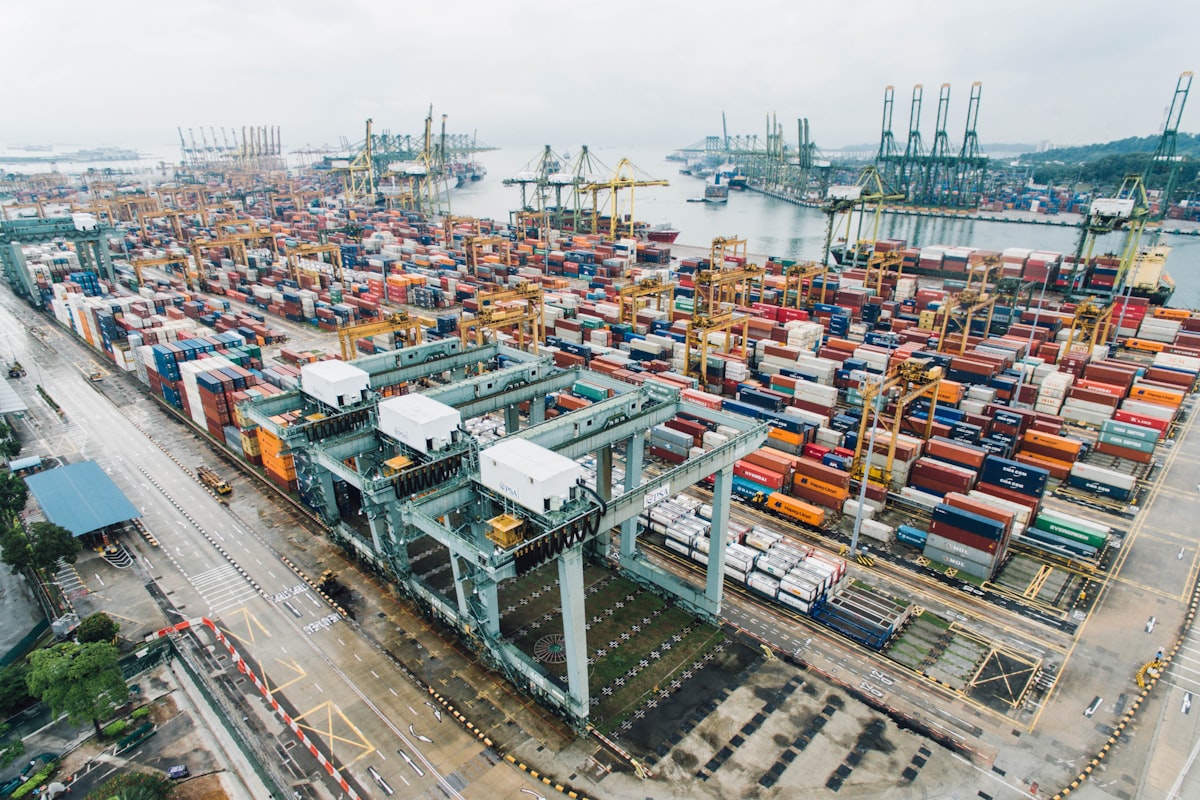
Two containers, one tariff book, two completely different bills
German customs collects three things at the border: duty on the goods, import VAT on top of that, and excise duty if the product attracts it. Everything else in your cost model - the freight, the insurance, the agent, the truck - is priced by the market. The legal part is the part importers get wrong, because most buyers read one percentage off a tariff site, multiply it by the supplier invoice, and call the result a landed cost. Your bill is decided by four questions, and 'what is the duty rate on China?' is not one of them.
I priced two orders on the same Tuesday in February 2026. The first was 1,200 cotton T-shirts out of Ningbo for a textile wholesaler in Leipzig. The second was 2,400 stoneware mugs out of Chaozhou for a catering supplier near Nuremberg. Both buyers had done their homework, both had a TARIC code, and both expected a total bill around 30% of the goods value. The shirt order landed at 34% of its customs value in duty and VAT. The mug order landed at 122%, because a new anti-dumping regulation on Chinese ceramic tableware was adopted in that same week and the number my client had found for HS 6912 had been overtaken by events. One of those two bills is a rounding error in a business plan. The other one is the entire margin.
| The question | Where the answer lives | What it changes |
|---|---|---|
| Is this a distance sale to a consumer or a commercial consignment? | The EUR 150 duty exemption was abolished on 1 July 2026; distance sales up to EUR 150 pay EUR 3 per tariff line | Whether duty starts at the first euro or per declared line |
| Which TARIC code is it, and is a trade-defence measure sitting on that code? | EZT-online and TARIC for the tariff; Commission anti-dumping regulations for the surcharge | 0% to 79% extra on the identical box |
| What does German customs treat as the value? | Articles 70 and 71 of the Union Customs Code: price paid plus freight plus insurance | The base every percentage is applied to |
| What stacks on top, and what comes back? | 19% import VAT, clearance and port charges, then input VAT deduction | Cash at the border versus real, permanent cost |
Gate 1: a distance sale to a consumer, or a commercial consignment?
Until 30 June 2026 a consignment worth up to EUR 150 arrived duty free, whoever ordered it. That exemption is gone. Council Regulation (EU) 2026/382 amended the EU duty-relief regulation with effect from 1 July 2026, and German customs is blunt about what replaced it: goods in consignments up to EUR 150 delivered as distance sales from third countries to consumers in the EU carry a flat duty of EUR 3 per goods category, which in practice means per declared tariff line, while the ordinary tariff rate applies to everything else. The charge is per line, not per parcel and not per unit, and the official examples show how wide the difference is.
Three practical consequences for a German buyer. First, the free sample box is over: a EUR 90 consignment from a Chinese supplier now attracts duty from the first euro, and the flat EUR 3 route is reserved for distance sales to consumers, which a business-to-business sample is not. Second, do not confuse this with the handling fee that is coming: German customs states that a separate handling fee will apply at the latest from November 2026, on top of the flat duty, and the two are different charges. Third, if you sell to consumers, IOSS is still the cleanest route, with one condition that German customs spells out explicitly - where IOSS is used, the declarant is the seller or its indirect representative, and the importer or the recipient cannot act as declarant. German customs also confirms that the usual waiver for trivial amounts of duty cannot be applied to these flat charges, so the EUR 3 really is collected.
| What is in the consignment | Tariff lines | Flat duty |
|---|---|---|
| Four pairs of socks | 1 | EUR 3 |
| Four pairs of socks, one plush toy and one phone charging cable | 3 | EUR 9 |
| Ten pairs of socks, two cable ties and four pairs of trousers | 3 | EUR 9 |
| One EUR 90 commercial sample imported by a company | 1 | EUR 3 flat duty does not apply; the tariff rate is charged from the first euro |
Gate 2: the code, and the measure sitting on top of the code
The tariff rate in the customs tariff - the third-country rate, the one everyone quotes - is only the first layer. For Chinese origin goods it is often not the layer that matters. The European Commission can impose anti-dumping duties and countervailing duties on top, and it does so for China more than for any other origin. These are not small corrections. They are levied in addition to the tariff duty, on the same customs value, and some of them are expressed as a fixed amount per piece or per tonne instead of a percentage, which makes whatever number is written on your supplier invoice irrelevant. There is also no preference to chase: the EU has no free trade agreement with China, so unlike Mexican or Japanese goods there is no origin document that can reduce the rate. The only two levers are the code you declare and whether a measure is attached to it.
Three things I check before I quote any Chinese consignment. One, origin follows production, not the port of loading: a container that leaves from Vietnam but was manufactured in China is still Chinese origin, and the Commission runs anti-circumvention checks precisely because re-routing became common. Two, the measure is not always a percentage of value, so the specific-duty versions cannot be engineered around with a lower invoice. Three, the ceramics case is a live example of how fast a number goes stale: HS 6912 sat at a 7% tariff rate for years, which is why most published China guides, including older pages on this site, still print 7%, and since 7 February 2026 the country-wide anti-dumping duty of 79% is what German customs actually collects on that code.
| Chinese origin goods | Trade-defence duty | Source and date |
|---|---|---|
| Ceramic tableware and kitchenware (HS 6911, 6912) | 79% country-wide, in addition to the 7% tariff duty | Commission Implementing Regulation (EU) 2026/274, adopted 5 February 2026, in force since 7 February 2026 |
| Passenger car and light lorry tyres | 4.3% to 45.3% | European Commission, 9 July 2026 |
| Polyamide yarns | 60% to 67.6% | European Commission, 28 July 2026 |
| Electric bicycles | 10.3% to 70.1% anti-dumping, plus 3.9% to 17.2% countervailing | Regulation (EU) 2025/120, measures extended January 2025 |
| Everything with no measure on it | 0% to 17% tariff duty, depending on the code | German reference band for 2026 |
Gate 3: what German customs treats as the value
Every percentage in this article is applied to a base, and the base is not the invoice. German customs works through the valuation ladder - the transaction value of the imported goods first, then identical goods, similar goods, the deductive method, the computed value, and the fallback method - and it lands on the transaction value in almost every ordinary purchase. To that price it adds the transport and the insurance costs up to the point where the goods enter the customs territory, if they were not already included. Foreign currency amounts are converted at the rate in force at the relevant time, which is why the exchange rate printed in your tariff ruling is not the one in your bank statement that month.
The official German wording is worth reading twice. For the customs value, transport and insurance costs are added to the price actually paid or payable where they are not already included. For the import VAT, the assessment base is the customs value, and to that base are added any foreign duties and taxes already borne, the customs duties and other EU import charges falling on the goods, and the transport costs from the EU border to the first destination inside the Union. The consequence is that freight is not just a logistics line: it is taxed. Insurance is taxed. And the duty itself is taxed, because the duty sits inside the base on which the 19% is calculated. If you cut your freight bill by USD 900 on a shipment of that size, you also cut the import VAT you have to finance by roughly EUR 158, and if the goods carry a tariff duty the duty falls with it.
| Line | How it is treated | Where it comes from |
|---|---|---|
| Supplier invoice price | Starting point of the customs value | Article 70 of the Union Customs Code |
| Freight to the EU border | Added to the customs value | Article 71 of the Union Customs Code |
| Marine or air insurance | Added to the customs value | Article 71 of the Union Customs Code |
| Inland freight inside the EU | Outside the customs value, inside the import VAT base | Section 11(3) of the German VAT Act |
| Customs duty and any trade-defence duty | Added to the import VAT base | Section 11(3) of the German VAT Act |
| Import VAT | 19%, or 7% for goods that qualify for the reduced rate | Sections 11 and 12 of the German VAT Act |
Gate 4: what stacks on top, and what you get back
Duty and import VAT are the charges German customs collects. Everything else at the border is somebody's invoice, and the useful discipline is separating the money you will never see again from the money that comes back through your VAT return. Duty is permanent: it is a cost of goods sold, and no later filing recovers it. Import VAT is not a cost at all for a VAT-registered business buying for taxable supplies, which is why a heavily dutied consignment can still be manageable while a mis-declared one wrecks a quarter.
These ranges are from quotes I wrote between August and September 2026, so treat the two figures I did not source from an authority as market observation rather than law. The rule that matters is the last column: on the mug consignment in the next section, EUR 1,375.02 of import VAT is a liquidity event, and EUR 3,276.76 of duty is gone. German customs also allows the cash to be managed rather than paid at the gate - the new flat-duty imports in particular run through a deferral account, with the amounts notified and due on the 16th of the following month - and any business importing regularly should be discussing a deferral account with its customs office before it discusses a lower freight rate with its forwarder. Two administrative facts to settle before your first container: without a valid EORI number your agent cannot file the declaration at all, and in Germany the declaration itself runs through ATLAS, the customs IT system that carries the entry and the duty assessment, so your agent needs your EORI on file before the vessel berths, not after.
| Charge | Indicative 2026 range | Comes back? |
|---|---|---|
| Customs agent fee per declaration | EUR 75 to EUR 150 | No, though the 19% German VAT on the fee is recoverable |
| Terminal handling, Hamburg or Bremerhaven | EUR 140 to EUR 220 per container | No |
| Inland trucking, Hamburg to southern Germany | EUR 180 to EUR 450 | No |
| Storage or demurrage after the free days | EUR 60 to EUR 140 per container per day | No |
| Customs duty, including any trade-defence duty | 0% to 86% of the customs value | Never |
| Import VAT | 19%, or 7% for qualifying goods | Yes, as input VAT, if you are VAT-registered |
The worked example: 1,200 shirts out of Ningbo
Here is the first of those two February quotes, converted and rebuilt line by line. The buyer is a textile wholesaler in Leipzig, the supplier ships FOB Ningbo, and the goods are cotton T-shirts at 12% under HS 6109.10. Nothing unusual happens in this shipment, which is exactly the point: this is what a clean Chinese consignment costs a German importer in 2026.
Run the arithmetic yourself, because it is the only way to trust it. The customs value is EUR 5,143.52, the duty is 12% of it, the VAT base adds that duty plus EUR 180 of inland trucking, and the 19% is charged on the sum. The duty is EUR 617.22 against a EUR 4,000 goods purchase, which is 15.4% of the factory price - tolerable for a product with 60% gross margin, painful for one with 25%. If you are VAT-registered in Germany, the EUR 1,128.74 of import VAT arrives back through your return and the order's real cost is EUR 4,907. If you are not, the landed cost is EUR 6,035.74 and the shirts are 51% more expensive than the supplier invoice suggests.
| Line | Amount | How it is calculated |
|---|---|---|
| 1,200 cotton T-shirts, FOB Ningbo at USD 3.60 | EUR 4,000.00 | USD 4,320 converted at 1 EUR = 1.08 USD |
| LCL sea freight, Ningbo to Hamburg, 8.5 CBM at USD 140 | EUR 1,101.85 | USD 1,190 added to the customs value |
| Marine insurance | EUR 41.67 | USD 45 added to the customs value |
| Customs value | EUR 5,143.52 | Price paid plus freight plus insurance |
| Customs duty at 12% | EUR 617.22 | 12% of EUR 5,143.52 |
| Inland freight, Hamburg to Leipzig | EUR 180.00 | Inside the VAT base, outside the customs value |
| Import VAT base | EUR 5,940.74 | Customs value plus duty plus inland freight |
| Import VAT at 19% | EUR 1,128.74 | 19% of EUR 5,940.74 |
| Customs agent fee | EUR 95.00 | Plus 19% German VAT on the fee |
| Cash paid at the border | EUR 1,745.96 | Duty plus import VAT, 33.9% of the customs value |
| Real cost with the VAT recovered | EUR 4,907.00 | EUR 907 above the factory price, a 22.7% add-on |
| Total landed cost if the VAT is not recoverable | EUR 6,035.74 | The same order bought by a non-registered buyer |
The same box with a measure on it: 2,400 stoneware mugs
Now the second quote from that February week. A catering supplier near Nuremberg orders 2,400 stoneware mugs from Chaozhou, FOB at USD 1.35 each. The freight is smaller than the T-shirt consignment, the goods are cheaper per unit, and the code the buyer had been using for years - HS 6912 - carries a 7% tariff rate. Everything about this order looks easier than the first one.
The comparison that matters is against the same shipment without the measure. Drop the 79% line and the customs value is unchanged at EUR 3,810.19, the duty is EUR 266.71, the VAT base is EUR 4,226.90, the import VAT is EUR 803.11 and the cash at the border is EUR 1,069.82 - 28.1% of the customs value rather than 122.1%. The measure adds EUR 3,010.05 of duty to a purchase whose goods cost EUR 3,000, and even after recovering the VAT it leaves EUR 2,438.14 of extra permanent cost. That is the whole argument for spending an afternoon in TARIC before you place a ceramic order rather than after your broker calls you.
| Line | Amount | How it is calculated |
|---|---|---|
| 2,400 stoneware mugs, FOB Chaozhou at USD 1.35 | EUR 3,000.00 | USD 3,240 converted at 1 EUR = 1.08 USD |
| LCL sea freight, Shantou to Hamburg, 6 CBM at USD 140 | EUR 777.78 | USD 840 added to the customs value |
| Marine insurance | EUR 32.41 | USD 35 added to the customs value |
| Customs value | EUR 3,810.19 | The base every percentage below is applied to |
| Customs duty at 7% | EUR 266.71 | The rate that most published guides still print |
| Anti-dumping duty at 79% | EUR 3,010.05 | Country-wide measure in force since 7 February 2026 |
| Inland freight, Hamburg to Nuremberg | EUR 150.00 | Inside the VAT base |
| Import VAT base | EUR 7,236.95 | Customs value plus both duties plus inland freight |
| Import VAT at 19% | EUR 1,375.02 | Recoverable if you are VAT-registered |
| Cash paid at the border | EUR 4,651.78 | 122.1% of the customs value |
| Anti-dumping duty per mug | EUR 1.25 | Within a cent of the EUR 1.25 factory price of the mug itself |
What the freight market is doing while you read this
Freight is the line item that moves most, and September 2026 is a good month to be careful. Our own tracker for this lane, which is what a forwarder will quote a small importer on a monthly arrangement, sits well below the spot indices that were published in mid-September, and both numbers are correct - they measure different products.
Do not read the gap between USD 2,530 and USD 4,626 as one of the two sources being wrong. The tracker band describes a bookable port-to-port arrangement for a regular shipper; the index tracks the spot bookings struck in one week, on a lane that ends in Rotterdam rather than Hamburg, and in a month when carriers were pushing volume out ahead of China's Golden Week holiday from 1 to 7 October. The wider market context matters too: major carriers have been gradually resuming Suez transits, which relieves the alternative routes, security in the Red Sea is still unsettled, and industry commentary in late September points to a possible port strike in Germany - carriers price that uncertainty into North European bookings. If you are fixing a rate this month, fix it with a validity date and a surcharge clause, not a promise.
| Item | September 2026 | Source |
|---|---|---|
| 20ft FCL, China to Hamburg | USD 1,880 to USD 2,780 | This site's route tracker |
| 40ft FCL, China to Hamburg | USD 2,530 to USD 3,730 | This site's route tracker |
| LCL | USD 110 to USD 168 per CBM | This site's route tracker |
| Air freight | USD 4.20 to USD 6.30 per kg | This site's route tracker |
| Sea transit, port to port | 28 to 35 days | This site's route tracker |
| Customs clearance in Germany | 1 to 2 working days | This site's route tracker |
| Drewry World Container Index, global 40ft average | USD 4,500 | Drewry, 17 September 2026 |
| Drewry World Container Index, Shanghai to Rotterdam | USD 4,626, up 90% year on year | Drewry, 17 September 2026 |
| Freightos global container index | USD 3,407.40 | Freightos, 18 September 2026 |
| Spot bookings against September 2025 | up about 135% | Market commentary, September 2026 |
The three lines I write on every quote
After enough of these shipments, the whole calculation collapses into three lines, and I put them on the quote itself because clients stop arguing once they see the structure.
My position, after two years of watching Chinese consignments get priced wrong: the tariff rate is the least interesting number on the page. For most consumer goods from China it sits between 0% and 12%, it is published free of charge, and your forwarder will tell you what it is in a two-minute reply. The two numbers that decide whether the order makes money are whether a trade-defence measure sits on your code - which is how a 7% mug becomes an 86% mug - and what your customs declared as the value, freight and insurance included. Check those two before you negotiate anything else, and check them again every quarter, because the measure list changes without asking you.
- Customs value = supplier price + freight to the EU border + insurance. Nothing else, and nothing less.
- Duty = the tariff rate for the declared code, plus any anti-dumping or countervailing measure on that code, applied to the customs value.
- Cash at the border = duty + import VAT. Only the first of those two is a permanent cost.

Frequently Asked Questions
Do I pay German duty on the freight as well as on the goods?
Yes. The customs value is the price you paid plus the transport and insurance costs up to the EU border, added in where they were not already included in the invoice. Import VAT is then charged on that customs value plus the duty plus the transport from the border to the first destination inside the EU, so a euro of freight can trigger both a duty and a tax consequence.
My goods were made in China but the container loads in Vietnam. Do I still pay the Chinese anti-dumping duty?
Almost certainly yes. Origin follows where the goods were produced, not where they were shipped from, so goods manufactured in China remain Chinese origin after a transshipment in a third country. The Commission also runs anti-circumvention checks, and the newest ceramic regulation was written specifically to strengthen them. If your supplier claims the goods were genuinely produced outside China, ask for the production evidence and have your customs agent confirm the non-preferential origin before the container sails.
My mugs are 6912 and every table says 7%. Why is my agent talking about 79%?
Because the tariff rate and the trade-defence measure are two separate charges. HS 6912 carries a 7% tariff duty, and since 7 February 2026 imports of Chinese ceramic tableware and kitchenware also carry a country-wide anti-dumping duty of 79% imposed by Commission Implementing Regulation (EU) 2026/274. Both are applied to the same customs value, so the mugs are effectively charged at 86% before VAT. Read the measure column in TARIC, not just the rate column.
Can I recover German import VAT on a Chinese shipment?
If you are VAT-registered in Germany and use the goods for taxable supplies, the import VAT is deductible as input VAT in your return, and the import entry has to be in the name of your business. The duty is a different matter: customs duty, including any anti-dumping duty, is a permanent cost with no recovery route. Many importers also arrange a deferral account so the VAT is not paid out at the gate at all.
Does the new EUR 3 flat duty apply to my commercial shipments?
No. The flat EUR 3 per tariff line applies to goods in consignments up to EUR 150 delivered as distance sales to consumers in the EU; for everything else the ordinary tariff rate applies, and the old EUR 150 duty exemption that used to cover small consignments was abolished on 1 July 2026. A separate handling fee, distinct from the flat duty, is due to apply at the latest from November 2026 according to German customs.
Written by Ace Wang
Founder & Import Operations Specialist
Ace Wang has spent 20 years in cross-border ecommerce operations, managing import supply chains for small and medium businesses. From the early days of Alibaba sourcing to modern multi-country logistics strategies, Ace has helped hundreds of entrepreneurs navigate customs clearance, shipping optimization, and landed cost management. The LandedCostHub calculator and all content on this site are built on real-world experience — not textbook theory. Ace believes that transparent, accurate cost data is every importer's right, not a professional service luxury. More about Ace Wang →
Main departure hubs in China
Most China export freight moves through Shanghai, Shenzhen, Ningbo, Guangzhou. The hub you book from drives transit time, departure frequency and often the rate itself — two gateways in the same country can differ by hundreds of dollars on a container.
Sea freight loads at the container port, air freight at the international airport. Ask your forwarder which hub the quote is based on before comparing rates.
Import cost on key routes
View shipping rates, duty rates, and total landed cost estimates.
Calculate Your Total Landed Cost
Use our free calculator to estimate your total import costs including duties, shipping, and taxes.
Related Guides
De Minimis Threshold Guide: Import Duty-Free Limits by Country
Complete guide to de minimis thresholds worldwide. Learn how to legally reduce landed costs by staying under duty-free limits.
Read More →Amazon FBA Import Costs: Complete Guide for Sellers
Calculate your total landed costs for Amazon FBA imports. Understand duty, shipping, storage, and FBA fee structures.
Read More →US Customs Duty Rates: Complete Guide for Importers
Comprehensive guide to US customs duty rates. Learn how duties are calculated, find your HTS code, and discover duty reduction strategies.
Read More →Popular Routes
Calculate import costs from this country.
China → Pakistan
View import costs and calculator
China → Nigeria
View import costs and calculator
China → Bangladesh
View import costs and calculator
China → Nepal
View import costs and calculator
China → Malaysia
View import costs and calculator
China → Japan
View import costs and calculator
China → South Korea
View import costs and calculator
China → Mexico
View import costs and calculator
China → Spain
View import costs and calculator