Importing to Germany in 2026: Four Ways In, One Customs Bill
Updated: 2026-10-21
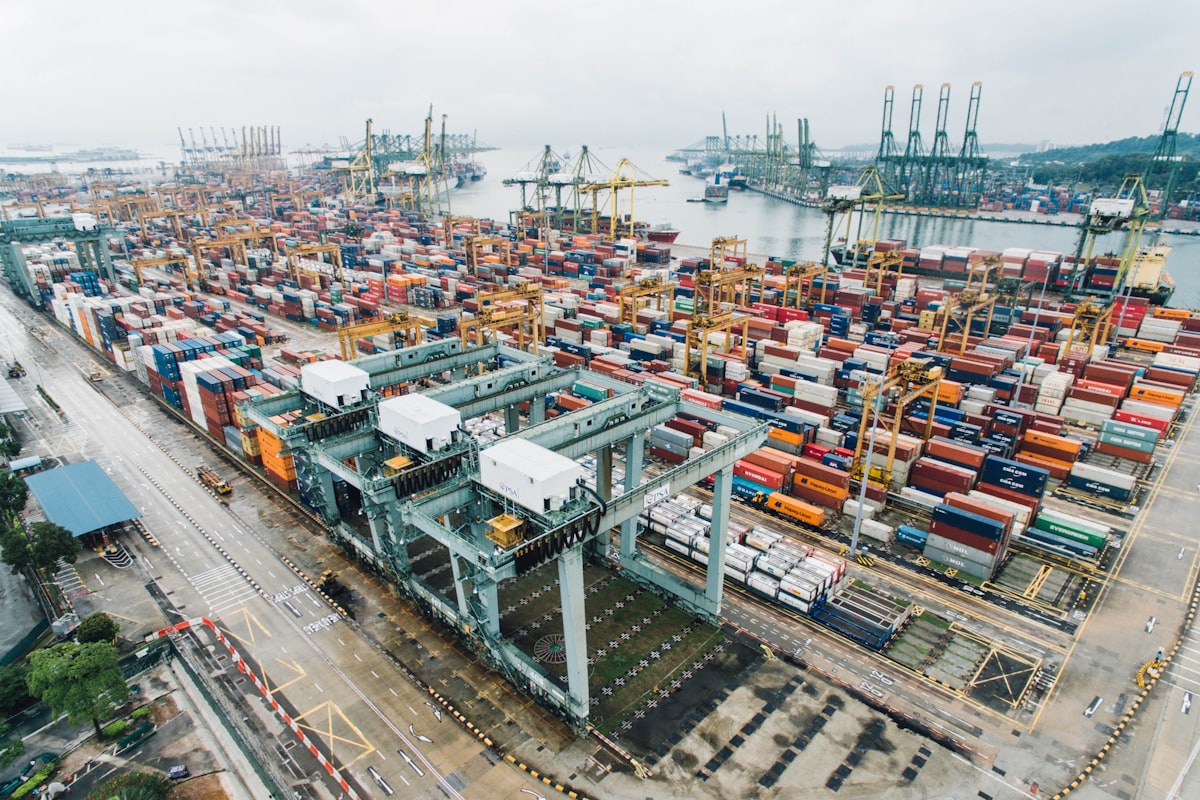
One Order, Four Ways In
Take one order and stop arguing in percentages. Two thousand four hundred pairs of leather shoes, HS heading 6403, FOB Haiphong at EUR 19.50 a pair, which is EUR 46,800 of goods. Ocean freight to Hamburg EUR 2,100, marine insurance EUR 140. That puts the declared customs value at the German border at EUR 49,040. Nothing else changes in this article. Same factory, same cartons, same buyer, same week. The only variable is the channel the goods travel through, and that single choice moves the duty and import VAT you pay at the border between EUR 9,317.60 and EUR 13,986.21 on an order worth less than fifty thousand euros.
I started tracking this after a footwear importer in North Rhine-Westphalia showed me two entry documents for identical shipments six weeks apart. Both were 2,400 pairs from the same Vietnamese factory. One carried EUR 0 in duty, the other EUR 3,923.20. The difference was not a rate change, a customs decision or a lucky classification. One shipment had a certificate of origin stapled to the commercial invoice and the other had a promise from the supplier that he would "send it later". He never did. The buyer paid the 8% out of his own margin and then spent four months discovering that the paperwork could not be reconstructed after the fact from the Vietnamese side. That is the whole game in one anecdote: in Germany you are not taxed on what your goods are worth, you are taxed on what you can prove about them at the moment of release.
| Channel | Who signs the declaration | Duty on this order | Import VAT at release | What it triggers |
|---|---|---|---|---|
| Own EORI, FCL to Hamburg, valid EUR.1 | You, as importer of record | EUR 0 | EUR 9,317.60 | EORI, ATLAS entry, LUCID if you own the packaging |
| Own EORI, FCL to Hamburg, no origin proof | You, as importer of record | EUR 3,923.20 | EUR 10,063.01 | Same, plus 8% you will never recover |
| Consolidated LCL, forwarder files | Forwarder as indirect representative | EUR 0 with EUR.1 | EUR 9,239.89 | Written representation mandate, destination LCL charges |
| 2,400 single-pair parcels, seller's IOSS | Seller or IOSS holder | EUR 7,200 at EUR 3 per parcel | Collected at checkout | IOSS registration, product identifiers from 1 November 2026 |
| Air to Frankfurt, 2,640 kg chargeable | You, as importer of record | EUR 0 | EUR 11,526.92 | Same as FCL, with a cash cycle measured in days |
The Certificate That Is Worth EUR 4,668
Vietnam and the EU have had a free trade agreement in force since 1 August 2020, and footwear was one of the categories staged down over seven years. On day one, 42.1% of footwear lines went to zero. By year three that reached 73.2%. The final tranche lands on 1 January 2027. So in October 2026 most leather footwear lines from Vietnam already enter Germany at zero, but "most" is not "yours", and the only way to know is to check the ten-digit line rather than the chapter heading. Assume it applies and you will be right roughly three times out of four, which is a bad way to run a purchase order.
The certificate itself is a EUR.1 movement certificate, applied for through the Vietnamese Ministry of Industry and Trade portal and issued electronically. It is valid for 12 months. Here is the part that catches European buyers: the EU side will accept a preference claim after import and refund the duty, but Vietnam requires the origin declaration to have been made at export, inside the window set by Circular 33/2023/TT-BTC. A certificate cannot be conjured up in November for goods that sailed in September, which is exactly what my North Rhine-Westphalia importer was told after the fact. On this order the missing paper cost EUR 3,923.20 in duty and another EUR 745.41 in import VAT charged on that duty, EUR 4,668.61 in total, or 10% of the FOB value. The certificate itself cost him a few dozen euros.
- Origin is a document, not a country. A Vietnamese factory is not the same thing as Vietnamese origin, and a Chinese-owned plant in Hai Phong can still produce Vietnamese-origin shoes.
- Check the ten-digit line against the staging list before you confirm the PO, not after the container is booked.
- The EUR.1 has to be issued at export. Build it into the supplier's shipping checklist as a hard gate, next to the packing list.
- Invoices must match the certificate line by line: quantity, description, HS code and consignee. A mismatch is the most common reason a valid certificate gets rejected at the desk.
- Keep the certificate and the underlying production records for at least three years, which is the retention period under the Union Customs Code. Post-clearance audits routinely cover that whole window.
Who Is Allowed to Sign the Declaration
Every import into Germany is lodged electronically in ATLAS, and every declaration needs an EORI number. That number comes free of charge from the Generalzolldirektion, it starts with DE, and it is yours as a company rather than per shipment. The question that actually matters is not whether an EORI exists somewhere in the chain, but whose name sits on the entry. There are three arrangements. Under direct representation your forwarder declares the goods in their own name and re-invoices the charges to you. Under indirect representation they declare in your name and your EORI, which makes you the importer of record. Or you file it yourself, which almost nobody does for a first container and a lot of people do by their third.
The direct representation trap is invisible on the invoice. A forwarder clears your pallets under their own EORI, sends you a tidy all-in bill including duty and import VAT, and everything looks settled. Then your accountant asks for the import document so the 19% can go on the VAT return, and there isn't one in your name to give her. The tax was paid, the forwarder recovered it, and you are holding a service invoice instead of an import assessment. I have seen a company lose EUR 11,400 of deductible VAT this way over one quarter before anyone noticed, because the numbers on the invoices looked plausible and nobody matched them to an entry.
| Arrangement | Name on the entry | Who can deduct the import VAT | Who carries the risk |
|---|---|---|---|
| Direct representation | Forwarder's EORI | Forwarder, not you | Forwarder, who bills you for it |
| Indirect representation | Your EORI, your name | You | You, with a written mandate in place |
| You file in ATLAS | Your EORI | You | You, including classification errors |
| Seller claims DDP and clears in their name | Seller or their EU entity | Not you | Seller, but you cannot audit the duty paid |
The 19% You Get Back, and the 19% You Keep
German import VAT, the Einfuhrumsatzsteuer, is 19% of the customs value plus the duty plus the freight and insurance up to the first destination inside Germany. Section 11 of the UStG is explicit about the additions, and Section 12 sets the rate at 19%, with a reduced 7% for the goods listed in Anlage 2. On our shoe order with a valid EUR.1 that is EUR 9,317.60, and without it EUR 10,063.01, because the duty itself joins the base. An 8% duty is therefore a 9.52% hit once you count the VAT charged on top of it. That number, not the headline tariff, is what belongs in your costing sheet.
For a VAT-registered German company the 19% is not a cost. It is a loan to the tax office, usually for three to six weeks. You pay at release, then deduct it as input tax on the advance return for the period, provided the import document names your company and your VAT number. If you import monthly and your volumes are decent, ask the Generalzolldirektion for a deferment account, which lets you settle duty and import VAT by direct debit about a month after release instead of per container. It needs a guarantee and it is granted rather than automatic, but on a EUR 60,000 monthly import programme it is the difference between financing the tax office and financing your stock. Private buyers and companies without a German VAT registration get none of this back. For them the 19% is a permanent cost, which is why the same sofa costs a business and a consumer very different amounts.
- The import document must name you as importer. It is the only paper that unlocks the deduction.
- Food, printed books, newspapers and cut flowers sit at 7%. Beverages, restaurant-adjacent goods and most other consumer products sit at 19%.
- Do not use a rule of thumb for the 7% list. Anlage 2 to the UStG is the list, and it has exceptions that surprise people.
- Import VAT you cannot deduct is a real cost, so model it as one whenever the buyer is not VAT-registered.
- Freight to the first German destination is part of the base. Freight onwards from there is not, unless you knew the final destination when the tax was triggered.
What Changed on 1 July 2026 for Parcels
The EUR 150 duty exemption for low-value consignments stopped applying to distance sales on 30 June 2026. From 1 July 2026 a temporary flat customs duty of EUR 3 per item applies to consignments worth up to EUR 150, under Council Regulation (EU) 2026/382. It runs until 1 July 2028, when the customs data hub for e-commerce takes over and the normal tariff applies again. Two details decide most arguments. First, it is charged per item in the tariff sense, not per unit: five identical T-shirts in one parcel attract one EUR 3 charge, while one T-shirt plus one wristwatch attract EUR 6. Second, it is charged on the declarant, meaning the seller, the IOSS holder or their representative, not on the consumer at the door. Product identifiers become mandatory on 1 November 2026.
The exclusion clause is the reason origin paperwork suddenly matters to people selling phone cases. Goods that benefit from a preferential trade agreement or a customs union measure are outside the flat fee, as long as the VAT was not collected through IOSS and the goods are declared in the H1 dataset. Read that twice, because it inverts the usual advice. For a low-value parcel, a valid preference claim plus a non-IOSS declaration is now the cheaper route, while an IOSS-collected parcel pays the EUR 3 whatever its origin. The Commission's own justification is volume: close to 5.9 billion low-value items entered the EU in 2025 duty-free, and over 60% of the products inspected in cosmetics, protective equipment, food supplements, toys and electronics that year failed EU standards. You can disagree with the instrument and still plan around it.
| Basket | Bill to 30 June 2026 | Bill from 1 July 2026 |
|---|---|---|
| 4 pairs of socks, same tariff line | EUR 0 duty | EUR 3 (1 item) |
| 4 pairs of socks plus a plush toy plus a charging cable | EUR 0 duty | EUR 9 (3 items) |
| One pair of EUR 120 shoes with a EUR.1, no IOSS, declared in H1 | EUR 0 duty | EUR 0, preferential goods are excluded |
| The same shoes sold with IOSS VAT collected at checkout | EUR 0 duty | EUR 3, IOSS does not exclude you |
| 2,400 single-pair parcels instead of one container | EUR 0 duty | EUR 7,200 in flat fees |
Three Registrations Customs Never Asks For
German customs will release your goods without ever mentioning the obligations that come after release, and that gap is where new importers get hurt. If you distribute packaged goods in Germany you have to be registered in the LUCID packaging register before the first delivery, and for most sales packaging you also need system participation, meaning a contract with a dual system that licenses your volumes. Electrical goods need a WEEE registration number from stiftung ear before they can be offered. And since 1 January 2026 the carbon border adjustment mechanism is in its definitive regime, with authorisation, reporting and the purchase and surrender of certificates for cement, iron and steel, aluminium, fertilisers, electricity and hydrogen. None of these appear on a customs declaration. All of them can stop your sales.
I watched a mid-sized importer of kitchen appliances get a cease-and-desist letter from a competitor in 2024 for missing LUCID registration on a product line worth about EUR 180,000 a year in Germany. The customs side was flawless, the CE documentation was in order, and the company still had to pull the listing for eleven days while it registered and signed a dual system contract. The fine itself was modest. The lost sales window before Christmas was not. Budget a week for LUCID and two to four weeks for a WEEE registration, and do both before you book the container rather than after it clears.
| Registration | Triggered by | Who checks it | Cost of ignoring it |
|---|---|---|---|
| LUCID packaging register | Any packaged goods put on the German market | ZSVR and competitors | Sales stop, cease-and-desist letters, and back-dated volume fees |
| Dual system participation | Sales packaging that ends up with the consumer | System operators and market surveillance | Unlicensed volumes, plus retroactive licensing at your expense |
| WEEE registration at stiftung ear | Electrical and electronic equipment | Market surveillance authorities | Listing removal and a sales ban |
| CBAM authorisation | Cement, iron and steel, aluminium, fertilisers, electricity, hydrogen | German Emissions Trading Authority | Goods cannot be imported under the definitive regime |
Where the Box Actually Lands
Hamburg handled 8.3 million TEU in 2025, up 7.3%, on total throughput of 114.6 million tonnes. The mix inside that number is the interesting part: container traffic with China rose 6.5%, with India 49.2%, with Malaysia 84.3%, and with the United States it fell 25.6% as the 2025 tariff shocks reshaped routings. If your sourcing map still assumes a China-only supply chain into Hamburg, the port statistics have already moved past you. Sea freight from Chinese ports to Hamburg runs about 28 to 38 days port to port, LCL adds four to six days for consolidation, the China-Europe rail corridor reaches German hubs in roughly 12 to 18 days, air freight clears in 5 to 8 days, and express door-to-door is 2 to 5.
Indicative 2026 spot rates on the China to Germany lane sit at USD 1,800 to 3,500 for a 20ft container and USD 3,000 to 6,000 for a 40ft or high cube, with LCL at USD 60 to 120 per cubic metre and air at USD 3.80 to 7.00 per kilo for general cargo, higher under 500 kg. Treat those as budget anchors, not quotes, and get a dated quote for the week you actually ship. The second decision is the gateway, and it changes less than people think: Hamburg and Bremerhaven for ocean, Frankfurt for air, Duisburg for rail and barge. What changes a lot is the terminal handling and free time at each, and those two lines are where a cheap freight quote quietly becomes an expensive arrival.
| Gateway | Mode | Transit from Asia | When it wins |
|---|---|---|---|
| Hamburg | Ocean FCL and LCL | 28 to 38 days port to port | Volume into northern and central Germany, weekly sailings, deepest carrier choice |
| Bremerhaven | Ocean FCL | 28 to 38 days port to port | Volume heading south, and vehicle or project cargo |
| Duisburg | Rail and barge | 12 to 18 days by rail | Inland distribution without a North Sea leg |
| Frankfurt | Air | 5 to 8 days airport to airport | Restocks under 500 kg where the margin covers EUR 3.80 to 7.00 per kilo |
The Verdict by Scenario
Channels are not better or worse in the abstract, and anyone who tells you one is cheapest has not looked at your order. Here is how I would decide, with the number that actually decides it. First shipment from a new supplier, 18 cubic metres, unproven quality: LCL with your own EORI and an indirect representation mandate, because you need to learn the entry once with your name on it and you should not pay for a container you might not refill. Eighteen cubic metres or more per quarter with a stable supplier: FCL to Hamburg, 20ft at USD 1,800 to 3,500 or 40ft high cube at USD 3,000 to 6,000, and a EUR.1 in the document pack every single time. High-value restock under 200 kg: air to Frankfurt, where the freight premium of roughly EUR 11,628 over ocean buys you three to four weeks of cash cycle. Direct-to-consumer below EUR 150 per order: IOSS plus the EUR 3 fee, and stop pretending the parcel route is duty-free. Steel or aluminium components: CBAM authorisation before you book anything, because the goods cannot enter under the definitive regime without it.
My bias, stated plainly: most importers who ask me about Germany should be running indirect representation with their own EORI from the first container, not direct representation because it looks tidier on the invoice. The extra paperwork is one mandate and one VAT number. The thing it buys you is the legal position of importer of record, which is what lets you deduct the 19%, contest a classification decision, and claim preference retrospectively if a certificate turns up late. Importers who hand that position to a forwarder to save an afternoon end up paying for it in VAT they cannot reclaim. The second bias: put the certificate of origin in the supplier's shipping checklist with the same weight as the bill of lading. Nobody argues about EUR 4,668 on a purchase order. Everybody argues about it after the container has been released.
| Scenario | Channel I would use | The number that decides it |
|---|---|---|
| First order, 18 cbm, unproven supplier | LCL, own EORI, indirect representation | 19% of EUR 48,631 is deductible only if your name is on the entry |
| 20 cbm or more per quarter | FCL 40HC to Hamburg with EUR.1 | EUR 3,000 to 6,000 freight against EUR 4,668.61 of duty risk |
| High-value restock under 200 kg | Air to Frankfurt | EUR 11,628 freight premium against three to four weeks of cash |
| D2C orders below EUR 150 | IOSS and accept the EUR 3 | EUR 7,200 of flat fees on 2,400 single-pair parcels |
| Steel or aluminium inputs | Ocean plus CBAM authorisation | No authorisation, no import, whatever the freight rate |

Frequently Asked Questions
Do I need my own German EORI if my forwarder handles customs?
You need one if you want to be the importer of record, and you want to be the importer of record if you intend to deduct the 19% import VAT. A forwarder clearing under direct representation uses their own EORI, pays the import VAT, recovers it, and invoices you a service fee. Ask which arrangement is in the mandate before the first shipment, because it cannot be fixed retroactively for VAT purposes.
How much duty will I pay on clothing or shoes from Vietnam in 2026?
MFN rates are 12% on most clothing lines and 8% on leather footwear. Under the EU-Vietnam agreement most footwear lines are already at zero, with the final tranche landing on 1 January 2027, so it depends on your ten-digit line. A valid EUR.1 issued at export is what turns 8% into 0%, and on a EUR 49,040 customs value that is EUR 3,923.20 of duty plus EUR 745.41 of VAT charged on it.
Can I reclaim the 19% Einfuhrumsatzsteuer?
Yes, if you are VAT-registered in Germany and the import document names your company and VAT number. It goes on the advance return as input tax, typically three to six weeks after you pay it at release. If you are a private buyer or a company without a German VAT registration it is a permanent cost and cannot be reclaimed.
Does the EUR 3 flat duty apply to my B2B container?
No. It applies to distance sales of consignments valued up to EUR 150, charged per item as defined by tariff classification, and it runs from 1 July 2026 to 1 July 2028. Normal commercial entries pay the tariff. The part that matters for small parcels is the exclusion: goods under a preferential agreement, sold without IOSS and declared in H1, fall outside the EUR 3 charge entirely.
What happens if my packaging is not registered in LUCID?
You are distributing packaged goods in Germany without the registration the Verpackungsgesetz requires, which exposes you to a sales stop, cease-and-desist letters from competitors and back-dated licensing fees. Registration is free and takes about a week, but most sales packaging also needs a contract with a dual system before the first delivery. Do both before the container ships, not after it clears.
Written by Ace Wang
Founder & Import Operations Specialist
Ace Wang has spent 20 years in cross-border ecommerce operations, managing import supply chains for small and medium businesses. From the early days of Alibaba sourcing to modern multi-country logistics strategies, Ace has helped hundreds of entrepreneurs navigate customs clearance, shipping optimization, and landed cost management. The LandedCostHub calculator and all content on this site are built on real-world experience — not textbook theory. Ace believes that transparent, accurate cost data is every importer's right, not a professional service luxury. More about Ace Wang →
Calculate Your Total Landed Cost
Use our free calculator to estimate your total import costs including duties, shipping, and taxes.
Related Guides
Importing from South Korea: Complete Guide for Importers
Complete guide to importing from South Korea. KORUS FTA duty savings, supplier sourcing, shipping routes, and landed cost calculation.
Read More →Importing from China 101: A Complete Guide for First-Time Importers
Everything you need to know about importing from China. Supplier sourcing, shipping, customs, and landed costs explained.
Read More →Importing from Vietnam: Complete Guide for Small Businesses
Learn how to import from Vietnam. Find suppliers, understand shipping routes, calculate landed costs, and navigate customs.
Read More →