Importing to Canada 2026: Tariff Codes, Duty and Landed Cost
Updated: 2026-10-09
Why Canada catches importers off guard
Canada runs one of the tightest low-value import regimes in the G7, and the rules are not the ones most first-time importers expect. Send a parcel by courier from anywhere except the United States or Mexico and the duty-and-tax exemption stops at CAD 20 of value for duty. Import clothing and you meet an 18% duty rate under the default Most-Favoured-Nation schedule before the 5% GST is even applied. None of the paperwork is optional, and since the CARM system became mandatory in May 2024 every commercial parcel needs a full customs data set before it clears.
I priced a 400-piece apparel order from a Bangkok supplier in early 2026 and nearly quoted it at my own cost. My spreadsheet had the factory price, the freight and a line I labelled 'customs' with a guess next to it. When the broker sent the real numbers back, the 18% duty plus GST had added CAD 9,560 to a CAD 40,000 shipment, and that was before the courier charged CAD 25 just to file the entry. I had built the whole quote around Thailand as the cheap alternative to China, and the tariff schedule quietly disagreed with me.
Step 1: the tariff code, and why it decides everything
Canadian classification runs on three layers. The first six digits are the international Harmonized System, identical in every country on earth. The next two make the Canadian tariff item, and this is where Canada diverges from its neighbours. The full ten digits add a statistical suffix that CBSA uses for trade data. Two shirts sharing a six-digit code can land in different eight-digit tariff items with rates that differ by more than ten percentage points, which is why the code, not the description on the invoice, sets the bill.
You look the code up in the Customs Tariff 2026, which has applied since 1 January 2026 and is amended through the year by order-in-council. CBSA also publishes a classification guide that walks through the General Interpretative Rules, and when you genuinely cannot decide you can request a binding ruling before you import. I stopped guessing after a box of 'textile samples' got reclassified as finished apparel and taxed at the full 18%. The invoice wording did not save me; the tariff item did.
| Layer | Digits | Who sets it | Why it matters |
|---|---|---|---|
| Harmonized System | 1-6 | World Customs Organization | Same code in every country; the anchor |
| Canadian tariff item | 7-8 | CBSA / Customs Tariff Act | Sets the actual duty rate |
| Statistical suffix | 9-10 | CBSA / Statistics Canada | Trade data only, no rate impact |
| Tariff treatment | n/a | Origin plus FTA status | Moves you to a preferential column |
Step 2: what CBSA calls the value for duty
Canada taxes the transaction value, which is the price you actually paid for the goods, adjusted to the place of export. International freight and insurance are not part of it. That single choice separates Canada from the European Union, where the CIF value (cost, insurance, freight) is the base. A CAD 40,000 order that costs CAD 1,800 to move is valued at the border at CAD 40,000, not CAD 41,800, and the duty is charged on the smaller number.
The catch is that nearly everything else is added back. Commissions other than genuine buying commissions, royalties you must pay as a condition of sale, packing costs and the value of any assists such as tooling you supplied all raise the value for duty. If you buy FOB Bangkok and the supplier invoices the freight on a separate line, keep the two numbers apart on the commercial invoice so the officer can see which is which. Foreign currency is converted at the CBSA exchange rate published for the month of import, so a moving exchange rate changes your duty even when the factory price does not.
Step 3: the duty rate, MFN versus preferential
The default column is Most-Favoured-Nation, and it is where Thailand sits. Canada has no free trade agreement with Thailand, so Thai-origin goods pay the MFN rate with no way around it. The headline numbers are high on the categories people actually import: finished apparel under HS chapters 61 and 62 is 18%, many footwear lines run 18% to 20%, and housewares vary by line. Consumer electronics are the exception and often enter at zero.
Where it gets interesting is origin. CUSMA covers the United States and Mexico, CETA covers the European Union, CPTPP covers Japan, Vietnam, Malaysia and others, and the Canada-Korea and Canada-Chile agreements each carry their own schedule. Any of them can drop these same goods to zero. The rate follows the goods' origin, not the seller's address, so a shipment leaving a Bangkok warehouse that never entered the commerce of a CPTPP country cannot claim CPTPP treatment even if the seller ships from a member's territory. That is the single most expensive misunderstanding on this route.
| Product group | HS chapter | Typical MFN rate | Common FTA rate |
|---|---|---|---|
| Apparel, finished garments | 61, 62 | 18% | 0% under CETA, CPTPP, CUSMA |
| Footwear | 64 | 18% to 20% | 0% under CETA, CPTPP |
| Laptops and mobile phones | 84, 85 | 0% | 0% |
| Furniture | 94 | varies, often 0% to 9.5% | 0% under CETA, CPTPP |
| Toys and games | 95 | varies, often 0% | 0% |
Step 4: GST and HST, the tax that never goes away
GST applies to virtually every commercial import at 5%, and the base is the value for duty plus any duty you have paid. Put plainly, Canada taxes the duty. A flat 5% on a CAD 40,000 garment order would be CAD 2,000, but stacked on top of the 18% duty the real figure is CAD 2,360, because the tax is charged on the duty-paid value rather than the goods value alone.
If the goods are delivered to a participating province, a harmonized rate replaces the 5%: Ontario charges 13%, while Nova Scotia, New Brunswick, Newfoundland and Labrador and Prince Edward Island charge 15%. Quebec adds 9.975% QST, British Columbia 7% PST, Manitoba 7% RST and Saskatchewan 6% PST. A GST-registered business recovers the federal portion as an input tax credit, so on my apparel order the difference between a registered and an unregistered importer was the full CAD 2,360. Alberta and the three territories charge GST only, which is why a Calgary distribution centre can be materially cheaper than a Toronto one for the same goods.
Step 5: clearance, CARM and the brokerage fee
Since CARM Phase 2 became mandatory in May 2024, couriers must file a full Commercial Accounting Declaration for every commercial parcel, including ones worth CAD 15. The old simplified reporting under Section 7.3 of the Customs Act still exists on paper, but the data requirement behind CARM, a six-digit HS code, the country of origin, line-item values and the importer's business number, effectively forces a formal entry on each parcel.
That overhead reaches you as a brokerage or processing fee of roughly CAD 15 to CAD 35 per parcel, up from about CAD 10 two years ago, and it is charged whether or not duty is owed. A business moving 30 small shipments a month can spend more on those fees than on duty itself. There are two ways out: consolidate shipments through a freight forwarder so many parcels clear as one entry, or file your own declarations in the CARM Client Portal, which needs a release-prior-to-payment bond with a CAD 25,000 minimum. For time-critical air freight, forwarders use PARS pre-arrival filing to release goods within hours of wheels-down. If a courier misclassifies your goods, the correction window is 90 days, after that CBSA will not refund the overpayment.
Step 6: the CAD 20 de minimis and the small-parcel trap
This is the number that decides your shipping method. Under the Courier Imports Remission Order, goods arriving by courier that are not from the United States or Mexico get a duty-and-tax exemption only up to CAD 20 of value for duty. Goods from the United States or Mexico get relief from sales and excise taxes up to CAD 40, and under CUSMA a duty threshold of CAD 150. The remission is claimed with treatment codes 85-2955-1, 85-2955-2 and 85-2955-3 depending on value and origin.
A CAD 19 phone case arrives free. A CAD 25 version of the same case pays duty and GST on the full value and still carries the courier's clearance fee, so the jump from CAD 19 to CAD 25 can double what you hand over. CBSA has flagged undervaluation on e-commerce parcels from platforms such as Temu, Shein and AliExpress as a running compliance problem, which is why declarations that all land just under CAD 20 attract extra scrutiny. Never misdeclare to stay under the line: the importer of record carries the liability even when the seller wrote the invoice, and an AMPS penalty starts at CAD 1,500 for a first-level contravention.
The Thailand route, priced end to end
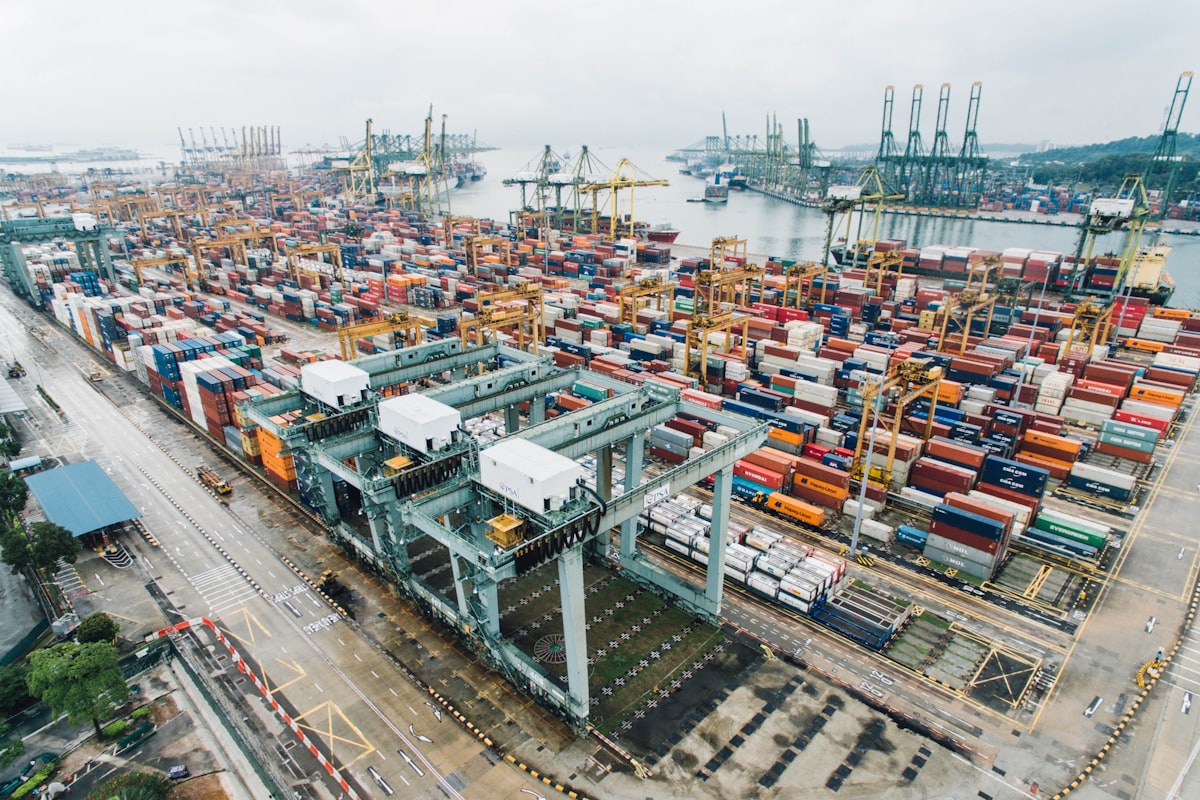
Thailand ships out of Laem Chabang, the country's busiest port at more than 8.6 million TEU a year, with Bangkok Port handling about 0.9 million TEU and Map Ta Phut moving bulk and liquid cargo. On the Canadian side your container lands at Vancouver, which moves roughly 186 million tonnes a year, or at Prince Rupert, Montreal or Halifax. Sea transit runs about 18 to 25 days port to port, and once inland rail and delivery are added the door-to-door clock stretches closer to seven weeks.
Base ocean pricing on this lane sits near CAD 2,100 to CAD 3,100 for a 20-foot container and CAD 2,800 to CAD 4,100 for a 40-foot, with LCL around USD 110 to 170 per cubic metre. Air freight out of Suvarnabhumi falls fast with weight: about USD 99.67 per kg on a 10 kg shipment, USD 13.72 at 100 kg and USD 8.29 at 300 kg. Those are port-to-port or terminal-to-terminal rates, and the door-to-door number your forwarder quotes adds origin handling, terminal charges, documentation and inland delivery. The table below prices the same goods from Thailand and from a CUSMA-origin supplier so the origin decision is visible on one screen. The gap is CAD 7,560 on a single order, and almost all of it is the duty plus the GST that the duty drags in. That is the real argument for chasing a preferential origin or moving the sourcing, not the headline freight rate. My rule after that Bangkok quote: work out the duty column before you negotiate the factory price, because on apparel the tariff is a bigger lever than the discount.
| Line item | Thailand origin (MFN) | US origin (CUSMA) |
|---|---|---|
| Value for duty (FOB) | CAD 40,000 | CAD 40,000 |
| Duty (18% versus 0%) | CAD 7,200 | CAD 0 |
| GST 5% on value plus duty | CAD 2,360 | CAD 2,000 |
| Freight and insurance | CAD 1,920 | CAD 1,920 |
| Brokerage fee | CAD 25 | CAD 25 |
| Landed cost | CAD 51,505 | CAD 43,945 |
| Cost over goods value | +28.8% | +9.9% |

Frequently Asked Questions
How do I find the right Canadian tariff code for my product?
Start from the six-digit Harmonized System code, then find the matching eight-digit Canadian tariff item in the Customs Tariff 2026 published by CBSA. The eight-digit item, not the six-digit code, carries the duty rate. If two codes look plausible, request a binding ruling from CBSA before you import rather than guessing.
Does Canada have a de minimis, and what is the CAD 20 limit?
Yes. Goods arriving by courier from a country other than the United States or Mexico are exempt from duty and tax only up to CAD 20 of value for duty. From the United States or Mexico, sales and excise tax relief runs to CAD 40 and, under CUSMA, the duty threshold is CAD 150. Anything above the line is taxed on its full value.
Is Canadian duty calculated on the price including shipping?
No. Duty is charged on the transaction value of the goods adjusted to the place of export, which excludes international freight and insurance. This is the opposite of the European Union, where duty is charged on the CIF value. A CAD 40,000 order that costs CAD 1,800 to ship is valued at CAD 40,000 at the border.
Do I pay GST on imports if my goods are not CUSMA origin?
GST at 5% applies to virtually every commercial import regardless of origin, charged on the value for duty plus any duty paid. Preferential agreements like CUSMA only change the duty rate. A GST-registered business recovers the federal tax as an input tax credit, but HST, QST and PST at the provincial level are not always recoverable the same way.
Why did my courier charge a fee even though no duty was owed?
Because CARM requires a full Commercial Accounting Declaration for every commercial parcel since May 2024, the courier does the same work on a CAD 15 parcel as on a CAD 1,500 one. Brokerage and processing fees of roughly CAD 15 to CAD 35 are common and are charged whether or not duty applies. Consolidating shipments through a forwarder is usually the cheapest fix.
Written by Ace Wang
Founder & Import Operations Specialist
Ace Wang has spent 20 years in cross-border ecommerce operations, managing import supply chains for small and medium businesses. From the early days of Alibaba sourcing to modern multi-country logistics strategies, Ace has helped hundreds of entrepreneurs navigate customs clearance, shipping optimization, and landed cost management. The LandedCostHub calculator and all content on this site are built on real-world experience — not textbook theory. Ace believes that transparent, accurate cost data is every importer's right, not a professional service luxury. More about Ace Wang →
Calculate Your Total Landed Cost
Use our free calculator to estimate your total import costs including duties, shipping, and taxes.
Related Guides
Importing from South Korea: Complete Guide for Importers
Complete guide to importing from South Korea. KORUS FTA duty savings, supplier sourcing, shipping routes, and landed cost calculation.
Read More →Importing from China 101: A Complete Guide for First-Time Importers
Everything you need to know about importing from China. Supplier sourcing, shipping, customs, and landed costs explained.
Read More →Importing from Vietnam: Complete Guide for Small Businesses
Learn how to import from Vietnam. Find suppliers, understand shipping routes, calculate landed costs, and navigate customs.
Read More →