China to USA Import Costs in 2026: The Three-Layer Duty Stack
Updated: 2026-10-28
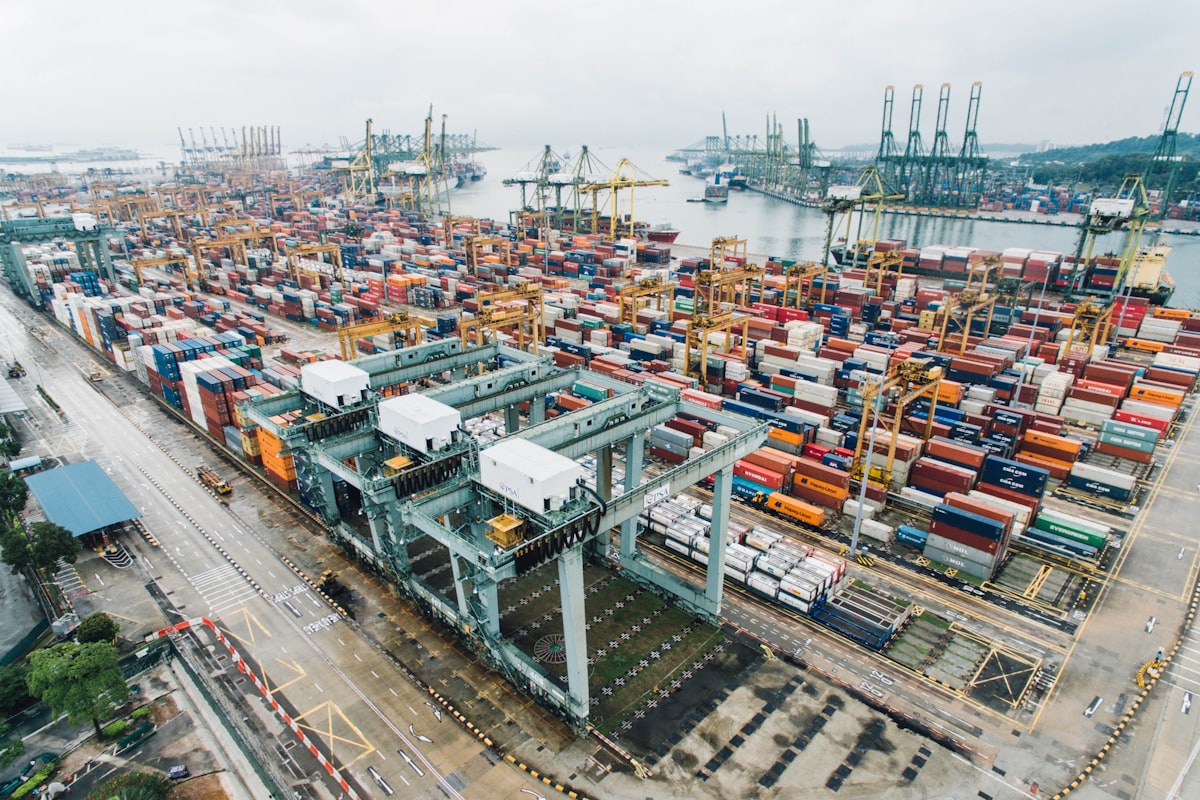
The July 24 Rule That Added 12.5% to Every Chinese Line
On 24 July 2026 a new Section 301 action took effect on goods from 60 economies, and China was put in the top band at 12.5%. The legal basis is a set of investigations opened on 12 March 2026 into whether those economies police forced labour in their export supply chains, with determinations published on 2 June 2026 and the action signed on 23 July 2026. USTR implemented it through HTSUS headings 9903.05.20 to 9903.05.84, with exemptions listed in Annexes I and II of the notice. Seventeen economies received 10%, including India, Bangladesh, Cambodia, Mexico, Canada and the United Kingdom. China, Vietnam, Thailand, Brazil and the rest of the list were not given that discount.
I repriced four purchase orders the week the notice appeared, and the arithmetic was brutal in a way the headlines never captured: a cotton T-shirt went from 24% to 36.5% of its customs value, and a wooden chair from 25% to 37.5%. Nothing about the goods changed. What changed was a heading number in chapter 99. The detail almost everyone missed: goods already loaded on a vessel before 00:01 Eastern on 24 July and entered before 00:01 on 28 July were exempt, so two containers on the same water that week paid different duty depending on the bill of lading date.
- Check the entry date first: the layer applies to goods entered for consumption on or after 24 July 2026.
- If the cargo sailed before 24 July 2026 and cleared before 28 July 2026, it was outside the layer entirely.
- The 12.5% is additional to the general rate and to other chapter 99 duties, not a replacement for them.
- Metal and vehicle goods covered by Section 232 headings are carved out of this layer, not stacked under it.
Layer One: The Rate Is Decided by Ten Digits, Not by the Country
There is no single Chinese tariff rate. The first layer is the ordinary most-favoured-nation rate attached to your ten-digit HTSUS line, and it ranges from free to 16.5% across the goods most people actually buy. I pulled the live rates from the USITC tariff database on 28 October 2026: smartphones and laptops are free, wooden furniture is free, electric bicycles are free, lithium-ion batteries are 3.4%, leather footwear is 8.5% and cotton T-shirts are 16.5%. Two cartons on the same pallet can sit 16.5 percentage points apart before any China-specific duty is added.
This is the part that punishes lazy classification. A supplier who ships the same product family in two fabric compositions can move a line from 16.5% to over 30% total just by switching from cotton to a man-made blend, because the subheading changes. I have watched a buyer save 6 percentage points by moving a knit top from 6109 to 6110 and lose 11 points on a different style in the same shipment. Classification is not paperwork. It is the largest controllable number in the landed cost file.
| Product | HTSUS line | MFN rate | Checked |
|---|---|---|---|
| Smartphones | 8517.13.00 | Free | 28 Oct 2026 |
| Wooden bedroom furniture | 9403.60.80 | Free | 28 Oct 2026 |
| Electric bicycles | 8711.60.00 | Free | 28 Oct 2026 |
| Lithium-ion batteries | 8507.60.00 | 3.4% | 28 Oct 2026 |
| Leather footwear | 6403.99.60 | 8.5% | 28 Oct 2026 |
| Cotton T-shirts | 6109.10.00 | 16.5% | 28 Oct 2026 |
Layer Two: The 2018 Lists Are Still Running in 2026
The original Section 301 action on Chinese technology transfer and intellectual property is now eight years old and still in force. USTR confirmed on 7 October 2026 that neither the July 2018 action nor the August 2018 action terminated on its four-year anniversary, because domestic industries asked for continuation, and a second statutory four-year review is under way. In practice that means the product lists built between 2018 and 2019 still add 7.5% on List 4A goods and 25% on Lists 1 to 3. Chapter 99 of the tariff schedule maps every eight-digit subheading to its list, and the mapping was current as of 30 September 2026.
The list membership is arbitrary in a way that makes sourcing decisions for you if you let it. Wooden furniture sits on the 25% list. Electric bicycles sit on the 25% list. Cotton T-shirts, plastic household articles and most leather footwear sit on the 7.5% list. Smartphones, laptops, lithium-ion cells and toys are not on any of the four lists at all. I have used that table to talk a client out of a furniture range and into a textile accessory range on the same factory floor, and the duty difference paid for the tooling.
| Product | Section 301 heading | Note reference | Added duty |
|---|---|---|---|
| Cotton T-shirts | 9903.88.15 | 20(s), List 4A | 7.5% |
| Leather footwear | 9903.88.15 | 20(s), List 4A | 7.5% |
| Plastic household articles | 9903.88.15 | 20(s), List 4A | 7.5% |
| Wooden furniture | 9903.88.03 | 20(f), List 3 | 25% |
| Electric bicycles | 9903.88.02 | 20(d), List 2 | 25% |
| Smartphones, laptops, Li-ion cells | none | not listed | 0% |
Layer Three: 12.5% Stacked, and the Total Nobody Quotes
The new action does not replace the old one. U.S. note 52(a) states that goods subject to headings 9903.05.20 to 9903.05.84 remain subject to the general rates of duty and to any other additional duty in chapter 99. So the Chinese stack in the fourth quarter of 2026 is ordinary MFN plus the 2018 list rate plus 12.5%. Cotton T-shirts land at 36.5%, wooden furniture at 37.5%, electric bicycles at 37.5%, leather footwear at 28.5%, lithium-ion batteries at 15.9% and smartphones at 12.5%. The spread inside one container is three to one.
Most quotes I see still show a single blended percentage, and that number is dangerous because it is an average across a mixed file. If 60% of your value sits in phones at 12.5% and 40% sits in furniture at 37.5%, your blended rate is 22.5% and neither line is charged that. The only honest way to price a Chinese purchase order in 2026 is line by line, using the ten-digit code, and then to add the fees in section seven below on top of the total customs value.
| Product | MFN | 2018 list | July 2026 layer | Total duty |
|---|---|---|---|---|
| Cotton T-shirts | 16.5% | 7.5% | 12.5% | 36.5% |
| Wooden furniture | Free | 25% | 12.5% | 37.5% |
| Electric bicycles | Free | 25% | 12.5% | 37.5% |
| Leather footwear | 8.5% | 7.5% | 12.5% | 28.5% |
| Lithium-ion batteries | 3.4% | 0% | 12.5% | 15.9% |
| Smartphones | Free | 0% | 12.5% | 12.5% |
Where the Stack Collapses: Metal, Annex Lists and US Content
Four exits exist, and three of them are narrow. First, articles covered by the Section 232 steel, aluminium and copper headings, and by the vehicle and parts headings, are excluded from the July 2026 layer, because the notice refuses to stack a forced-labour duty on top of a national-security duty. Second, Annexes I and II of the notice exempt specific products for specific economies, mostly raw materials and inputs the United States cannot source. Third, goods entered under chapter 98 for repair or processing pay the new duty only on the value added abroad, and goods entered under 9802.00.80 pay on the assembled value less the cost of US components.
The 232 exit is not a gift. Metals move to a different ladder: 50% on steel, aluminium and copper content, 25% on derivative products, 15% on metal-intensive industrial and grid equipment through 2027, and 10% on certain US metal products, with a carve-out where the metal content of the finished article is 15% or less. I have seen a furniture importer discover that steel legs pushed his chairs out of the 12.5% layer and into the 232 derivative ladder, which cost him more than the layer he escaped. Run both calculations before you celebrate an exclusion.
- Section 232 articles: out of the 12.5% layer, into the 50%, 25%, 15% or 10% ladder instead.
- Antidumping and countervailing duties still apply on top of every layer described here.
- Chapter 98 entries need CBP to agree the provision is appropriate, so the paper file matters.
- Personal use goods in accompanied baggage are outside the layer; commercial samples are not.
The Box Cost 7,835 Dollars Westbound and 791 Back
Freight is the second-largest line on the file and it has moved more violently than the duty. Drewry's World Container Index for 1 October 2026 put Shanghai to Los Angeles at USD 7,835 per 40ft container, up 257% year on year, and Shanghai to New York at USD 10,428, up 226%. The same index put Los Angeles back to Shanghai at USD 791, up 11%. The composite stood at USD 4,434, and the Freightos global index was USD 3,343 on 2 October 2026. A westbound box costs roughly ten times the eastbound box on the same hull.
Two things follow. The first is that repositioning empty equipment is cheap and shipping finished goods is not, which is why a return load out of California is the best freight deal in the world right now. The second is a US-specific advantage that European importers do not have: American customs value is built on the transaction value at the place of export, and 19 CFR 152.103 explicitly excludes international freight and insurance. A USD 7,835 ocean bill does not raise your duty by a cent. In Rotterdam the same bill would sit inside the customs value and be taxed at the duty rate and again at 21% VAT.
| Lane | 40ft spot, 1 Oct 2026 | Year on year |
|---|---|---|
| Shanghai to Los Angeles | USD 7,835 | +257% |
| Shanghai to New York | USD 10,428 | +226% |
| Shanghai to Rotterdam | USD 3,399 | +111% |
| Los Angeles to Shanghai | USD 791 | +11% |
| Rotterdam to Shanghai | USD 613 | +34% |
| WCI composite | USD 4,434 | +166% |
The Fees Under the Duty: 34.58 Is the Floor
Duty is not the last line. The merchandise processing fee is 0.3464% of the entered value with a floor and a cap that CBP re-sets every fiscal year; the notice published on 31 July 2026 set the fiscal 2027 floor at USD 34.58 and the cap at USD 670.86, effective 1 October 2026. The harbour maintenance fee is 0.125% of value on ocean cargo, with no floor and no cap. Informally entered shipments of USD 2,500 or less follow a lighter procedure, and CBP proposed on 8 October 2026 to widen that route and add an electronic informal entry type for mail.
The floor is where small importers get hurt. On a USD 8,000 entry the MPF is the USD 34.58 minimum, which is 0.43% of value, not 0.35%. On a USD 60,000 entry you pay USD 207.84. On a USD 300,000 entry you pay the USD 670.86 cap, which is 0.22%. That is a regressive fee dressed as an ad valorem charge, and it is one more reason a single consolidated entry beats six small ones if your broker will allow it. Add the customs bond, the ISF filing and the broker's per-entry charge and the fixed cost of importing one container rarely comes in under USD 500.
| Fee | Basis | Fiscal 2027 amount |
|---|---|---|
| Merchandise processing fee | 0.3464% of entered value | USD 34.58 minimum, 670.86 cap |
| Harbour maintenance fee | 0.125% of value, ocean only | No minimum or cap |
| Informal entry threshold | Value of shipment | USD 2,500 or less |
| ISF penalty exposure | Per violation | USD 5,000, capped at 100,000 per vessel |
| Customs bond, annual | Value and risk | Typically 300 to 600 per year |
One Container, Five Lines, One Entry Summary
Here is the file I priced in October 2026 for a mixed 40ft out of Ningbo into Los Angeles: 12,000 cotton T-shirts at USD 2.40 each, wooden furniture at USD 19,200, 40 electric bicycles at USD 320, lithium-ion cells at USD 6,000 and smartphones at USD 24,000. Total free-on-board value USD 90,800. Duty came to USD 26,466, or 29.15% of goods value, and it was not evenly spread: the furniture and the bicycles carried 37.5% each while the phones carried 12.5%. Add the two CBP fees at USD 428.03 and the duty-and-fee bill is USD 26,894.03.
The full landed number, including USD 7,835 of ocean freight, USD 420 of insurance, USD 165 of brokerage, USD 350 of bond and ISF work and USD 1,250 of inland delivery, was USD 127,714.03. That is 40.65% on top of the goods value, and only USD 26,894 of it is customs. The lesson I keep repeating to buyers: optimise the duty, but do not pretend the duty is the whole overhang. In this file the freight alone was worth 8.6% of the goods value, and it moved 257% in a year.
| Line | FOB value | Duty rate | Duty paid |
|---|---|---|---|
| Cotton T-shirts, 12,000 pcs | USD 28,800 | 36.5% | USD 10,512.00 |
| Wooden furniture | USD 19,200 | 37.5% | USD 7,200.00 |
| Electric bicycles, 40 units | USD 12,800 | 37.5% | USD 4,800.00 |
| Lithium-ion cells | USD 6,000 | 15.9% | USD 954.00 |
| Smartphones | USD 24,000 | 12.5% | USD 3,000.00 |
| Total | USD 90,800 | 29.15% | USD 26,466.00 |
What Happens to Your Cash Between the Factory Gate and the First Sale
The cash leaves long before the goods arrive. A 30% deposit on USD 90,800 is USD 27,240 at the purchase order. The ISF has to be filed 24 hours before loading, which means the broker invoice lands before the container sails. Entry is filed within 15 calendar days of arrival and the entry summary and duty payment follow within 10 working days, so USD 26,894 leaves the account while the container is still in a yard in Los Angeles. Freight, insurance, brokerage and inland delivery settle on their own schedules in between.
My rule for a first order of this size is to hold 45% of the goods value in cash beyond the deposit, and to model the duty at the top of the range rather than the blend, because a classification change or a new chapter 99 action can move the file by thousands between the quote and the entry. The July 2026 layer is the freshest proof: it was not in anyone's April budget, it applies to goods entered after 24 July, and it added USD 11,350 to the container above. If your margin cannot absorb that, your margin was never real.
- Deposit at purchase order: USD 27,240 on this file, non-refundable in most factory terms.
- ISF and broker costs before sailing: roughly USD 500 fixed, before the container moves.
- Duty and fees at entry: USD 26,894, paid within 10 working days of entry.
- Freight and inland: USD 9,085 here, and the least predictable number in the model.

Frequently Asked Questions
Is there an extra tariff on Chinese goods in 2026?
Yes. On top of the ordinary MFN rate and the 2018 Section 301 lists, a new Section 301 action took effect on 24 July 2026 at 12.5% for products of China, implemented through HTSUS headings 9903.05.20 to 9903.05.84. On my six-line sample the total ranged from 12.5% on smartphones to 37.5% on wooden furniture and electric bicycles.
What date decides whether the 12.5% applies?
The date the goods are entered for consumption, not the order date and not the invoice date. The layer applies to entries on or after 24 July 2026, with one exception: goods loaded on a vessel and in transit before 00:01 Eastern on 24 July 2026, and entered before 00:01 on 28 July 2026, were not subject to it. After 28 July the transition window is closed.
Did the Supreme Court ruling remove the China tariffs?
It removed the IEEPA tariffs. The Court struck them down in February 2026 and CBP has been running court-ordered refunds since the summer, which is why importers with 2025 entries are filing claims now. The Section 301 duties were never IEEPA duties, so they survived, and the July 2026 action added a new layer on top of them rather than replacing them.
Do I pay duty on the freight from China to the US?
No. US customs value is the transaction value at the place of export, and 19 CFR 152.103 excludes international freight and insurance, so a USD 7,835 ocean bill adds nothing to the duty base. The European Union does the opposite: transport to the border sits inside the customs value, so the same freight is taxed there and again in the VAT base.
Can US content or a Section 232 classification reduce the July 2026 layer?
Sometimes. Goods entered under 9802.00.80 pay the new duty only on the assembled value less the cost of US components, and chapter 98 repair entries pay only on the value added abroad. Articles covered by the Section 232 steel, aluminium, copper and vehicle headings are excluded from the 12.5% layer entirely, but they move onto the 232 ladder of 50%, 25%, 15% or 10%, and that is frequently worse.
Written by Ace Wang
Founder & Import Operations Specialist
Ace Wang has spent 20 years in cross-border ecommerce operations, managing import supply chains for small and medium businesses. From the early days of Alibaba sourcing to modern multi-country logistics strategies, Ace has helped hundreds of entrepreneurs navigate customs clearance, shipping optimization, and landed cost management. The LandedCostHub calculator and all content on this site are built on real-world experience — not textbook theory. Ace believes that transparent, accurate cost data is every importer's right, not a professional service luxury. More about Ace Wang →
Main departure hubs in China
Most China export freight moves through Shanghai, Shenzhen, Ningbo, Guangzhou. The hub you book from drives transit time, departure frequency and often the rate itself — two gateways in the same country can differ by hundreds of dollars on a container.
Sea freight loads at the container port, air freight at the international airport. Ask your forwarder which hub the quote is based on before comparing rates.
Import cost on key routes
View shipping rates, duty rates, and total landed cost estimates.
Calculate Your Total Landed Cost
Use our free calculator to estimate your total import costs including duties, shipping, and taxes.
Related Guides
De Minimis Threshold Guide: Import Duty-Free Limits by Country
Complete guide to de minimis thresholds worldwide. Learn how to legally reduce landed costs by staying under duty-free limits.
Read More →Amazon FBA Import Costs: Complete Guide for Sellers
Calculate your total landed costs for Amazon FBA imports. Understand duty, shipping, storage, and FBA fee structures.
Read More →US Customs Duty Rates: Complete Guide for Importers
Comprehensive guide to US customs duty rates. Learn how duties are calculated, find your HTS code, and discover duty reduction strategies.
Read More →Popular Routes
Calculate import costs from this country.
China → Switzerland
View import costs and calculator
China → Saudi Arabia
View import costs and calculator
China → South Africa
View import costs and calculator
China → Turkey
View import costs and calculator
China → Kenya
View import costs and calculator
China → Egypt
View import costs and calculator
China → Chile
View import costs and calculator
China → Colombia
View import costs and calculator
China → Peru
View import costs and calculator