Importing from South Korea to the EU 2026: FTA, CBAM, Real Costs
Updated: 2026-10-08
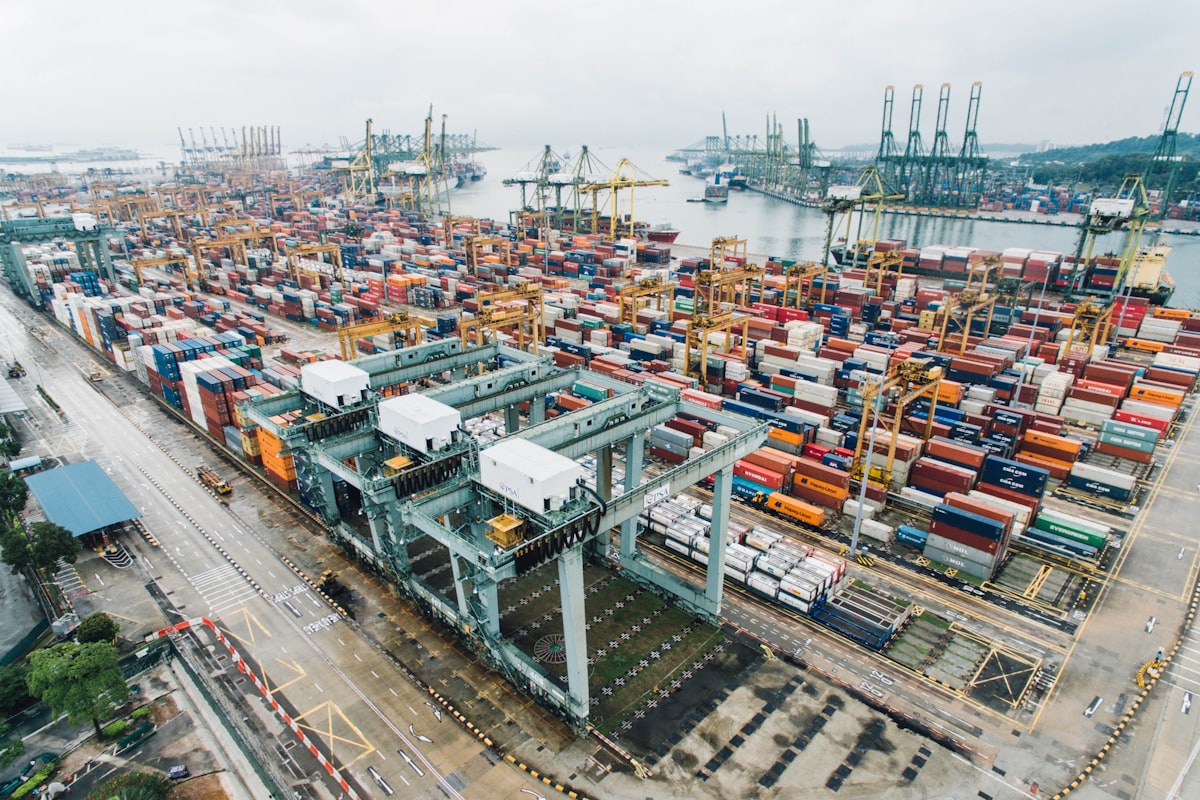
What the EU-Korea trade deal actually gives you, 15 years on
South Korea's free trade agreement with the European Union has been running long enough that most of its tariff cuts are finished. It was provisionally applied on 1 July 2011 and entered into force on 13 December 2015, once every member state had ratified it. The agreement removes duties on roughly 98% of import lines, which is why the headline rate for Korean industrial goods arriving in the EU today is zero. Korea is now the EU's eighth-largest partner for goods. Bilateral trade in goods reached about EUR 124.25 billion in 2025, growing 5.3% a year on average since the deal started. The EU imported EUR 69.7 billion from Korea that year and exported EUR 54.5 billion, leaving the EU with a EUR 15.2 billion goods deficit.
I bought my first Korean tooling in 2019, a set of injection moulds for a client who had moved a product line to Incheon. The quote was clean and the duty was almost a rounding error, because moulds were already close to free. What cost me money was the paperwork. The supplier sent an invoice with the words Origin: Korea in the header and nothing else, my broker had no EUR.1 to attach, so the shipment cleared at the standard rate and I spent three weeks chasing a replacement certificate. The lesson stuck. With Korea the tariff is rarely the problem. The proof is.
| Milestone | Date or figure |
|---|---|
| FTA provisionally applied | 1 July 2011 |
| FTA in force after ratification | 13 December 2015 |
| Digital Trade Agreement signed | 10 June 2026 |
| 13th meeting of the FTA Trade Committee | 17 April 2026 |
| Bilateral trade in goods, 2025 | EUR 124.25 billion |
| Korea's rank as an EU goods partner | 8th |
The four layers between your supplier's price and your landed cost
A zero rate on paper is not a zero bill. When a Korean pallet lands in Rotterdam or Hamburg, four things sit between the FOB price and what leaves your bank account, and the trade agreement only touches the first of them. The other three are the reason two importers buying the same product from the same mill can end up with very different costs per unit. Work down the list before you sign anything, because only one line is negotiable in the way most buyers assume.
- Customs duty: 0% for most industrial goods with a valid preference claim, and the standard third-country rate without one, which is 10% on cars and around 12% on many textile lines
- Import VAT: charged on the customs value plus the duty, so 21% in the Netherlands and 19% in Germany, recoverable if you are VAT-registered and import in your own name
- Carbon and safeguard charges: from 2026 steel and aluminium carry CBAM certificate costs, and steel that exceeds its quota pays a 50% out-of-quota duty
- Freight and the origin documents: a 40ft from Busan to Rotterdam runs USD 3,922 to USD 5,211, and one missing EUR.1 undoes the saving on the entire shipment
The two things that changed in 2026
Two EU measures started or tightened in 2026 and both land on goods Korea sells into Europe. The first is CBAM, the Carbon Border Adjustment Mechanism, which moved from its transitional phase to its definitive regime on 1 January 2026. Importers of cement, iron and steel, aluminium, fertilisers, electricity and hydrogen now have to be authorised, report embedded emissions, and buy and surrender CBAM certificates priced off EU Emissions Trading System auctions. The second is steel. Regulation (EU) 2026/1384 replaced the old safeguard from 1 July 2026. It cut the volume of duty-free import quotas by about 47% against the 2024 reference and doubled the out-of-quota duty to 50%, while widening the covered product list from 28 categories to 30 by adding stainless wire rod and forged bars.
Nobody at the trade fair in Seoul mentions either one. Suppliers quote ex-works and quote duty-free, and technically they are right, because neither CBAM nor the safeguard is a customs duty. They are costs that appear on your side of the border. A coil of Korean steel can be a 0% duty line under the FTA and still be the most expensive entry in your import file once the carbon certificates and the quota position are priced in. If your Korean quote looks better than the Chinese one, check what the goods are made of before you celebrate.
| What changed | When | What it means for a Korean shipment |
|---|---|---|
| CBAM definitive regime | 1 January 2026 | Steel and aluminium importers must be authorised and surrender carbon certificates |
| New steel safeguard | 1 July 2026 | Duty-free quota volumes cut about 47%, out-of-quota duty raised to 50% |
| Safeguard product list | 1 July 2026 | Grew from 28 to 30 categories, adding stainless wire rod and forged bars |
| EU-Korea Digital Trade Agreement | 10 June 2026 | New rules on data flows and digital trade, no change to tariffs |
| ABS anti-dumping duties | 13 February 2026 | Definitive duties on ABS resin from Korea and Taiwan |
What Europe actually buys from Korea
Korea's export mix into the EU is unusually concentrated in high-value engineering. Machinery and transport equipment alone made up 52.7% of EU goods imports from Korea in 2025, worth EUR 36.7 billion. Chemicals followed at EUR 15.4 billion, or 22.2%, and manufactured goods classified chiefly by material added EUR 7.7 billion, or 11%. Korea is a EUR 1.5 trillion economy, the 13th largest in the world and the 4th largest in Asia, and it spends 4.9% of GDP on research and development against the EU's 2.3%. That is why the Korean lines that matter to European importers are cars, components, batteries, electronics and cosmetics rather than bulk commodities. The flip side is that Korea buys very little from Europe in agriculture, importing just EUR 631 million of EU farm and fishery products in 2025 while exporting EUR 4.4 billion the other way.
| Product group | EU imports from Korea, 2025 | Share of the total | One thing to watch |
|---|---|---|---|
| Machinery and transport equipment | EUR 36.7 billion | 52.7% | Cars carry a 10% third-country rate, so the preference is worth real money |
| Chemicals and related products | EUR 15.4 billion | 22.2% | Most lines are already low or free, so proof of origin adds little |
| Manufactured goods classified by material | EUR 7.7 billion | 11% | Steel is now a CBAM and safeguard line, not a duty line |
| Agricultural and fishery products | EUR 631 million | Under 1% | Korea imports far more EU food than it exports, EUR 4.4 billion in 2025 |
The origin paperwork that turns the third-country rate into zero
A preference is never automatic. Customs applies the standard third-country rate unless the declarant can point to a valid proof of origin drawn up by the Korean exporter. Under the EU-Korea agreement there are three acceptable forms, and which one you get depends on the value of the consignment and on whether the exporter is registered. The document has to travel with the goods or reach your broker before the declaration is lodged, because you cannot retroactively turn a cleared shipment into a preferential one by emailing a scan afterwards.
The mistake I see most often is a supplier who believes a line on the commercial invoice saying Made in Korea is enough. It is not. The origin declaration is a specific wording set out in the agreement, signed and dated by the exporter, and it only works for consignments up to EUR 6,000 unless the exporter is an approved or registered exporter. For anything larger you need the EUR.1 certificate stamped by the Korean customs authority, and that stamp is the whole point. Customs compares the invoice description, the commodity code and the origin statement line by line, and a mismatch between the invoice and the certificate is the fastest way to lose the preference.
- An EUR.1 movement certificate issued and stamped by the Korean customs authority
- An origin declaration made out on the invoice by an approved or registered exporter
- An origin declaration by any exporter, but only for consignments up to EUR 6,000
- Commercial documents that match the goods, because customs checks the description, the commodity code and the origin statement against each other
- Retention of the proof and the transport documents, because a post-clearance audit can arrive years after the container has been sold
Busan to Rotterdam: what the ocean leg looks like in 2026
Almost everything you buy from Korea leaves through Busan. The port handled over three-quarters of Korea's container shipping in 2022 and was the sixth-busiest container port in the world by 2023. In 2024 it moved 24.4 million TEU, its busiest year on record, and the automated Busan New Port takes the largest vessels. Across the country 83% of exports travel in containers, which is why congestion at one terminal turns into demurrage on your invoice. Incheon, the alternative gateway near Seoul, handles only about 7% of Korea's containers, so Busan is where your routing decisions really happen.
On cost the honest answer is a range, not a number. In September 2026 a 40ft from Busan to Rotterdam was quoted between USD 3,922 and USD 5,211, with transit times from 35 to 51 days. The spread is the message. The slower sailing is not always the cheaper one and the fastest is rarely the one you booked. Agora Freight's quote, which is where the lower end came from, sat at USD 3,922 on a 51-day transit, while Cogoport listed USD 5,002.60 to USD 5,211.04 on 35 days. Remember that the base ocean rate excludes terminal handling, documentation and the destination charges your forwarder tacks on at the end.
| Route from Busan | Container | Indicative rate, September 2026 |
|---|---|---|
| To Rotterdam | 40ft | USD 3,922 to USD 5,211 |
| To Shanghai | 40ft | USD 705 |
| To Jakarta | 40ft | USD 2,172 |
| To Venice | 20ft | USD 6,210 |
| To Muuga, Estonia | 20ft | USD 5,190 |
| To Santos, Brazil | 40ft | USD 7,370 |
A worked example: EUR 25,000 of Korean parts into Rotterdam
Here is the arithmetic on one 40ft of Korean components with an FOB value of EUR 25,000, shipped Busan to Rotterdam and cleared in the Netherlands at 21% VAT. The standard third-country rate for the commodity line is 4.5% and the trade agreement takes it to zero. Freight is EUR 3,600 and insurance EUR 150, so the CIF customs value is EUR 28,750. Import VAT is charged on the customs value plus the duty, which is the detail most buyers miss when they compare a quote from a supplier who offers to pay the duty and one who does not.
The gap is EUR 1,565.44 on one container, and that is the price of a certificate the Korean exporter can request for free. If you are VAT-registered and import in your own name, the VAT line comes back on your return, so your true cost is goods plus freight plus insurance plus duty. That is EUR 28,750 with the preference and EUR 30,043.75 without it. Read that twice. Losing the origin document does not just add 4.5% duty, it also raises the recoverable VAT by EUR 271.69, because VAT is calculated on the customs value plus the duty. One skipped form compounds twice.
| Line | Without proof of origin | With a valid EUR.1 |
|---|---|---|
| Goods, FOB | EUR 25,000.00 | EUR 25,000.00 |
| Ocean freight | EUR 3,600.00 | EUR 3,600.00 |
| Insurance | EUR 150.00 | EUR 150.00 |
| CIF customs value | EUR 28,750.00 | EUR 28,750.00 |
| Customs duty at 4.5% | EUR 1,293.75 | EUR 0.00 |
| Import VAT at 21% | EUR 6,309.19 | EUR 6,037.50 |
| Duty plus import VAT | EUR 7,602.94 | EUR 6,037.50 |
| Border cost as a share of the goods value | 30.4% | 24.2% |
The small-parcel version, and the EUR 3 flat duty
Not every Korean order arrives in a container. Since 1 July 2026, a remote sale of goods worth EUR 150 or less into the EU pays a flat EUR 3 duty instead of the rate for the commodity code. The rule runs until 1 July 2028 and is charged per item and per declared tariff line, not per parcel, so five identical shirts attract EUR 3 while a shirt plus a watch attracts EUR 6. The person liable is the declarant, which in a marketplace sale means the seller or the platform rather than you as the buyer. Import VAT is still charged on top, on the customs value plus the duty.
There is an exclusion worth knowing if you buy from Korea. Goods that benefit from a preferential trade agreement and are declared in the H1 data set, where VAT has not been collected through the Import One-Stop Shop, fall outside the flat fee. In plain terms, a Korean parcel carrying a valid preferential origin claim that is not an IOSS sale can avoid the EUR 3, while a parcel from a country with no trade deal pays it on top of any duty. A separate EU handling fee must be collected from 1 November 2026 under the customs reform approved in September 2026, with the amount set by the Commission and reviewed every two years, so confirm the current figure before you price a small-parcel line.
- Flat EUR 3 duty applies to remote sales of EUR 150 or less, from 1 July 2026 until 1 July 2028
- It is charged per item and per declared tariff line, so five shirts are EUR 3 but a shirt plus a watch is EUR 6
- The declarant pays it, which for a marketplace sale is the seller, not the consumer
- Preferential-origin goods declared in H1 without IOSS collection are excluded from the flat fee
- An EU handling fee is due from 1 November 2026, amount set by the Commission and reviewed every two years
Before you sign the purchase order: five questions, three trades, six clauses
By the time you negotiate, the tariff work is done and the rate is not on the table. What is still open is who absorbs the cost when a document is late or a quota is full. Ask these five questions before you accept a Korean quote. Will you issue an EUR.1 or an origin declaration, and who signs it? Is the price FOB Busan or CIF Rotterdam, and which port charges are inside it? What is the commodity code on your invoice, and does it match the one my broker will declare? For steel or aluminium, has the mill reported embedded emissions in a form I can use for CBAM? And if the order ships in two containers, will each container carry its own proof of origin?
You will not get all five answered for free, so offer something in return. Three trades work in practice. Pay a deposit faster in exchange for the supplier absorbing the EUR.1 application cost. Accept a slower sailing from Busan in exchange for a fixed all-in rate that includes destination charges. Or commit to a quarterly volume in exchange for the supplier agreeing to issue origin documents container by container, which matters more than a one-off discount when a safeguard quota is tight and the fourth container in the booking is the one that falls out of it.
| Clause to pin in the purchase order | Wording that holds up |
|---|---|
| Proof of origin | The seller shall provide a valid EUR.1 or origin declaration for each container, at the seller's cost |
| Commodity code | The seller shall state the eight-digit commodity code on every invoice and shall not change it without written notice |
| Incoterm and scope | Prices are FOB Busan unless stated otherwise, with terminal handling at origin included |
| Carbon data | For steel and aluminium the seller shall provide embedded emissions data sufficient for CBAM reporting |
| Late documents | If the proof of origin is missing on arrival, the seller shall reimburse the duty difference within 30 days |
| Quota risk | The seller shall notify the buyer before shipment if the goods fall under an EU safeguard quota |

Frequently Asked Questions
Do I pay customs duty on goods imported from South Korea into the EU?
Only if you cannot prove origin. Most industrial goods enter at 0% under the EU-Korea free trade agreement, but the standard third-country rate applies unless the shipment carries a valid EUR.1 certificate or origin declaration. Cars carry a 10% third-country rate, so the paperwork is worth real money on a vehicle or a batch of components.
What proof of origin do I need to claim the preferential rate?
An EUR.1 movement certificate stamped by the Korean customs authority, or an origin declaration made out on the invoice by an approved or registered exporter. Any exporter can make the declaration for consignments up to EUR 6,000. Keep the proof and the transport documents, because customs can audit the preference years after the goods have cleared.
What is the new EU steel safeguard and does it affect Korean steel?
Regulation (EU) 2026/1384 replaced the previous safeguard on 1 July 2026. It cut duty-free quota volumes by about 47% against the 2024 reference, doubled the out-of-quota duty to 50%, and expanded the covered list from 28 to 30 product categories by adding stainless wire rod and forged bars. Steel that is duty-free under the trade agreement can still face the out-of-quota charge once the quota for its line is used up.
What is CBAM and does it apply to imports from Korea?
CBAM is the EU Carbon Border Adjustment Mechanism and it entered its definitive regime on 1 January 2026. It covers cement, iron and steel, aluminium, fertilisers, electricity and hydrogen. Importers have to be authorised, report embedded emissions, and buy and surrender CBAM certificates priced off EU Emissions Trading System auctions. Korean steel and aluminium are in scope.
How long does a 40ft container take from Busan to Rotterdam and what does it cost?
In September 2026 quotes ranged from USD 3,922 to USD 5,211 with transit times of 35 to 51 days. The base ocean rate excludes terminal handling, documentation and destination charges. Busan handled 24.4 million TEU in 2024, its busiest year on record, and moves over three-quarters of Korea's container traffic.
Written by Ace Wang
Founder & Import Operations Specialist
Ace Wang has spent 20 years in cross-border ecommerce operations, managing import supply chains for small and medium businesses. From the early days of Alibaba sourcing to modern multi-country logistics strategies, Ace has helped hundreds of entrepreneurs navigate customs clearance, shipping optimization, and landed cost management. The LandedCostHub calculator and all content on this site are built on real-world experience — not textbook theory. Ace believes that transparent, accurate cost data is every importer's right, not a professional service luxury. More about Ace Wang →
Main departure hubs in South Korea
Most South Korea export freight moves through Busan, Seoul. The hub you book from drives transit time, departure frequency and often the rate itself — two gateways in the same country can differ by hundreds of dollars on a container.
Sea freight loads at the container port, air freight at the international airport. Ask your forwarder which hub the quote is based on before comparing rates.
Import cost on key routes
View shipping rates, duty rates, and total landed cost estimates.
Calculate Your Total Landed Cost
Use our free calculator to estimate your total import costs including duties, shipping, and taxes.
Related Guides
Importing from South Korea: Complete Guide for Importers
Complete guide to importing from South Korea. KORUS FTA duty savings, supplier sourcing, shipping routes, and landed cost calculation.
Read More →Importing from China 101: A Complete Guide for First-Time Importers
Everything you need to know about importing from China. Supplier sourcing, shipping, customs, and landed costs explained.
Read More →Importing from Vietnam: Complete Guide for Small Businesses
Learn how to import from Vietnam. Find suppliers, understand shipping routes, calculate landed costs, and navigate customs.
Read More →Popular Routes
Calculate import costs from this country.
South Korea → Germany
View import costs and calculator
South Korea → United Kingdom
View import costs and calculator
South Korea → France
View import costs and calculator
South Korea → Netherlands
View import costs and calculator
South Korea → Canada
View import costs and calculator
South Korea → Australia
View import costs and calculator
South Korea → Brazil
View import costs and calculator
South Korea → Singapore
View import costs and calculator
South Korea → United Arab Emirates
View import costs and calculator