Importing from Thailand to the EU: 2026 Costs and Duties
Updated: 2026-10-15
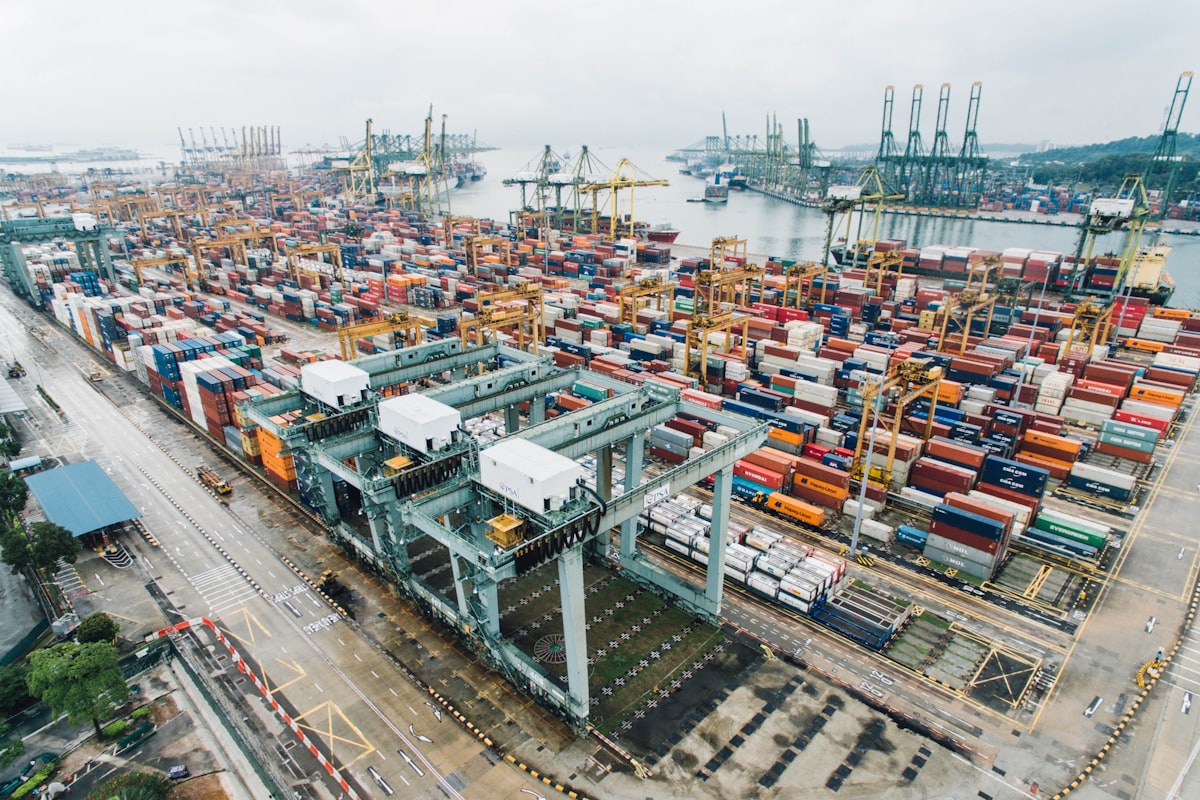
No deal, no GSP: why Thai goods still pay full duty in 2026
Thailand and the European Union have been talking about a free trade agreement since March 2013. The talks were put on hold in 2014 after the military takeover, relaunched in March 2023, and have since run through a first round in Brussels in September 2023, a second round in Bangkok in January 2024, and alternating rounds ever since. As of October 2026 the European Commission's own country page still labels the file as being negotiated. There is no EU-Thailand free trade agreement, no interim trade agreement, and no provisional application arrangement. And the old fallback is gone too: Thailand's benefits under the EU's Generalised Scheme of Preferences ended in 2015, when its World Bank upper-middle-income classification triggered exclusion from the scheme. So a Thai exporter has no preference to claim and an EU importer has none to receive. Every shipment is valued and taxed at most-favoured-nation rates, as though the trade relationship had never moved on at all.
The first Thai shipment I ever priced was a pallet of stoneware dinner sets in 2019, back when I still assumed that any country with a Chamber of Commerce that busy must have a deal with somebody. A Romanian importer I work with put it best: he had spent eight years buying from Vietnam and Turkey and never once thought about preference documents, then bought a single container of Thai rubber parts and discovered that his landed cost was 9% higher than the equivalent Vietnamese box, for no reason other than paperwork that cannot exist. That is what this guide is about. Not the politics of a trade negotiation, but the arithmetic that reaches your bank account.
| Year | EU imports from Thailand (EUR m) | EU exports to Thailand (EUR m) | Balance (EUR m) |
|---|---|---|---|
| 2015 | 16,342 | 11,714 | -4,628 |
| 2019 | 19,685 | 13,552 | -6,134 |
| 2022 | 27,336 | 14,782 | -12,554 |
| 2023 | 25,548 | 15,114 | -10,435 |
| 2024 | 27,550 | 14,686 | -12,865 |
| 2025 | 29,817 | 14,368 | -15,449 |
What Europe actually buys from Thailand
The mix matters more than the total, because duty rates are category-specific. EU imports from Thailand reached EUR 29.8 billion in 2025, up 8.2% on 2024, and 40.7% of that was office and telecommunications equipment alone, worth EUR 12.1 billion. Electronic data processing and office equipment added EUR 6.7 billion and telecoms equipment EUR 3.4 billion, which grew 33.9% in a single year. Those categories mostly enter the EU at a 0% MFN rate, which is precisely why the volume keeps climbing without any trade deal. Transport equipment went the other way, down 16.3% to EUR 1.7 billion, and automotive products fell 19.2% to EUR 855 million - categories where the tariff actually bites. Thailand is the EU's 25th largest goods partner and accounts for just 1.2% of EU imports, while the EU is Thailand's fourth largest partner, taking 7.2% of its goods trade.
Look at that structure and the commercial logic of the stalled negotiation becomes obvious. The EU's biggest import categories from Thailand are the ones that already pay close to nothing, so the tariff saving on the table is small relative to the market access Thailand wants for its own farm and processed food exports. That asymmetry is why a negotiation launched in 2013 is still unresolved more than three years after its relaunch. For an importer it means you should not build a business case on an FTA arriving: the European Commission has been describing this file as under negotiation for years, and there is no interim agreement to bridge the gap the way there was with Vietnam or Mercosur.
- Office and telecom equipment is 40.7% of EU imports from Thailand and grew 14.6% in 2025.
- Transport equipment is the weak spot: down 16.3%, with automotive products down 19.2%.
- Base metals grew 36.1% to EUR 840 million, the fastest-growing section in the table.
| HS section | 2025 imports (EUR m) | Share of total | Year on year |
|---|---|---|---|
| XVI Machinery and appliances | 17,516 | 58.7% | +11.7% |
| VII Plastics, rubber and articles | 2,218 | 7.4% | -0.4% |
| XVII Transport equipment | 1,739 | 5.8% | -16.3% |
| IV Foodstuffs, beverages, tobacco | 1,636 | 5.5% | +8.0% |
| XVIII Optical and photographic instruments | 1,573 | 5.3% | +4.2% |
| XIV Pearls, precious metals and articles | 1,210 | 4.1% | +0.5% |
| XV Base metals and articles | 840 | 2.8% | +36.1% |
Station 1: classification, the ten digits that set your rate
Before freight, before Incoterms, before a single container is booked, the goods need an eight-digit Combined Nomenclature code. That code decides three things at once: the MFN duty rate, whether a trade-defence measure applies, and whether an import licence or a health certificate is required. For fabricated goods the supplier's HS code is a starting point, not an answer - Thai exporters classify for Thai export purposes, which is a different exercise. Verify the code yourself against the EU tariff, and for anything you buy on repeat, apply for a Binding Tariff Information decision. A BTI binds customs authorities in every member state for three years, which is cheap insurance for a product line you plan to keep importing.
The expensive mistake I see most often is not a wrong HS code - it is a right code that nobody wrote down. If your invoice describes the goods as 'stainless steel fittings' and the declaration says 7307, you have a customs debt that can be reopened for years, and a valuation argument you cannot win, because the entry was never reconciled to anything. I now insist that every supplier invoice for a Thai shipment carries the eight-digit code next to the goods description, and I check the first one of every new product against TARIC before the PO is signed. It takes twenty minutes and it has saved me two audits.
- Get the eight-digit Combined Nomenclature code in writing from the supplier, then verify it on the EU tariff.
- Apply for a Binding Tariff Information decision for any recurring product line; it is binding EU-wide for three years.
- Check the trade-defence register for the code before you order, not after the invoice arrives.
- Keep the classification reasoning with the entry file, including the product photos and specification sheets.
Station 2: the importer of record has to be an EU entity
The customs declaration must be lodged by a party established in the EU holding an EORI number. A Thai supplier can quote DDP and can even book the freight, but you need to know who ends up as the declarant, because that determines who owns the customs debt and who holds the value breakdown. If the supplier has an EU establishment it can declare in its own name, and then the CIF figure that appears on your books is the supplier's number, which you cannot audit. If it does not, the declaration is made either by you or by a customs agent acting as your indirect representative, and the debt is yours. In that second case the agent needs your written authority, and you need the agent's value breakdown line by line.
There is a second, quieter consequence. Import VAT recovery is only clean if the VAT-registered party is the declarant or the consignee named on the entry. Import a container in a freight forwarder's name and you will spend three weeks explaining to your accountant why the input VAT does not match anything in your purchase ledger. On a EUR 33,000 landed value at 21% that is roughly EUR 5,700 sitting in limbo, which is more than most people's monthly cash buffer.
- Import under your own EORI where you can; it keeps the customs debt and the VAT audit trail in one place.
- If you use an agent, appoint one acting as your indirect representative and get the authority in writing.
- Never accept a DDP quote without knowing who the declarant will be, and get the CIF breakdown regardless.
- For a non-EU parent structure, check whether the member state requires a fiscal representative before you plan the flow.
Station 3: the preference document you cannot get
Here is the part that catches people out, and it has nothing to do with paperwork discipline. Importers buying from Turkey, Vietnam, South Korea, Japan, the UK or Chile can ask the supplier for a preference document and cut the duty line to zero. There is no Thai equivalent, because there is nothing to hang it on. A EUR.1 movement certificate, an origin declaration written onto the invoice, a REX statement from a registered exporter - none of these can be issued for Thai-origin goods destined for the EU today, and an importer's knowledge claim needs a live agreement to claim against. What you will receive from a Thai supplier is a commercial certificate of origin, usually certified by the Thai Chamber of Commerce. That document proves where the goods come from, which matters for your own records and for some restricted categories, but it carries no tariff value on entry.
A buyer in Antwerp sent me photographs of two documents last month: a EUR.1 for Vietnamese ceramic tableware and a Thai certificate of origin for the same product family, both sitting in the same file. His freight forwarder had told him to 'just send the origin documents', and nobody on his side had noticed that one of them was worth 7% of the CIF value and the other was worth nothing at all. The Vietnamese box cleared duty-free. The Thai box cleared at the full rate. Same buyer, same forwarder, same week. If you take one thing from this article, take that.
| Document | Who issues it | What it does for you on a Thai entry |
|---|---|---|
| EUR.1 movement certificate | Partner country customs authority | Not available: no EU-Thailand agreement |
| Origin declaration on the invoice | Exporter, consignments under EUR 6,000 | Not available: no EU-Thailand agreement |
| REX registered exporter statement | Registered exporter in the partner country | Not available: no EU-Thailand agreement |
| Importer's knowledge declaration | The importer, from its own records | Needs a live agreement to claim against |
| Commercial certificate of origin | Thai Chamber of Commerce | Evidence for your file; no duty relief |
| Form A (old GSP certificate) | Thai issuing authority | No longer gives EU preference since 2015 |
Station 4: freight, and why the CIF number is the number that matters
EU customs duty is charged on the CIF value - goods, international freight and insurance - not on the goods invoice alone. That is the opposite of the United States, which assesses duty on the FOB transaction value and excludes the ocean leg, and it means every euro of freight you negotiate away also removes duty and VAT. On a 12% apparel line, EUR 100 off the freight is EUR 12 off the duty and roughly EUR 23.5 off the VAT. In 2026 a 20ft box out of Laem Chabang to Hamburg is quoted at roughly USD 1,200 to USD 1,600 with a 26 to 32 day transit, and Felixstowe sits in the same band at USD 1,200 to USD 1,700. Forty-foot and high-cube rates run about 40% to 60% above the 20ft rate on most lanes, which is why filling a 40ft properly matters so much.
I have watched two importers argue for a month over USD 90 per container, then pay for four extra days of demurrage at USD 120 a day because the documents did not match at the port. Freight negotiation is the visible part of the bill; the terminal, the broker and the clock are the invisible part. On the shipments I advise, the difference between a good and a bad Thai import is almost never the ocean rate. It is whether the entry was lodged before the vessel berthed and whether the certificate of origin and the classification note were already in the file.
- Laem Chabang handled a record 10.15 million TEU in the Port Authority of Thailand's financial year to September 2025, up 7.3%.
- Transhipment is under 1% of that volume, so almost every box is Thai cargo on a direct sailing rather than relay freight.
- Bangkok Port (Klong Toey) adds about 1.28 million TEU a year for the river-side trade.
- Rates above are ocean freight ex-Laem Chabang and exclude origin terminal handling and bill of lading fees.
| Destination | 20ft ocean freight (USD) | Transit time |
|---|---|---|
| Singapore | 250 - 350 | 2 - 3 days |
| Jebel Ali, UAE | 650 - 850 | 18 - 21 days |
| Sydney, Australia | 900 - 1,200 | 14 - 18 days |
| Hamburg, Germany | 1,200 - 1,600 | 26 - 32 days |
| Felixstowe, UK | 1,200 - 1,700 | 26 - 33 days |
| Los Angeles, USA | 1,500 - 2,000 | 18 - 22 days |
| New York, USA | 1,800 - 2,400 | 28 - 33 days |
Station 5: the duty line, MFN first and trade defence second
MFN rates on Thai goods follow the standard EU schedule, so the category mix does most of the work. Machinery, electronics, most chemicals and many medical devices enter at 0%. Textiles and clothing sit around 12%, footwear runs as high as 17%, ceramic tableware is around 7%, toys around 4.7% and furniture up to about 4%. The complication is trade defence. Where a measure is in force, the rate on the tariff is not the rate you pay. Continuous filament glass fibre from Thailand has carried definitive anti-dumping duties of 15.3% to 25.4% since April 2026, after an investigation found the EU industry - around 2,500 to 3,000 jobs, concentrated in Belgium and Slovakia - was suffering material injury. Epoxy resins from Thailand have carried a 29.9% anti-dumping duty since July 2025.
The arithmetic of a trade-defence duty is worse than the headline percentage, because import VAT is charged on the duty-inclusive value. Take an epoxy-resin shipment with a CIF value of EUR 100,000. The anti-dumping duty alone comes to EUR 29,900 before you add the ordinary tariff. At 21% import VAT, that EUR 29,900 also attracts EUR 6,279 of VAT on its own. So a measure announced as '29.9%' costs a Dutch importer about 36% of the CIF value in duty and VAT together, and none of it is recoverable except the VAT. This is why I check the trade-defence register before quoting a new supplier, not after the first container is on the water.
| Line | Amount (EUR) | How it is calculated |
|---|---|---|
| Goods, ex-works Laem Chabang | 24,000.00 | As invoiced |
| Ocean freight to Rotterdam | 1,400.00 | 20ft FCL |
| Cargo insurance | 120.00 | 0.5% of goods value |
| Customs value, CIF basis | 25,520.00 | Goods plus freight plus insurance |
| Customs duty at 7% | 1,786.40 | 7% of 25,520.00 |
| Import VAT at 21% | 5,734.34 | 21% of 27,306.40 |
| Clearance and terminal fees | 260.00 | Broker 95 plus terminal handling 165 |
| Total landed | 33,300.74 | Sum of the lines above |
Station 6: import VAT, the tax that taxes the duty
Import VAT is not a real cost for a VAT-registered business that can deduct it, but it is a very real cash-flow event, and the base is wider than most people expect: the customs value plus duty plus, in most member states, the cost of moving the goods from the EU border to your first destination. Standard rates across the member states you are most likely to import through currently sit between 19% and 27%. Take the EUR 27,306.40 duty-inclusive base from the previous example and the same container owes EUR 5,188.22 in Germany and EUR 6,280.47 in Poland. That EUR 1,092 gap between two member states, on one shipment of goods worth EUR 24,000, is a routing decision, not a rounding error.
A client of mine spent a year routing everything through Rotterdam out of habit, then ran the numbers on the VAT timing and moved a third of his volume to a German entry point. The duty did not change at all. What changed was the cash cycle: the German line let him defer the import VAT into his periodic return, so the money never left the business, while the Dutch entries had him funding the VAT for six weeks before reclaiming it. On his volumes that was about EUR 30,000 of working capital, which is more than his entire annual interest bill. Nobody had ever shown him the comparison.
| Member state | Standard VAT | VAT on a EUR 27,306.40 base (EUR) |
|---|---|---|
| Germany | 19% | 5,188.22 |
| France | 20% | 5,461.28 |
| Netherlands | 21% | 5,734.34 |
| Belgium | 21% | 5,734.34 |
| Spain | 21% | 5,734.34 |
| Italy | 22% | 6,007.41 |
| Poland | 23% | 6,280.47 |
Station 7: after clearance, the multi-year tail
The container leaves the terminal and the story feels finished, but a customs entry stays open in practice for years. Customs records have to be kept and produced on request, post-clearance audits routinely reach back three years for customs, and VAT records are held longer still in most member states. If a trade-defence measure applies and your supplier's pricing triggered it, an audit can raise a debt long after the margin has been booked and spent. The defence is boring and it works: keep the classification note, the CIF breakdown, the certificate of origin and the entry documents together, per shipment, in a file you could hand over on a Tuesday morning without preparation.
The one thing I would add for Thai sourcing specifically is to check the European Commission's trade-defence register on a schedule, not on instinct. Glass fibre went from no measure to 15.3% to 25.4% in a single investigation, and epoxy resin went to 29.9%. Both announcements were public months before the rates applied, and both were invisible to the importers I spoke to, who found out when a forwarder emailed a new landed cost. Put a quarterly reminder in your calendar, search the four-digit heading of everything you buy from Thailand, and you will never be surprised by a customs debt you could have priced in.
- Keep classification notes, CIF breakdowns, origin documents and entries together per shipment, for at least three years.
- Diarise a quarterly check of the trade-defence register against your four-digit headings.
- Insist on a written CIF breakdown from the forwarder, not a single all-in number.
- Record why each code was chosen; an audit asks for reasoning, not documents.
The unit-economics ladder: what scale does to your landed cost
Duty is a percentage, so it behaves the same at every order size. Freight is not. That single asymmetry is the most useful thing to understand about Thai sourcing, because it means the same product can look unviable as a sample run and perfectly healthy as a container. Below is one product - cotton T-shirts, HS 6109.10, 12% MFN duty, delivered to Rotterdam with 21% import VAT - bought three different ways. Goods cost EUR 8.00 each in all three cases, so the only things changing are the freight basis, the insurance and the fixed clearance charges.
Read the bottom line and the lesson is difficult to unlearn. The rate is identical in all three scenarios and the goods cost EUR 8.00 a unit in each, yet landed cost per unit falls 22.5%, from EUR 14.30 on the air sample run to EUR 11.08 in the 20ft container. Almost all of that gap is freight, insurance and the fixed EUR 12 to EUR 480 of clearance and handling, spread over 200 units in one case and 12,000 in the other. If you are trialling a Thai supplier, price the trial knowing that it is a freight experiment as much as a product experiment, and do not let a sample-run unit cost talk you out of a container that would be profitable.
- Duty per unit falls from EUR 1.26 on the air sample run to EUR 0.98 in the 20ft container, because the rate is fixed while the CIF value per unit is not.
- Freight and insurance per unit drop from EUR 2.51 to EUR 0.15, a fall of about 94%.
- Import VAT per unit falls from EUR 2.47 on the sample run to EUR 1.92 in the container.
| Order shape | Units | Goods (EUR) | Freight and insurance (EUR) | Duty at 12% (EUR) | Import VAT (EUR) | Other (EUR) | Landed per unit (EUR) |
|---|---|---|---|---|---|---|---|
| Air sample run | 200 | 1,600 | 501 | 252.12 | 494.16 | 12 | 14.30 |
| LCL, 4 CBM | 2,000 | 16,000 | 544 | 1,985.28 | 3,891.15 | 260 | 11.34 |
| 20ft FCL | 12,000 | 96,000 | 1,784 | 11,734.08 | 22,998.80 | 480 | 11.08 |

Frequently Asked Questions
Do I pay customs duty on goods imported from Thailand into the EU in 2026?
Yes. There is no EU-Thailand free trade agreement in force, and Thailand's EU tariff preferences under the Generalised Scheme of Preferences ended in 2015. Every Thai-origin shipment is therefore assessed at the standard most-favoured-nation rate for its eight-digit code, plus any anti-dumping duty in force for that product.
Is an EU-Thailand free trade agreement coming soon?
Negotiations were launched in March 2013, suspended in 2014 and relaunched in March 2023. Rounds have continued since, alternating between Brussels and Bangkok, but the European Commission still lists the agreement as being negotiated in October 2026. There is no interim agreement and no provisional application, so today's shipments are not covered by any future deal, and preferential treatment is very unlikely to be applied retroactively.
Which documents do I need to import from Thailand into the EU?
A customs declaration under an EU EORI number, a commercial invoice showing the eight-digit Combined Nomenclature code, a packing list, the ocean bill of lading or air waybill, and a commercial certificate of origin if your file needs one. What you cannot get is a preference document: EUR.1 certificates, invoice origin declarations and REX statements do not exist for Thai-origin goods entering the EU, because there is no agreement to base them on.
How is import VAT calculated on a shipment from Thailand?
Import VAT is charged on the customs value plus duty, and in most member states also on the onward transport cost from the EU border to your first destination. Standard rates currently range from 19% in Germany to 27% in Hungary. A VAT-registered importer normally deducts the import VAT, so it is a cash-flow cost rather than a permanent one, but a private individual or a non-registered business absorbs it.
Does the EUR 3 flat duty on low-value parcels apply to Thai shipments?
Yes, and Thailand is specifically not exempt. Since 1 July 2026 the EU has charged a temporary flat customs duty of EUR 3 per declared tariff line on distance sales of goods up to EUR 150, running until 1 July 2028. The guidance excludes goods benefiting from preferential trade agreements declared in H1 without IOSS, but Thailand has no agreement with the EU, so the EUR 3 applies as normal.
Written by Ace Wang
Founder & Import Operations Specialist
Ace Wang has spent 20 years in cross-border ecommerce operations, managing import supply chains for small and medium businesses. From the early days of Alibaba sourcing to modern multi-country logistics strategies, Ace has helped hundreds of entrepreneurs navigate customs clearance, shipping optimization, and landed cost management. The LandedCostHub calculator and all content on this site are built on real-world experience — not textbook theory. Ace believes that transparent, accurate cost data is every importer's right, not a professional service luxury. More about Ace Wang →
Main departure hubs in Thailand
Most Thailand export freight moves through Laem Chabang, Bangkok. The hub you book from drives transit time, departure frequency and often the rate itself — two gateways in the same country can differ by hundreds of dollars on a container.
Sea freight loads at the container port, air freight at the international airport. Ask your forwarder which hub the quote is based on before comparing rates.
Import cost on key routes
View shipping rates, duty rates, and total landed cost estimates.
Calculate Your Total Landed Cost
Use our free calculator to estimate your total import costs including duties, shipping, and taxes.
Related Guides
Importing from South Korea: Complete Guide for Importers
Complete guide to importing from South Korea. KORUS FTA duty savings, supplier sourcing, shipping routes, and landed cost calculation.
Read More →Importing from China 101: A Complete Guide for First-Time Importers
Everything you need to know about importing from China. Supplier sourcing, shipping, customs, and landed costs explained.
Read More →Importing from Vietnam: Complete Guide for Small Businesses
Learn how to import from Vietnam. Find suppliers, understand shipping routes, calculate landed costs, and navigate customs.
Read More →Popular Routes
Calculate import costs from this country.
Thailand → Germany
View import costs and calculator
Thailand → United Kingdom
View import costs and calculator
Thailand → France
View import costs and calculator
Thailand → Netherlands
View import costs and calculator
Thailand → Canada
View import costs and calculator
Thailand → Australia
View import costs and calculator
Thailand → Brazil
View import costs and calculator
Thailand → Singapore
View import costs and calculator
Thailand → United Arab Emirates
View import costs and calculator