Importing to Chile in 2026: The USD 500 Cliff and the Per-Item Rule
Updated: 2026-09-21
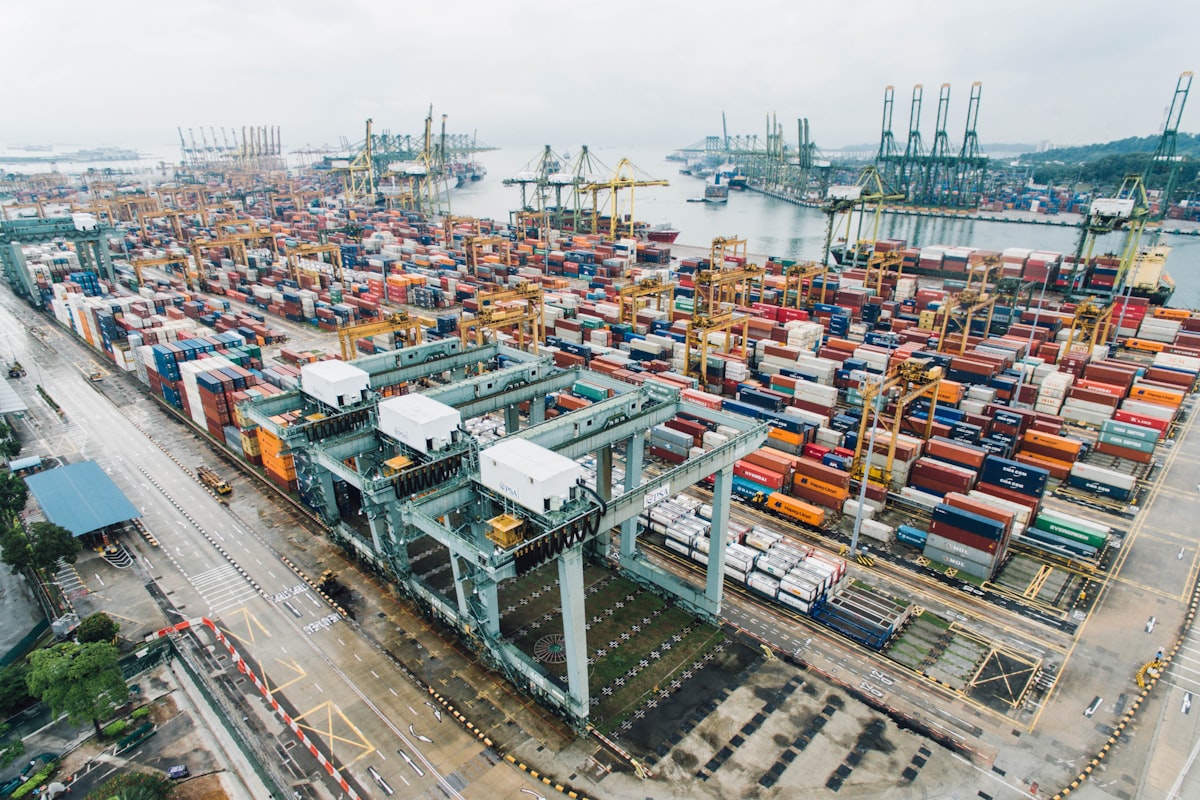
Chile's import tax stack, in the order the charges actually hit
Chile charges four separate things on an imported parcel, and they stack on top of each other instead of running in parallel. First the customs duty (derecho de aduana): 6% of the CIF value for goods coming from a country without a trade agreement. Then the import VAT (IVA de importacion): 19%, calculated not on the invoice price but on the CIF value plus the duty you just paid, which is why a 19% tax behaves like 20.1% on the goods. Then the aforo, the customs inspection and valuation charge that CorreosChile applies at 1.5% of CIF value when it clears a postal shipment for you. And then, only for specific product families, the additional taxes: 10% to 50% on alcohol, tobacco and jewellery, plus the variable fuel tax for vehicles.
I priced a leather goods order for a client in Santiago in August 2026 and the CIF basis is what broke his spreadsheet. He had built his margins on the FOB invoice from his supplier, the way you would for a US shipment, and the freight and the 2% theoretical insurance that Chilean customs adds on postal shipments turned a USD 780 order into a USD 855.60 taxable base. That single change of base is worth about USD 4.50 in extra duty and about USD 15 in extra VAT on that one order. Small on one shipment, but he ships monthly, so it is a real budget line, not a rounding error.
| Charge | Rate | Base it is calculated on | When it is collected |
|---|---|---|---|
| Customs duty (derecho de aduana) | 6% general rate | CIF value (goods + freight + insurance) | At import, unless origin is certified under a trade agreement |
| Import VAT (IVA) | 19% | CIF value + customs duty already paid | At checkout if a registered platform sold it, otherwise at import |
| Aforo (inspection and valuation) | 1.5% | CIF value | At import, on postal shipments cleared by CorreosChile |
| Additional taxes | 10% to 50% | CIF value plus duty | At import, only for alcohol, tobacco, jewellery, luxury vehicles |
What changed on 25 October 2025, and why the old USD 41 line mattered
Until 25 October 2025 a parcel worth up to USD 41 entered Chile paying nothing at all: no VAT, no duty. That number was not a consumer benefit, it was the enforcement line. Millions of small packages crossed it in silence because nobody had to declare anything below it, and the Servicio de Impuestos Internos (SII) had no way to see the transaction. Law 21.713 on Tax Obligation Compliance moved the collection point forward: from that date, remote sales of goods located abroad, up to USD 500 per item, carry 19% VAT that the platform is supposed to charge you at checkout. If the VAT really was charged and the data reaches Aduanas electronically, the parcel arrives exempt from import VAT and from duties. If it was not charged, you pay it at the border, through Aduanas, before the parcel is released.
The enforcement effect showed up in the numbers quietly. The SII reported that AliExpress alone accounted for 78% of these remote purchases in 2025, which tells you more about the market than any survey could: this is a consumer flow, not a business one. Nine platforms registered in the simplified system before the law took effect, and together they represented close to 90% of all remote purchases. A network of roughly 90% of a market does not appear because sellers love tax compliance. It appears because the alternative was parcels sitting in customs warehouses while buyers refused to collect them.
- Platforms registered with the SII before 25 October 2025: AliExpress, Amazon, Shein, Temu, Shopee, eBay, Elsevier, It's Elementary, Regina Margherita and Everichgroup
- Registered platforms charge the 19% at checkout, and the parcel should then clear without a second VAT charge
- Unregistered sellers charge nothing at checkout, and you pay the 19% at import through the Tesoreria General de la Republica
- The exempt ceiling is USD 500 per item, not per cart
- The old USD 41 exemption ended on the same date, so there is no longer such a thing as a tax-free small parcel
The USD 500 line is counted per item, not per cart
This is the rule that decides your bill, and it is not the one most buyers assume. The VAT regime applies item by item, each with its own accessory charges: shipping, insurance, extra packaging. When a single shipping charge covers several items and the platform does not split it, it has to be prorated across them. Effective discounts reduce the value under consideration, gifts sent without payment do not add to it, and USD 500 exactly is still inside the regime while USD 500.01 falls out of it and into the ordinary import procedure. Foreign currency amounts convert at the Banco Central de Chile rate for the date the charge hits your payment method, not the date you placed the order.
Watch how this works in practice, because it is the difference between a 19% and a roughly 30% tax bill. Two items of USD 300 in one cart can stay inside the regime even though the cart totals USD 600, provided each item, together with its assigned share of the shipping, stays at or below USD 500. And a USD 490 item with USD 20 of shipping assigned to it reaches USD 510, which puts it outside. Same cart, same buyer, two different tax treatments, decided by how the platform reports the line items. If you import as a business, the rule inverts: VAT-registered buyers have to declare their RUT to the seller before the sale is finalised, they do not get charged at checkout, they pay the VAT at import, and they can then use it as a fiscal credit if the paperwork holds up.
| Situation | What happens at checkout | What happens when it arrives in Chile |
|---|---|---|
| Registered platform or merchant | 19% VAT is added to the item price | Exempt from import VAT and duties if the charge and the shipping data are properly credited |
| Unregistered merchant that charges no VAT | No VAT collected | You pay VAT, duties and other charges through the Aduanas procedure |
| Item above USD 500 | The low-value regime does not apply | Tax and duties are assessed at import on the CIF basis |
| Buyer registered for VAT in Chile | No charge if you declared your RUT in time | VAT paid at import, usable as a fiscal credit when requirements are met |
Three baskets, computed to the last unit
CorreosChile publishes its own worked example for a shipment above the ceiling, and it is worth reading line by line because it shows what the CIF basis does to a USD 500 order: goods of USD 500, freight of USD 25, theoretical insurance at 2% of the goods value, which is USD 10, and the taxable base becomes USD 535. Duty at 6% is USD 32.10. Then the VAT is 19% of USD 567.10, which is USD 107.75, and there is an aforo of 1.5% of CIF, USD 8.02. Total payable on arrival: USD 147.87 on a USD 500 purchase, which is 29.6% of the goods value. Read the sequence again and notice that the duty is taxed by the VAT. That is where the extra 1.5 points hide.
Now the three baskets I actually run for readers. A USD 60 order of phone cases and cables from a registered platform: 19% at checkout, USD 11.40, paid USD 71.40, arrives at the door without a second charge. In September 2025 that same order sat above the old USD 41 line, so it was supposed to pay the 19% at import, but only if Aduanas assessed it: the old threshold put the weight on enforcement rather than on collection, which is exactly why the reform moved the charge to the checkout. A USD 250 clothing order: USD 47.50 of VAT at checkout and a final USD 297.50, no duty, no aforo. And then a USD 780 drum kit bought from a US shop that does not register in Chile: I assume USD 60 of freight and the same 2% theoretical insurance of USD 15.60, so CIF is USD 855.60, duty is 6% at USD 51.34, VAT is 19% of USD 906.94 at USD 172.32, aforo is USD 12.83, and the taxes total USD 236.49 on top of goods and freight. That basket is 30.3% of the goods value, against 19% for the first two.
| Basket | Goods USD | Assumed freight | CIF base | Duty 6% | VAT 19% | Aforo 1.5% | Total taxes | Tax as % of goods |
|---|---|---|---|---|---|---|---|---|
| Registered platform, small order | 60.00 | included | 60.00 | 0.00 | 11.40 | 0.00 | 11.40 | 19.0% |
| Registered platform, mid order | 250.00 | included | 250.00 | 0.00 | 47.50 | 0.00 | 47.50 | 19.0% |
| Unregistered US shop, over the ceiling | 780.00 | 60.00 | 855.60 | 51.34 | 172.32 | 12.83 | 236.49 | 30.3% |
| CorreosChile published example | 500.00 | 25.00 | 535.00 | 32.10 | 107.75 | 8.02 | 147.87 | 29.6% |
Why your duty rate depends on a paper, not on a flag
Chile's general duty is 6%, but Chile has signed some thirty trade agreements, including the one with the United States, in force since 1 January 2004, which eliminated tariffs on 90% of US exports to Chile on day one and on everything by 2016, and an agreement with China signed in 2006. None of that helps a parcel that arrives without an origin certification. The preference is not triggered by the flag on the plane, it is triggered by a document the exporter issues: a certificate or declaration of origin that ties the goods to a qualifying source. Retail parcels from US stores almost never carry one, because the shop has no reason to produce it for a consumer sale, so the 6% duty applies even though the agreement has been live for more than twenty years.
On business importations this is worth real money and it is the single most common mistake I see in landed cost planning. On a USD 40,000 order of US-made equipment, the difference between 6% and 0% duty is USD 2,400 of duty, plus roughly USD 456 of VAT that was charged on top of that duty. That is more than the freight difference between a good and a bad rate. The certificate has to be requested before the goods ship, not after: asking a supplier to certify origin retroactively turns a routine document into a negotiation.
- 6% is the general rate. It is what you pay by default when no preference is claimed
- Preferential 0% requires an origin certification issued by the exporter, not by you and not by the courier
- Retail parcels from US shops rarely carry one, which is why the 2004 agreement does not show up in most consumer orders
- For business shipments, request the certificate before departure and keep it with the commercial invoice
- The VAT is charged regardless of origin. Preferences kill the duty, they never touch the 19%
The double-charge bug: when the system bills you twice
On 24 July 2026 the Defensoria del Contribuyente (Dedecon) sent Aduanas a technical report describing a specific failure: buyers who had already paid the 19% at checkout were made to pay it again at import to get their parcel released. The mechanism is not a legal conflict, it is a broken data chain. The legal design created an exemption for imports up to USD 500 provided the VAT had been remitted through a registered platform, and it relies on the seller, the platform and the logistics operator transmitting that proof electronically to Aduanas. When the message never arrives, arrives incomplete, or arrives wrong, Aduanas cannot verify that the tax was paid and requires payment again before release. Dedecon found that a buyer holding an invoice, an order confirmation or a tax line on a receipt often cannot stop that second charge, and that the affected buyer has to pay first and chase a refund afterwards.
Two things make this worth taking seriously even though it affects a minority of shipments. First, the burden lands on exactly the people who complied, which is the opposite of how a tax system is supposed to allocate risk. Second, the fix Dedecon proposes is a pre-arrival verification and an expedited refund route, which means the problem is operational and solvable, not a matter of interpretation. Until that lands, treat the receipt as evidence for a claim, not as protection at the counter. CorreosChile notifies by email, SMS, WhatsApp or phone, and the payment route is the F18 import form at the Tesoreria General de la Republica, using the recipient's RUT and the FIVPS folio from the notification.
- Keep the checkout page or order email showing the 19% VAT line, with the amount in USD or CLP
- Keep the platform's tax receipt or invoice, not just the payment confirmation from your card
- Keep the tracking number and the carrier's notification, which carries the FIVPS folio
- Keep the commercial invoice or a screenshot of the cart with the description, value and shipping charge
- If a second charge is demanded, pay it to release the goods and file the refund claim with both receipts attached
- Check the SII registry before buying, because a registered merchant is the whole defence against this failure
The 2026 scoreboard: what the tax collected and what it broke
The SII publishes the collection in quarterly declaration periods, and the first two periods are now on record. The first, covering the last five days of October plus November and December 2025, produced USD 41 million, the equivalent of CLP 37,110 million, from 23 declarations, with Shein, AliExpress, Temu, Amazon and eBay as the five largest contributors. The second, covering January to March 2026, produced CLP 48,203,313,173 from 30 declarations, with the top five unchanged in substance: AliExpress, Amazon, Temu, Shein and eBay. Cumulative collection from the start of the regime to March 2026: CLP 85,161,454,535.
The behavioural data is more interesting than the revenue. The Camara Nacional de Comercio measured informality in international e-commerce above 20% in each of the first three quarters of 2025. In the fourth quarter, the first with the tax live, it fell to 11%, back to the level of the first quarter of 2023. Total informal digital purchases for 2025 still reached USD 1,118.6 million, 19% above 2024, and international e-commerce in that last quarter was USD 479.9 million out of USD 3,525 million of total online spending. Read those together and the conclusion is uncomfortable but clean: the 19% at checkout did not shrink the appetite for foreign shopping, it moved a fifth of a market from informal to declared.
| Declaration period | Platforms declaring | Collected in CLP | Largest contributors |
|---|---|---|---|
| Late Oct to Dec 2025 | 23 | 37,110,000,000 | Shein, AliExpress, Temu, Amazon, eBay |
| Jan to Mar 2026 | 30 | 48,203,313,173 | AliExpress, Amazon, Temu, Shein, eBay |
| Cumulative to March 2026 | 30 unique filers | 85,161,454,535 | Same five platforms dominate both periods |
My take: pay through the registry, split the cart, keep the receipts
The 25 October 2025 reform made foreign shopping more expensive and I think that is the correct outcome, because the old USD 41 line was never a benefit. It was a blind spot: parcels below it entered with no VAT and no duty, buyers built their expectations on a rule that existed because nobody was checking, and the people who lost were the local retailers competing against untaxed imports. The counterargument I hear most often is that a system which double charges the honest buyer is not ready, and on that specific point the critics are right. Dedecon documented the failure, the fault was in the information chain rather than in the rate, and the correct response is to fix the data flow, not to bring back the exemption. Reverting it would restore the blind spot and punish the buyers who paid correctly.
What I would actually do at the next checkout is arithmetic, and the arithmetic is dominated by one line: the cliff at USD 500 per item. Below it you pay 19% and nothing else, above it you pay duty on CIF, VAT on CIF plus duty, and an aforo on top, which lands near 30% before you add any courier handling. That gap, around 11 percentage points, is the real price list, and the per-item rule is the lever. Splitting a USD 900 order into two items of USD 450 with USD 30 of freight each keeps both inside the regime and produces about USD 185.82 of VAT, against roughly USD 270.32 of duty, VAT and aforo on a single USD 900 item, a difference of about USD 84 on the same goods. You do not need a customs broker to use that. You need to read how the platform reports the line items before you pay.
- Check whether the seller is in the SII registry. If it is, the VAT is collected once, at checkout, and the parcel should clear without a second charge
- Read the shipping charge per item, because the USD 500 ceiling absorbs it and a USD 490 item with USD 20 of shipping is already outside
- If your cart crosses the ceiling, split it into per-item orders instead of one consolidated shipment, and compare the freight difference against the roughly 11 points of tax you avoid
- For US, EU or Chinese made goods above the ceiling, ask the exporter for an origin certification before shipping, or assume the 6% duty applies
- Keep the six documents listed in the double-charge section until the parcel is in your hands, not until it ships
- If you import as a business and want the VAT as a credit, declare your RUT before the sale closes, or you will pay a tax you cannot recover

Frequently Asked Questions
Do I really pay the 19% twice if I buy on AliExpress?
No, that is the design: you pay once at checkout and the import is exempt up to USD 500 per item. But the Defensoria del Contribuyente documented cases in July 2026 where the exemption was not recognised at the border because the payment data never reached Aduanas electronically, and buyers had to pay again to release the parcel and then claim a refund. Keep the platform receipt showing the VAT line, the tracking number and the notification with the FIVPS folio, and register the claim if it happens.
Is the USD 500 limit per purchase or per product?
Per product, not per cart. Each item is assessed with its own accessory charges, including shipping and insurance, and when a single shipping charge covers several items it has to be apportioned between them. Two items of USD 300 can stay inside the regime in a USD 600 cart. A USD 490 item with USD 20 of shipping assigned to it reaches USD 510 and falls out. USD 500 exactly is inside, USD 500.01 is outside.
What happens if the store I buy from is not registered with the SII?
You pay nothing at checkout and everything at the border. Aduanas assesses the import, and you settle the 19% VAT, any applicable duty and the handling charges through the Tesoreria General de la Republica, usually with the courier or CorreosChile sending you a payment link or an F18 form. Check the registry before you buy, because the difference in total cost between a registered and an unregistered seller is the 6% duty and the aforo, not the VAT.
Are shipments from the United States duty free under the trade agreement?
Only when the exporter certifies origin. The Chile-United States agreement has been in force since 1 January 2004 and eliminated tariffs on 90% of US exports to Chile on day one and on all products by 2016, but the preference requires an origin document issued by the exporter. Consumer parcels from US stores rarely include one, so the 6% general duty applies to most retail orders even today. The 19% VAT applies either way.
Can I deduct the VAT if I import as a company?
You can use it as a fiscal credit, but only if you handle it correctly before the sale closes. A VAT-registered buyer must inform their status and RUT to the seller or platform so the tax is not charged at checkout, then pay the VAT at import with the proper documentation. If you fail to declare your status in time, the platform charges the VAT and you cannot credit it later, which turns a recoverable tax into a permanent cost.
Written by Ace Wang
Founder & Import Operations Specialist
Ace Wang has spent 20 years in cross-border ecommerce operations, managing import supply chains for small and medium businesses. From the early days of Alibaba sourcing to modern multi-country logistics strategies, Ace has helped hundreds of entrepreneurs navigate customs clearance, shipping optimization, and landed cost management. The LandedCostHub calculator and all content on this site are built on real-world experience — not textbook theory. Ace believes that transparent, accurate cost data is every importer's right, not a professional service luxury. More about Ace Wang →
Calculate Your Total Landed Cost
Use our free calculator to estimate your total import costs including duties, shipping, and taxes.
Related Guides
Importing from South Korea: Complete Guide for Importers
Complete guide to importing from South Korea. KORUS FTA duty savings, supplier sourcing, shipping routes, and landed cost calculation.
Read More →Importing from China 101: A Complete Guide for First-Time Importers
Everything you need to know about importing from China. Supplier sourcing, shipping, customs, and landed costs explained.
Read More →Importing from Vietnam: Complete Guide for Small Businesses
Learn how to import from Vietnam. Find suppliers, understand shipping routes, calculate landed costs, and navigate customs.
Read More →