Importing to Vietnam 2026: Duty, VAT and Clearance Costs
Updated: 2026-10-13
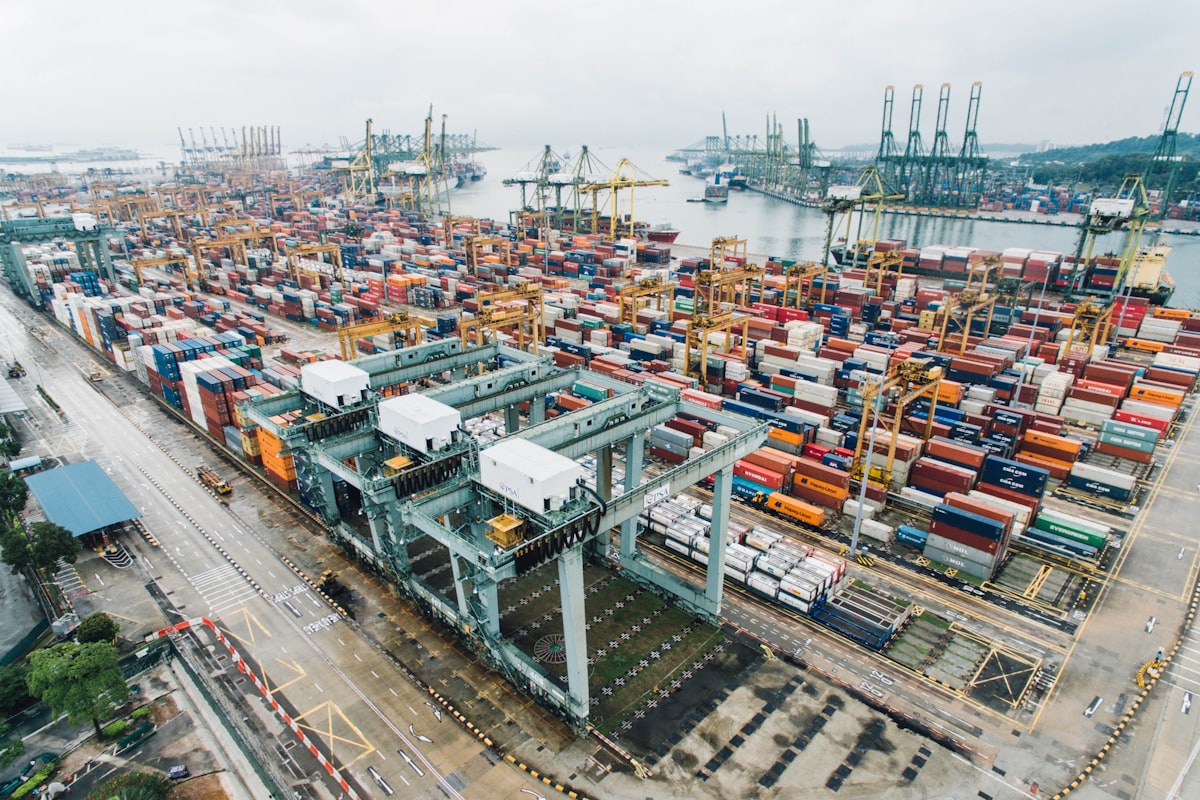
The Only Number That Matters: Vietnam Taxes CIF, Not FOB
Vietnam charges duty on the CIF value of the shipment, not on the FOB price on your supplier's invoice. That single line decides the whole bill, and it is the first thing I check when a client sends me a quote for a Vietnam shipment. Under Customs Tariff Law No. 107/2016/QH13, Vietnam applies WTO valuation rules: transaction value first, and only if that cannot be used does customs work down the alternative methods in sequence. Freight and insurance to the first Vietnamese border sit inside the value. On a USD 40,000 FOB order from Germany with USD 3,200 of ocean freight and USD 400 of insurance, you are taxed on USD 43,600 before a single duty point is applied. The average MFN duty across Vietnam's schedule is around 7.9%, but averages lie. Your rate is set by the 8-digit line, not by the chapter.
I learned the FOB-versus-CIF lesson on a furniture shipment into Cat Lai a few years back. The supplier quoted FOB Ningbo, my client built his margin on that number, and the customs value came back almost 9% higher once freight and insurance were loaded on. Nothing on the invoice was wrong. The costing sheet was. Since then I refuse to sanity-check an import budget until I see the customs value, because in Vietnam the freight you pay is not only a logistics line. It is a tax base.
- Inside the customs value: the goods price, international freight and insurance to the first Vietnamese border, and royalties or licence fees tied to the imported goods.
- Outside the customs value: import duty itself, Vietnamese inland transport after clearance, and any post-import assembly or installation cost.
- Also outside: Vietnamese taxes already paid on the goods, and buying commission paid to your own agent rather than to the seller.
- Foreign currency is converted at the exchange rate published by the State Bank of Vietnam for the declaration date, so the rate you get depends on when you file, not when you paid.
- Vietnam classifies at 8 digits on the ASEAN Harmonised Tariff Nomenclature (AHTN), which is deeper than the 6-digit HS code printed on most Chinese invoices.
Three Rates for the Same Box: Ordinary, MFN and FTA
Vietnam's tariff schedule is a three-tier system, and which tier you land in depends on origin, not on the product. The first tier is the ordinary rate: for goods from a country that does not have most-favoured-nation treatment with Vietnam, the rate is 150% of the MFN rate for that line under Article 10 of the Law on Export and Import Duties, with the ordinary schedule listed in Decision 15/2023/QD-TTg. Where the MFN rate is zero, the Prime Minister sets the ordinary rate and in practice it lands at 5%. The second tier is the MFN rate itself, which Vietnamese legal texts call the preferential rate, and it is what exporters from the EU, UK, US, Japan, Korea and China pay by default. The third tier is the special preferential rate under one of Vietnam's free trade agreements, and it does not exist unless you hold a valid certificate of origin. The MFN schedule itself lives in Decree 26/2023/ND-CP.
The 150% rule surprises people because it sounds like a penalty, and that is exactly what it is. Take cotton T-shirts under HS 6109.10: the MFN rate is 20%, so a shipment from an origin with no MFN treatment pays 30%. Same shirt, same carton, ten points more, and the only thing that changed is where the paperwork says it came from. I once watched a buyer try to argue this at the counter with a Chinese invoice in hand. It does not work. Origin is a legal attribute, not a commercial description, and Vietnam prices it.
| Rate tier | When it applies | How it is set |
|---|---|---|
| Ordinary rate | Origin has no MFN treatment with Vietnam | 150% of the MFN rate; 5% where the MFN rate is zero |
| MFN rate (called the preferential rate in Vietnamese law) | Origin has MFN treatment: EU, UK, US, Japan, Korea, China and most others | Published per 8-digit line in the tariff schedule |
| Special preferential rate | Goods meet a Vietnam FTA rule of origin and carry a valid certificate | Set by the FTA decree; often 0% under ATIGA, ACFTA, EVFTA, CPTPP or RCEP |
| Out-of-quota rate | Tariff-quota goods above the quota volume | Higher than the in-quota rate; applies to a short list of agricultural lines |
The VAT Line Nobody Prices In: 8% Until 31 December 2026, Charged on the Duty
Import VAT in Vietnam is charged on CIF plus import duty, which means the duty is taxed again. That is not a Vietnamese quirk, it is how most VAT systems treat imports, but it is the line cost sheets get wrong. The standard rate is 10%. Since 2022 the National Assembly has repeatedly cut it to 8% for goods and services that would otherwise sit at 10%, and the current extension runs to 31 December 2026 under Resolution 204/2025/QH15, passed on 17 June 2025, and Decree 174/2025/ND-CP of 30 June 2025. Banking, securities, real estate and certain mineral products stay at 10%. The underlying framework is the Law on VAT No. 48/2024/QH15, adopted on 26 November 2024 and effective from 1 July 2025, which was amended by Law No. 90/2025/QH15 and then tidied up by Decree 144/2026/ND-CP, issued on 5 May 2026 and effective from 20 June 2026. If you are VAT-registered in Vietnam, the VAT you pay at the border is normally creditable input VAT, so the headline number hurts less than it looks. If you are not registered, it is a pure cost.
Here is the arithmetic that changes decisions. A cotton T-shirt line with a CIF value of USD 12,000 and a 20% MFN duty pays USD 2,400 of duty. VAT then applies to USD 14,400, not to USD 12,000. At 10% that is USD 1,440; at the reduced 8% it is USD 1,152. The two-point cut is worth USD 288 on a single small line, and it disappears on 1 January 2027 unless the National Assembly extends it again. I would not build a 2027 price list on 8%.
| Tax | Base in Vietnam | Rate in 2026 |
|---|---|---|
| Import duty | CIF customs value, using WTO transaction value first | 0% to 150% by 8-digit line and origin tier; average MFN around 7.9% |
| Import VAT | CIF plus import duty, special consumption tax and environmental protection tax | 10% standard; 8% reduced rate for most goods until 31 December 2026 |
| Special consumption tax | Excisable goods: cars, alcohol, tobacco, air conditioners, petrol | 1% to 150%, with up to 150% on cars seating fewer than 24 people |
| Environmental protection tax | Fuels, certain chemicals and materials | Set per unit of volume or weight, separately from VAT |
The VND 1,000,000 Parcel Exemption Died on 18 February 2025
For fifteen years Vietnam let small cross-border parcels in tax-free. Decision 78/2010/QD-TTg exempted express-delivery imports worth VND 1,000,000 or less from both import duty and VAT. Decision 01/2025/QD-TTg, signed on 3 January 2025, annulled the whole of it, and the repeal took effect on 18 February 2025. What survived is the duty side only. Goods arriving by post or express with a value up to VND 1,000,000, or with import tax of up to VND 100,000, are still exempt from import duty under the current exemption rules. They are not exempt from VAT. That is the mirror image of what the European Union did in July 2026, when it put a flat EUR 3 duty on low-value consignments after VAT had already stopped being waived.
This is the change I would put in front of anyone shipping single parcels to Vietnamese consumers. A VND 900,000 order from a foreign web shop now clears duty-free and then pays VAT at 8% or 10% on the CIF value, so call it VND 72,000 to VND 90,000, plus whatever the courier charges for handling the declaration. UPS, for example, started charging VND 250,000 per customs declaration form for non-trading shipments on 9 April 2026. On a small parcel the courier fee can be larger than the tax. And the threshold itself is on the table: the Ministry of Finance consulted in 2026 on a draft decree that would unify the exemption at a customs value of VND 100,000, or VND 10,000 of tax payable, across every channel. That is roughly USD 3.80. No effective date had been published when I last checked in October 2026.
| Channel | Import duty | Import VAT |
|---|---|---|
| Express or postal shipment up to VND 1,000,000, or duty up to VND 100,000 | Exempt | Charged, because the VAT exemption was repealed on 18 February 2025 |
| Other imported goods up to VND 500,000, or tax payable up to VND 50,000 | Exempt | Exempt under the same current exemption rules |
| Any shipment above the threshold | Charged at the applicable tier | Charged on CIF plus duty |
| Draft decree consulted on during 2026 | Would unify the exemption at VND 100,000 of value or VND 10,000 of tax | Not yet legislated, so monitor rather than model |
Three Baskets, Three Bills
Rates only become real when you put money next to them. Below are three baskets I priced in September 2026 for a client weighing up a Vietnam distribution arm. All values are CIF into Cat Lai, all are MFN origin, and VAT is shown at the reduced 8% rate in force until the end of 2026. The fourth row is the same T-shirt basket with an ASEAN certificate of origin attached, and it is the reason this article exists.
The last row is the whole point. Nothing about the shirt changed. The certificate did. A properly issued Form D under ATIGA, Form E under ACFTA, or the EVFTA and CPTPP equivalents takes a 20% duty to nothing, and the saving of USD 2,592 on a USD 12,000 line is usually several times what it costs to get the origin paperwork right. There are 22 preferential schemes attached to that single T-shirt tariff line. Most importers use none of them, because nobody asked the supplier for the right certificate before the goods shipped. Footwear is even more brutal: 30% MFN, and 45% if the origin has no MFN treatment at all. If you are shipping shoes into Vietnam at 45%, you are being taxed for a paperwork decision somebody made months earlier.
| Basket and HS code | CIF value (USD) | Duty (USD) | VAT at 8% (USD) | Total tax (USD) | Tax as % of CIF |
|---|---|---|---|---|---|
| Cotton T-shirts, 2,000 pieces, HS 6109.10, MFN origin at 20% | 12,000 | 2,400 | 1,152 | 3,552 | 29.6% |
| Leather footwear, 600 pairs, HS 6403.99, MFN origin at 30% | 18,000 | 5,400 | 1,872 | 7,272 | 40.4% |
| Leather handbags, 500 pieces, HS 4202.21, MFN origin at 25% | 25,000 | 6,250 | 2,500 | 8,750 | 35.0% |
| Same T-shirts with an ATIGA Form D, ASEAN origin at 0% | 12,000 | 0 | 960 | 960 | 8.0% |
The Paperwork That Changes the Rate
Vietnamese customs is data-driven. Declarations run through VNACCS/VCIS, the national e-customs platform operated by the General Department of Vietnam Customs since 2014, and the system scores each declaration into a green, yellow or red channel. Green clears on the data alone, yellow means a document review, and red adds a physical inspection of the goods. Your compliance history is part of that score, so a sloppy declaration today is a slower declaration next quarter. Import duty and taxes are generally payable before release unless you hold a bank guarantee, and post-clearance audits can reach back years after the container is empty.
The clearance itself is rarely the bottleneck. Specialised inspection is. Food, plants, animals, cosmetics, textiles, machinery with efficiency standards and a long list of other categories need a quality, quarantine or safety check from a line ministry, and those checks often take longer than customs does. Textiles are a good example: apparel entering Vietnam needs a conformity declaration under QCVN 01:2017/BCT covering formaldehyde and azo amine limits, plus Vietnamese-language labelling. Used clothing is banned outright, so a pallet of second-hand garments is not a cheap import, it is a seizure risk.
- Certificate of origin, but only if you are claiming a preferential rate. Form D for ATIGA, Form E for ACFTA, plus the EVFTA, CPTPP and RCEP formats. A defective certificate means the duty difference lands on you.
- Commercial invoice, packing list, and bill of lading or air waybill, reconciling line for line. A quantity mismatch is a fast route to a yellow channel.
- Specialised inspection registration, started before the vessel berths rather than after. Quality, quarantine, food safety, energy efficiency and MIC type approval for telecoms equipment all sit here.
- Vietnamese-language labelling, and for textiles the QCVN 01:2017 conformity declaration covering formaldehyde and azo amines.
- An import licence or trading rights where the goods are restricted. Decree 292/2026/ND-CP, effective 5 September 2026, decentralised part of foreign trade licensing and abolished deposits for several categories.
- Records you can defend for years, because customs can audit after release and the file has to stand on its own long after the goods are gone.
Who Customs Will Accept as the Importer
Vietnam does not let a non-resident foreign company act directly as importer of record. To be recognised by customs, the importer generally needs a registered Vietnamese legal entity or another recognised import structure, and it needs a Vietnamese tax code for the declarant. That is the structural wall most foreign sellers hit: they can sell into Vietnam, but they cannot be the declarant. The workaround is a Vietnamese importer of record, a licensed customs broker filing on your behalf, or an entity of your own, and each option has a different cost and a different risk profile.
I have seen three setups work in practice. The first is a local distributor buying on their own account, which is clean but costs you control of pricing and customer data. The second is a Vietnamese service company that imports on your behalf and re-invoices, which keeps the channel open but adds a margin and a dependency. The third is your own Vietnamese entity, which is what serious sellers eventually do. Since 1 July 2025, e-commerce platforms with a payment function have been required to withhold and pay tax per order under the amended VAT law, which changed the arithmetic for anyone selling through a marketplace rather than their own storefront. On top of that, the e-commerce retail market was worth somewhere between USD 31 billion and USD 38.5 billion in 2025 and grew about 19% in the first half of 2026, so the volume of small parcels reaching customs is climbing fast.
- A registered Vietnamese legal entity, which is the only route to being importer of record in your own name.
- A Vietnamese tax code for the declarant, because customs will not process a declaration without one.
- A licensed customs broker filing through VNACCS/VCIS, which is how most first-time importers start.
- A marketplace or platform structure that handles import on your behalf, along with the tax withholding that comes with it.
What the Clearance Itself Costs
Duty and VAT are not the only lines on the bill. The clearance layer in Vietnam has its own price list, quoted in dong rather than in percentages. A customs declaration for ordinary commercial goods typically runs VND 800,000 to VND 1,500,000, and can reach VND 3,000,000 where classification or valuation is contested. A red-channel container adds roughly VND 600,000 of inspection cost. Port storage and demurrage can run USD 120 to USD 150 per container per day once free time runs out, which is why a one-week delay on a single 40-foot box can cost more than the duty on a small consignment.
I put those numbers next to the tax numbers for a reason. On a large, tariffed shipment the duty dwarfs everything else and the clearance fee is noise. On a small parcel the opposite is true: the tax is a rounding error and the handling is the bill. If your model is single parcels into Vietnam, you are not really managing a tariff problem. You are managing a fixed-cost problem, and the fix is consolidation rather than negotiation.
| Item | Typical cost in 2026 |
|---|---|
| Customs declaration for ordinary commercial goods | VND 800,000 to VND 1,500,000 per declaration |
| Declaration where classification or valuation is contested | Up to VND 3,000,000 |
| Physical inspection, red channel | About VND 600,000 per container |
| Courier customs declaration fee for a non-trading shipment, UPS | VND 250,000 per declaration form, since 9 April 2026 |
| Demurrage and detention once free time expires | USD 120 to USD 150 per container per day |
Where the Box Actually Lands
Vietnam's container traffic concentrates in three gateways. In the 2026 Lloyd's List ranking of the world's top container ports, Vietnam holds three places: Ho Chi Minh City leads the country at number 22 worldwide, Hai Phong makes the country's biggest upward jump, and Cai Mep sits inside the top 100. Hai Phong handled 5,695,839 TEU in 2024 and has been moving up fastest since. The Cai Mep-Thi Vai deep-water cluster south of Ho Chi Minh City grew about 9% in early 2026 as carriers added direct services to Europe and to both US coasts, and Tan Cang-Cai Mep International Terminal set a monthly record of 221,819 TEU in July 2026.
Which gateway you use changes your inland cost far more than it changes your duty. Cai Mep-Thi Vai takes the largest vessels and is the natural choice for direct deep-sea services, but it sits about 60 km from Ho Chi Minh City, so you pay to truck the box in. Cat Lai is right in the city, clearing most southern consumer imports, which also makes it the most congestion-prone. Hai Phong serves the northern industrial belt around Bac Ninh and Hanoi and is the default for component flows. If your end customer is in the north and you routed through Cai Mep to shave the ocean freight, you have probably spent the saving on trucking before the container is empty.
| Gateway | Type | Why it matters |
|---|---|---|
| Hai Phong | Northern seaport | Vietnam's fastest-rising port, 5,695,839 TEU in 2024, default for northern industrial zones |
| Cat Lai, Ho Chi Minh City | Southern river port | Clears most southern consumer imports and is the most congestion-prone |
| Cai Mep-Thi Vai | Deep-water cluster | Takes the largest vessels and direct Europe and US services, about 60 km from Ho Chi Minh City |
| Da Nang | Central seaport | Serves the central region, smaller and less used for deep-sea imports |
| Tan Son Nhat and Noi Bai | International airports | Air freight into Ho Chi Minh City and Hanoi, the fast lane for high-value light goods |
| Shanghai to Hai Phong, 20-foot FCL | Reference ocean rate | About USD 1,248 to USD 1,430, roughly 4 to 5 days transit |
The First 72 Hours After Your Container Berths
This is the sequence I now run for every Vietnam import, because it makes the fixed costs visible before they happen. The clock starts when the vessel berths, not when you send the documents, and almost everything that goes wrong is a data problem that shows up as a channel colour.
Read the last row again. Even a perfect green-channel clearance puts the tax bill in front of the gate, and that bill is computed on a customs value that includes the freight. That is the whole guide in one sentence: in Vietnam everything downstream of the invoice is taxed, and the only lever that moves the rate materially is origin. Get the certificate, classify the 8-digit code correctly, and pay before the clock starts. Do those three things and Vietnam is an ordinary market. Skip them and the 150% ordinary rate, the red channel and the demurrage meter all start running at the same time.
| Hour | What happens | What it costs |
|---|---|---|
| Hour 0 to 4 | Vessel berths and the terminal discharges your container to the yard | Storage clock starts; free time is typically 5 to 7 days |
| Hour 4 to 12 | Declaration filed, or filed late if you were not ready before arrival | VND 800,000 to VND 1,500,000 for the declaration |
| Hour 12 to 36 | VNACCS returns a channel: green clears on data, yellow adds document review, red adds inspection | About VND 600,000 extra for a red channel |
| Hour 36 to 60 | Specialised inspection, if your goods need it: food, textiles, cosmetics, machinery | Adds days rather than hours, and this is the real bottleneck |
| Hour 60 to 72 | Duty and VAT paid electronically, then release follows payment | On a USD 12,000 CIF T-shirt line at 20% MFN and 8% VAT: USD 3,552 |

Frequently Asked Questions
Do I pay import duty and VAT on the freight when importing into Vietnam?
Yes. Vietnam's customs value is built on CIF, so international freight and insurance to the first Vietnamese border sit inside the taxable value. Duty is charged on that CIF figure, and VAT is then charged on CIF plus the duty, so the freight is effectively taxed twice: once as part of the value and again inside the VAT base.
What is the current tax-free threshold for parcels sent to Vietnam?
The duty side still exempts postal and express shipments worth up to VND 1,000,000, or with import tax of up to VND 100,000. The VAT side stopped exempting them on 18 February 2025, when Decision 01/2025/QD-TTg repealed Decision 78/2010/QD-TTg in full. A VND 900,000 parcel therefore pays no duty but does pay VAT, plus the courier's declaration fee. A draft decree consulted on in 2026 would cut the unified exemption to VND 100,000, but no effective date has been published.
How much is import VAT in Vietnam in 2026?
The standard rate is 10%, but a reduced 8% rate has been extended to 31 December 2026 for goods that would otherwise sit at 10%, under Resolution 204/2025/QH15 and Decree 174/2025/ND-CP. Banking, securities, real estate and some mineral products stay at 10%. Import VAT is charged on CIF plus duty, and registered businesses can normally credit it against output VAT.
Can a foreign company act as importer of record in Vietnam?
Not directly. Vietnamese customs generally requires the importer to have a registered Vietnamese legal entity or another recognised import structure, plus a Vietnamese tax code for the declarant. In practice foreign sellers use a local importer of record, a licensed customs broker filing through VNACCS/VCIS, or their own Vietnamese entity.
How do I legally reduce the duty on goods imported into Vietnam?
Origin is the biggest lever. Vietnam applies special preferential rates under ATIGA, ACFTA, EVFTA, CPTPP, RCEP and around 22 schemes on many tariff lines, but only with a valid certificate of origin that meets the rules of origin. On HS 6109.10 cotton T-shirts the MFN duty is 20%, and with an ATIGA Form D it drops to zero, which is a USD 2,400 saving on a USD 12,000 CIF line. Beyond origin, get the 8-digit classification right and make sure the declared customs value is defensible, because undervaluation is the fastest route to a red channel and a post-clearance audit.
Written by Ace Wang
Founder & Import Operations Specialist
Ace Wang has spent 20 years in cross-border ecommerce operations, managing import supply chains for small and medium businesses. From the early days of Alibaba sourcing to modern multi-country logistics strategies, Ace has helped hundreds of entrepreneurs navigate customs clearance, shipping optimization, and landed cost management. The LandedCostHub calculator and all content on this site are built on real-world experience — not textbook theory. Ace believes that transparent, accurate cost data is every importer's right, not a professional service luxury. More about Ace Wang →
Import cost on key routes
View shipping rates, duty rates, and total landed cost estimates.
Calculate Your Total Landed Cost
Use our free calculator to estimate your total import costs including duties, shipping, and taxes.
Related Guides
Importing from South Korea: Complete Guide for Importers
Complete guide to importing from South Korea. KORUS FTA duty savings, supplier sourcing, shipping routes, and landed cost calculation.
Read More →Importing from China 101: A Complete Guide for First-Time Importers
Everything you need to know about importing from China. Supplier sourcing, shipping, customs, and landed costs explained.
Read More →Importing from Vietnam: Complete Guide for Small Businesses
Learn how to import from Vietnam. Find suppliers, understand shipping routes, calculate landed costs, and navigate customs.
Read More →